
Sanok: Icons, landscapes and hiking trails
Accommodation in Sanok
Sanok combines an important collection of icons with hiking trails and regional cuisine. During your stay, you can choose between urban culture, routes of varying lengths and other destinations in Sanok County.
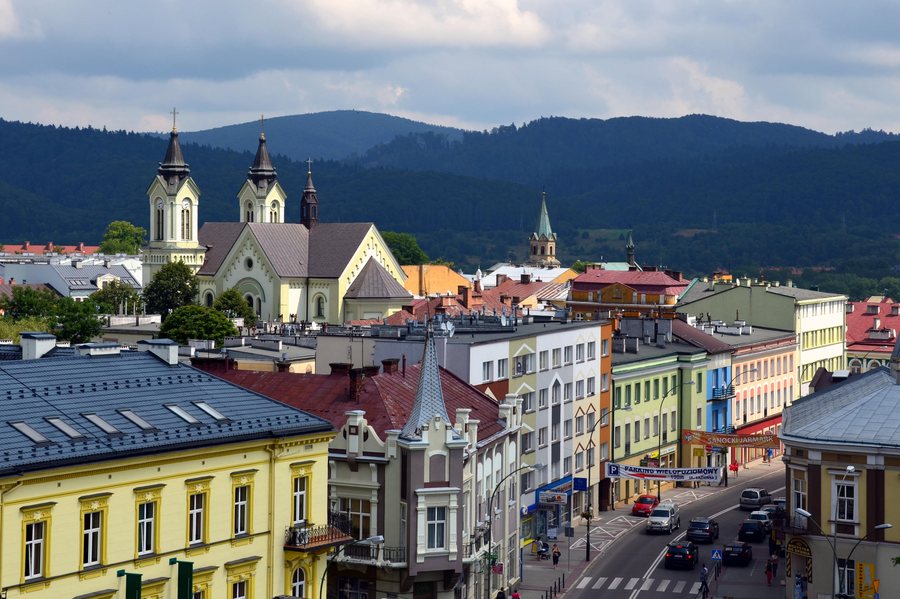
Sanok at a glance
- The San River runs through Sanok from south to north through a belt of valleys formed during the Ice Age, the Doły Jasielsko-Krośnieńsko-Sanockie.
- Sanok is located in two mesoregions: the Sanok-Turcza Mountains and the Bukowsko Foothills.
- The Historical Museum displays 700 icons and other works of religious art.
- The Icon Trail is about 70 kilometres long and links 14 churches in the area around Sanok.
What shapes the landscape and culture of Sanok?
A mesoregion is a larger landscape area. Sanok is located in both the Sanok-Turcza Mountains and the Bukowsko Foothills; the San River is another defining geographical feature. It runs through the city in a belt of valleys formed during the Ice Age, the Doły Jasielsko-Krośnieńsko-Sanockie. Thus, descriptions of Sanok bring together the river, valley areas and two landscape regions.
Icons and other religious art are the focus of the Historical Museum. The collection includes 700 icons. The museum also offers workshops based on patterns from its collection of Pokuttya ceramics. If you plan to attend one of these workshops, confirm availability in advance.
Which hiking trails can you compare?
The approximately 70-kilometre-long Icon Trail links 14 churches in the area around Sanok. Another hiking route runs from Sanok to Chryszczata: it is 40 kilometres long and takes about ten hours. You can compare them by distance, number of churches and estimated duration.
The Sanok–Przemyśl trail passes through the Słonne Mountains and the Przemyśl Foothills and is 72 kilometres long. A cycling and driving version of the route described in Sanok County runs from Sanok via Mrzygłód, Dobra, Łodzina, Ulucz, Tyrawa Solna, Siemuszowa, Hołuczków, Tyrawa Wołoska, Słony Wierch, Załuż and Międzybródź, then back to Sanok.
Where can you find regional cuisine and swimming pools?
Sanok’s open-air museum has a tavern in a historic granary dating from 1732. Regional dishes include wholemeal flour pierogi and Hryczaniki. Before your visit, check whether the tavern is currently open.
The CRiS swimming-pool complex in Sanok has year-round indoor pools, seasonal outdoor pools and a rehabilitation area. As this is a description of current facilities, check that they are operating before you travel.
What other cultural and natural attractions does Sanok County offer?
Historic churches and landscape conservation are among the regional themes of Sanok County. Mrzygłód’s historic architectural market square is considered one of the region’s most interesting attractions. Tyrawa Solna is home to a wooden Greek Catholic parish church built in 1837 and dedicated to John the Baptist. It is built using log construction and has a post-built tower.
The church complex in Dobra includes a 17th-century church whose tower now serves as a gate and bell tower. The former Greek Catholic Church of St Nicholas in Dobra has figurative polychrome decoration painted by Antoni and Michał Bogdański between 1899 and 1904.
Sanok County is also home to natural attractions: Słonne Mountains Landscape Park is one of three landscape parks in the county. The Polanki Nature Reserve near Bykowce protects natural Carpathian beech forest communities. The Zwiezło Nature Reserve near Duszatyn in the municipality of Komańcza protects two mountain lakes formed by a landslide on the slopes of Mount Chryszczata.
On the Polish side, the Sanok–Humenné railway line runs through Sanok County along the Osława Valley, passing through the municipalities of Zagórz and Komańcza. If you are considering taking a train along this route, check separately for current passenger services.
How should you plan your accommodation search?
First, consider what you want your stay to focus on: the museum and regional cuisine in Sanok, one of the routes described here, or historic and landscape attractions elsewhere in the county.
Discover more destinations: Sanok, Dębna, Rzepedź, Tarnawa Dolna, Tyrawa Solna, Czaszyn, Siemuszowa, Kalnica, Czystogarb, Łukowe, Wysoczany, Wola Michowa, Pastwiska, Zahutyń, Bukowsko, Zagórz, Komańcza, Długie, Mrzygłód, Mokre, Nowy Łupków.
FAQ
How long is the Icon Trail?
The Icon Trail is about 70 kilometres long and links 14 churches in the area around Sanok.
Which hiking route has an approximate duration?
The stated duration for the 40-kilometre Sanok–Chryszczata hiking trail is about ten hours.
What can you see at the Historical Museum?
The museum displays 700 icons and other works of religious art. It also offers workshops based on patterns from its collection of Pokuttya ceramics; confirm availability in advance.
Which regional dishes are served at the tavern in the open-air museum?
The dishes mentioned are wholemeal flour pierogi and Hryczaniki. Before your visit, check whether the tavern is currently open.
For the overview of the wider region: Subcarpathia.

