
Czyżów Szlachecki – Church and History
Accommodation in Czyżów Szlachecki
In Czyżów Szlachecki, the parish and the Church of All Saints and Saint John of Nepomuk offer concrete points of reference for understanding the area’s cultural history. Their history spans different dates, while the architecture and structural features characterize the place in greater detail.
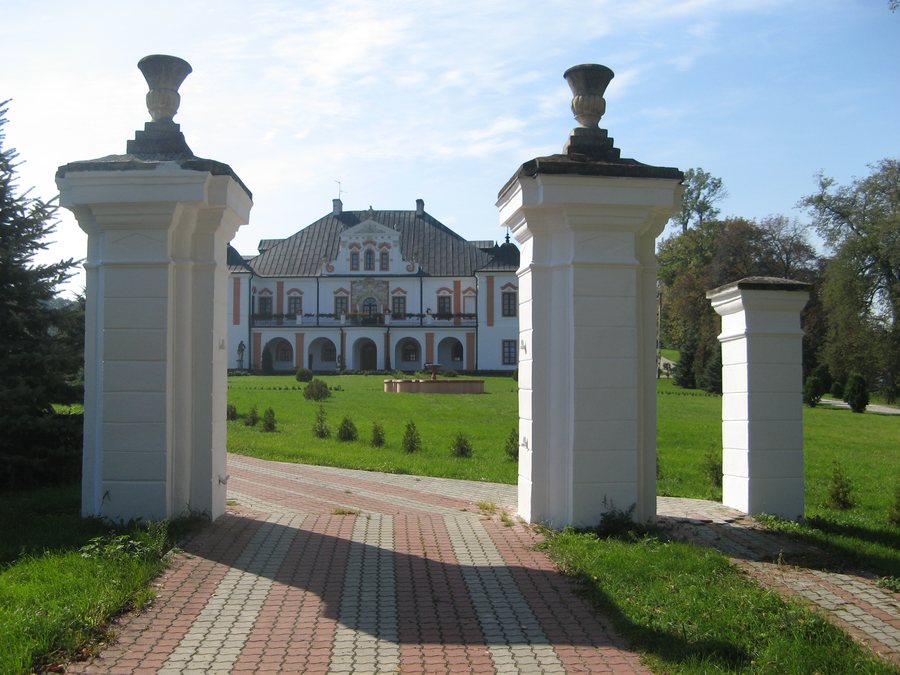
Key facts about Czyżów Szlachecki
- The parish in Czyżów was established in the late 14th or early 15th century.
- The Church of All Saints and Saint John of Nepomuk is a brick, single-nave late Gothic church with a narrower choir with a straight end. It was remodeled in the Baroque style in the early 18th century.
- A stone wall dating from the 18th century encloses the church and the former churchyard.
- An 18th-century bell tower stands beside the church.
What traces of time shape the church’s history?
Two dates should be distinguished when considering the chronology: the parish in Czyżów was established in the late 14th or early 15th century. The Church of All Saints and Saint John of Nepomuk is described as late Gothic and was remodeled in the Baroque style in the early 18th century. These are different points of reference: the date of the parish is not the same as the date of the church’s remodeling.
If you are interested in the area’s cultural history, this distinction helps you consider the establishment of the parish and the later changes to the church building separately. Its history is therefore not limited to a single period.
How can you recognize the church’s architecture?
The church is built of brick and has a single nave. “Single-nave” describes a church interior with one main nave. The choir is narrower than this main section and has a straight end. Together, these features describe the layout in clearly distinct parts: the main nave and the choir. Its late Gothic classification and the Baroque remodeling in the early 18th century add a description of its stylistic development.
For an initial overview, you can therefore focus on two aspects: the spatial form, with its narrower choir, and the chronological sequence from late Gothic design to Baroque remodeling. These features belong to the Church of All Saints and Saint John of Nepomuk in Czyżów Szlachecki. They provide a specific architectural focus without conflating the parish’s history with the building’s history.
What structural features are part of the church grounds?
A stone wall dating from the 18th century encloses the church and the former churchyard. A bell tower, also dating from the 18th century, stands beside the church. The wall and tower add two more historically dated features to the description of the church building.
When comparing local building history, it is worth not grouping these details into a single building phase: the church is late Gothic and was remodeled in the Baroque style in the early 18th century; the wall and bell tower date from the 18th century. This keeps the style, remodeling, and dating of the features clearly distinct.
Discover more travel destinations: Sandomierz, Koprzywnica, Kolonia Gałkowice, Dwikozy, Klimontów, Samborzec, Wielogóra, Konary.
FAQ
When was the parish in Czyżów established?
The parish was established in the late 14th or early 15th century.
What architectural features does the church have?
The brick church has a single nave and is late Gothic. Its choir is narrower and has a straight end; the church was remodeled in the Baroque style in the early 18th century.
What other historic structural features are there by the church?
A stone wall dating from the 18th century encloses the church and the former churchyard. An 18th-century bell tower stands beside the church.
For the broader travel overview: Sandomierz County.

