
Discover Pianu De Sus: Churches and Historical Traces
Accommodation in Pianu De Sus
Pianu de Sus combines several churches with visible traces of local history and a central memorial site. The distinctive features lie not only in the names of the churches, but also in the materials, paintings, inscriptions and stories associated with individual places.
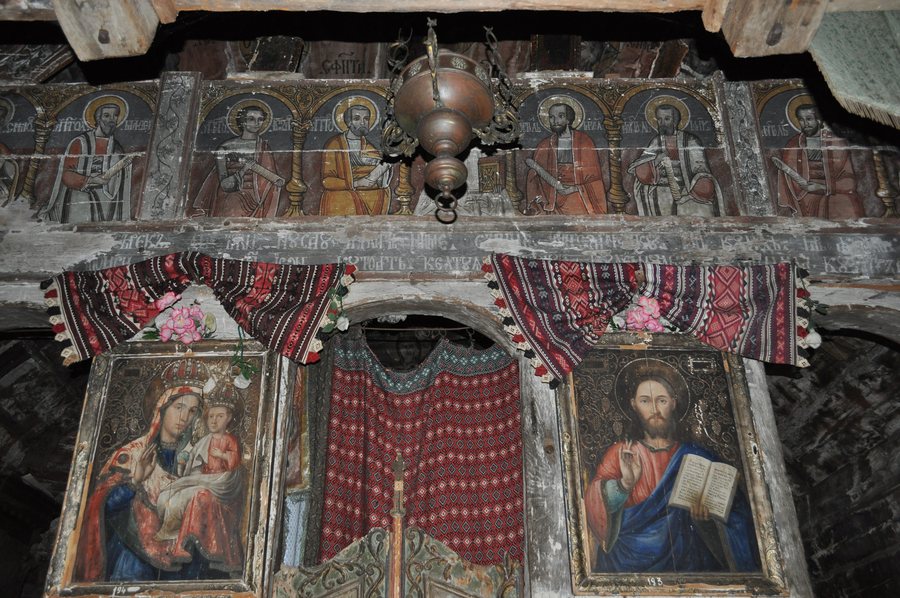 File:RO AB Pianu de Sus 2011.86.jpg
Photo: Utilizator:Țetcu Mircea Rareș at ro.wikipedia via Wikimedia Commons, CC BY-SA 3.0
File:RO AB Pianu de Sus 2011.86.jpg
Photo: Utilizator:Țetcu Mircea Rareș at ro.wikipedia via Wikimedia Commons, CC BY-SA 3.0
The Cuvioasa Paraschiva wooden church was built from fir wood on a stone foundation. Its paintings are located directly on the wood of the beams. As a result, material and design are directly connected in this building: the wood is not only part of the construction, but also serves as the surface for the pictorial work. Those who view churches not only according to their outward appearance will find here a particularly concrete detail to consider when planning their trip.
The Buna Vestire Church is located in the upper part of Pianu de Sus and is surrounded by arcades painted in 1929. Cyrillic inscriptions are still preserved inside the church, some of which date from the time of its construction. Buna Vestire is almost 200 years old. The combination of its age, arcades and preserved written characters makes the site especially interesting for visitors who also pay attention to historical details and different forms of religious design when travelling.
In the centre of Pianu de Sus stands the monument to the heroes who fell in the First World War. It names 72 fallen soldiers. The tricolour carried in 1918 by the mounted group from Pianu de Sus is also kept in the Orthodox Parish Church No. 1 of Pianu de Sus. Both testimonies give the local history a clear connection to remembrance, community and the events of the early 20th century.
At Cuvioasa Paraschiva, fir wood, the stone foundation and the paintings executed directly on the wood of the beams form the defining architectural and design features.
Buna Vestire places a different emphasis. The church stands in the upper part of the village, while the painted arcades form its immediate architectural setting. The Cyrillic inscriptions add a written dimension to this impression. Some of these inscriptions date from the time of construction and have survived to the present day. In this way, a single site makes it possible to understand how architecture, painting and writing can preserve historical traces together.
What do the grave posts of Pianu de Sus tell us?
The cemetery surrounding the Cuvioasa Paraschiva wooden church still contains decorated wooden grave posts bearing the symbol “XIII”. The posts are carved with geometric motifs from top to bottom. They have square cross-sections and are 1.20 to 2.00 metres high.
Which local stories are associated with Pianu de Sus?
A local tradition connects the construction of the Nașterea Sf. Ioan Botezătorul Church with a contribution from a wealthy family in the village. This family is said to have donated a cauldron filled with gold coins. As a traditional tale, this story forms part of the site's cultural associations, without being equated with a verified construction inscription. For travellers, it provides access to the question of how communal memories of the creation of a building are passed down.
The national holiday is also celebrated communally in Pianu de Sus. Every year, around 1 December, residents gather in front of the town hall, listen to the Hora Unirii and Christmas songs performed by the church choir, drink mulled wine and celebrate the national holiday. The event combines a public square with music, a choir, drinks and an annual celebration. If you assess the place by its social and cultural life, this date is a concrete part of its local character.
How can you assess Pianu de Sus as an accommodation location?
When choosing a hotel or other accommodation in Pianu de Sus, the churches, grave posts and central monument can serve as thematic points of reference. They provide several concrete destinations within the locality that suit different interests: sacred architecture at Cuvioasa Paraschiva, arcades and inscriptions at Buna Vestire, wood carving in the cemetery, and memorial history in the centre.
The available themes are particularly suitable for travellers who do not want to reduce culture to a single building. In Pianu de Sus, architecture, painting, writing, grave design, historical remembrance and a recurring festival exist side by side. Couples and families can therefore take different interests into account without every traveller needing to approach the local history in the same way. The factual details also help clarify before booking whether the focus of the trip should be more on churches, traces of craftsmanship, memorial sites or communal traditions.
Which other destinations can you compare?
For a broader regional comparison, you can also consider Alba Iulia, Câmpeni, Gârbova, Ponor, Poiana Aiudului, Sohodol, Mătișești and Vadu Moților .
FAQ
Where is the Cuvioasa Paraschiva wooden church located?
The Cuvioasa Paraschiva wooden church is located in the upper part of the cemetery of Parish I in Pianu de Sus.
Where is the Nașterea Sf. Ioan Botezătorul Church located, and when was it built?
The Nașterea Sf. Ioan Botezătorul Church is located in the lower part of Pianu de Sus and was built around 1837.
What distances are given for travelling to Pianu de Sus?
The centre of Pianu de Sus is 7.8 kilometres from the DN7. From motorway kilometre 24+110 to the municipal centre of Pianu, the distance is 7 kilometres.
For the higher-level travel overview: Alba.

