
Vadu Moților: Discover Culture, Nature and Regional Cuisine
Accommodation in Vadu Moților
Vadu Moților combines historical local references with nature and regional gastronomy. For your travel planning, the different historical periods as well as the bus route and road corridor can be considered separately.
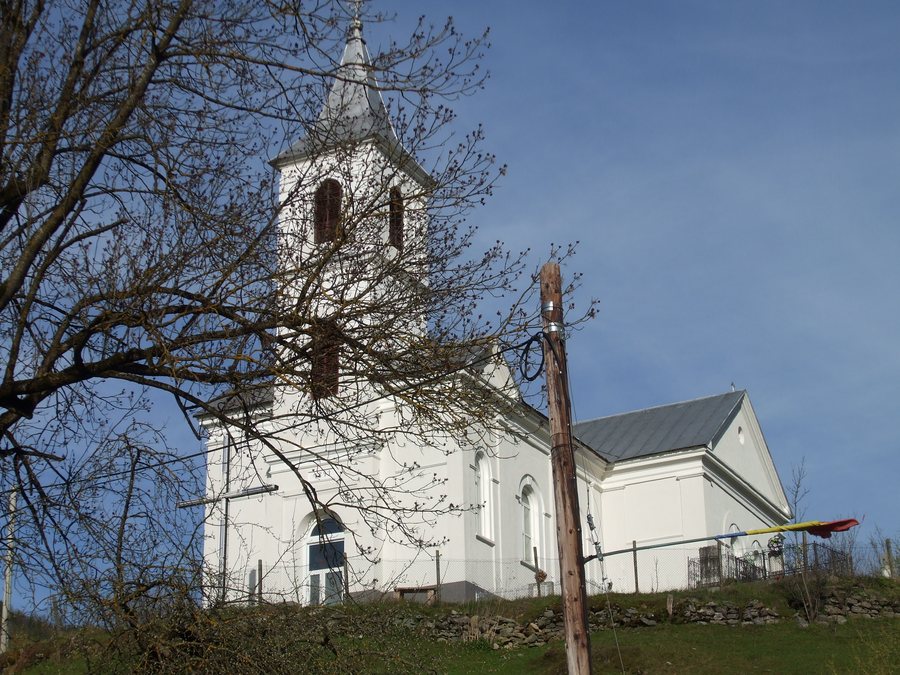 File:RO AB Vadu Motilor Greek Catholic church 1.jpg
Photo: TARE GHEORGHE at Romanian Wikipedia via Wikimedia Commons, Public domain
File:RO AB Vadu Motilor Greek Catholic church 1.jpg
Photo: TARE GHEORGHE at Romanian Wikipedia via Wikimedia Commons, Public domain
The wooden church of “Sfinții Arhangheli” in Lăzești is a historic monument and was built before 1738. Travelers interested in culture can include Lăzești in their travel planning as a distinct historical reference.
The church in Lăzești can be linked with the peasant houses in Vadu Moților as two clearly separate historical reference points.
In Vadu Moților, you can visit peasant houses dating from the 18th century. The peasant houses thus represent rural residential buildings from the 18th century and complement the religious building in Lăzești with a different type of structure.
Vadu Moților has a water mill and an old fulling mill dating from the 19th century.
The Lăzești hermitage was founded in 1994 and includes a chapel and a peasant house. The founding year represents a later historical period than the peasant houses from the 18th century and the facilities from the 19th century.
For a cultural and historical journey, the different years can serve as individual points of reference, from the construction before 1738 to the foundation in 1994.
Language and local traditions
Representatives of the Lăzești–Scărișoara and Lăzești–Vadu Moților village communities compiled a list of old words and expressions. The words and phrases were formerly used in the area and in the wider Țara Moților region. “Vâltori și mori” is associated with a tourist destination in Vadu Moților. This linguistic reference complements the architectural evidence with former regional words and expressions.
Nature and regional gastronomy
Piatra Hojii is designated as a natural monument in Vadu Moților; access and use are therefore not specified in greater detail.
In the village of Necşeşti within the Vadu Moţilor commune, Ioan Crişan is a local producer. The producer reference is therefore located in Necşeşti, a specific village within the commune.
Vadu Moților is one of the communes in the Apuseni Mountains where local gastronomic points are located. For regional cuisine, a distinction must be made between the producer in Necşeşti and the local gastronomic points in the context of the commune. No specific product, sales offer or tasting opportunity is associated with the producer.
Travel and spatial orientation
Vadu Moților is a stop on the Câmpeni–Vadu Moților–Poiana Vadului bus route. Vadu Moților is an intermediate stop on this connection.
Vadu Moţilor is located along the DN75 road corridor between Lunca and Turda. Its location between Lunca and Turda serves as a spatial reference for a road route. For individual planning, the bus route and road corridor can be considered separately. The reference points also differ spatially for practical travel depending on the mode of transport: the bus route passes through Vadu Moților, while the DN75 places the town between Lunca and Turda.
Other destinations in Alba County include Arieşeni in Alba County, Sebeş in Alba County, Mesentea in Alba County, Răchita in Alba County, Pianu De Jos in Alba County, Câmpeni in Alba County, Săliștea in Alba County and Ohaba in Alba County.
To the overarching travel overview: Alba.

