
Scărișoara: Karst formations, wooden churches and traditional culture
Accommodation in Scărișoara
Cheile Mândruțului is a geological and geomorphological protected area with representative karst formations. The municipality of Scărișoara invites visitors to its center for the promotion and preservation of traditional culture and traditional crafts.
Nature and trails
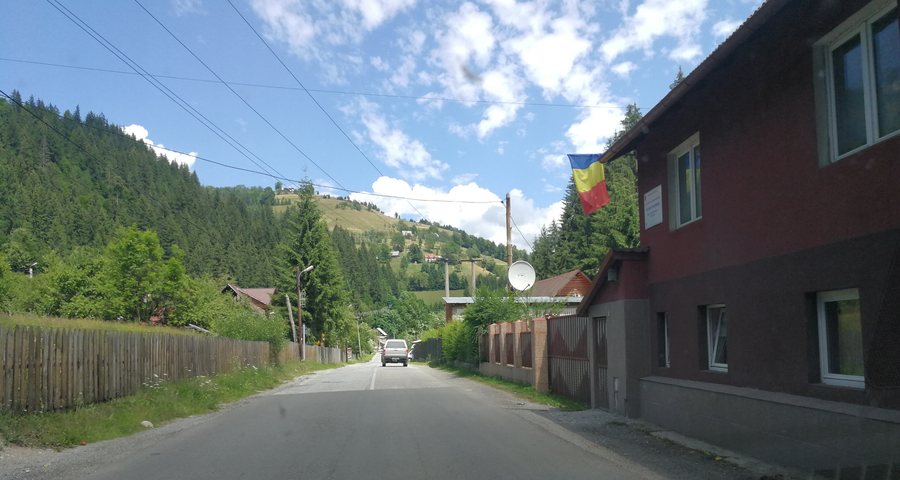
Access to Cheile Mândruțului is via DN75, which runs parallel to the Arieș Valley along the southern edge of the protected area. Cheile și cascada Zugăi lies on the border between Scărișoara and Albac and forms a four-kilometer-long gorge with narrow sections where the water flows rapidly. Forests cover 74.51 percent of the administrative area of the municipality of Scărișoara. The municipality’s tourism profile is associated with a dispersed settlement landscape typical of the Apuseni Mountains, extending mainly across the sun-exposed slopes over dozens of square kilometers. The CR trail connects Scărișoara, in the Cheile Mândruțului area, with the ridge trail between Valea Albac and Valea Ordâncușei.
Landscape
The Cheile Mândruțului viewpoint, at an elevation of 922 meters, offers panoramic views of the villages of Scărișoara and Gârda de Sus, as well as the surrounding valleys. Peștera Mare de la Colșul Morii in Cheile Mândruțului is 85 meters long. Cheile Mândruțului is only one meter wide in places and features natural water slides and small cascades. Piatra Mândruțului reaches an elevation of 922 meters and offers views of Scărișoara, Gârda de Sus and Arieșeni. Elevation, length and width measurements put the different landscape forms into concrete perspective.
Other places
Other places in the region include Vințu de Jos, Poiana Aiudului, Mesentea, Straja, Ighiu, Sălciua De Sus, Laz and Ponor.
Culture and history
Playing the tulnic is considered a tradition typical of the people of Scărișoara; on clear summer evenings, girls and women played it in clearings on the slopes. The dances of the Moți documented in Scărișoara include Țarina, învârtite and tropotite. The Easter custom of the Toacă in Scărișoara involves seven young men guarding a wooden Toacă from Saturday afternoon until Easter Monday morning.
Traditional coopers in Scărișoara made barrels, vats, troughs and smaller wooden vessels called “zdroabe” from staves. The wooden church in Scărișoara was built in 1848. The wooden church in Lăzești is one of the old wooden churches of Țara Moților. It features traditional architecture and an authentic wooden structure. Its interior contains, among other things, paintings and icons more than two centuries old that have accompanied generations of worshippers.
The first documented mention of Scărișoara dates from 1733 and appears in the Orthodox and Uniate statistics of Transylvania. In connection with Horea’s uprising, Scărișoara is mentioned on November 26, 1784, as the place of origin of leaders of the uprising.
Regional cuisine
Balmoș is a traditional dish from Scărișoara, served to guests or on holidays. It is prepared with sour cream, cornmeal and pieces of cheese or fresh cheese; it is usually served hot.
To the main travel overview: Alba.

