
Câmpulung: Museums, Monuments and Historic Routes
Accommodation in Câmpulung
More than 150 buildings in Câmpulung are listed in Romania’s National List of Historic Monuments. A protected historic urban area is legally designated as an area of exceptional value for the national cultural heritage. For your own travel planning, the following places can be organized by museum, sacred and landscape themes.
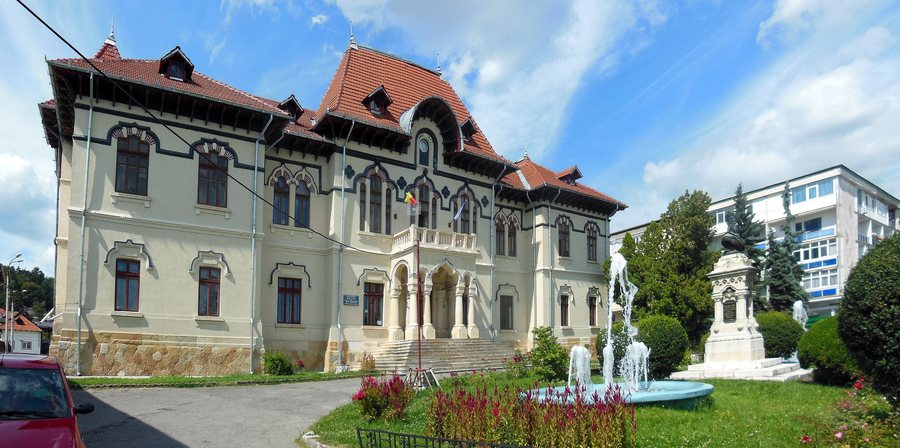 File:Clădirea Primăriei, azi Palatul Culturii municipiul CÂMPULUNG LMI 376 AG-II-m-B-13582.jpg
Photo: Miehs via Source, CC BY-SA 3.0 ro
File:Clădirea Primăriei, azi Palatul Culturii municipiul CÂMPULUNG LMI 376 AG-II-m-B-13582.jpg
Photo: Miehs via Source, CC BY-SA 3.0 ro
Museums and Collections
The Muzeul Municipal Câmpulung was officially founded in 1889 and was among the first museums in Romania. The historical exhibition covers the history of the Muscel region from the earliest times to the end of the 20th century. On display are archaeological finds from the Bronze Age, Hellenistic imported pottery, Roman pottery, and weapons from excavations at Castrum Jidava. Another exhibition includes works by Romanian artists from the interwar period or the period immediately after the Second World War. The Muzeul Municipal Câmpulung also has a natural history collection.
The Muscel Department of Ethnography and Folk Art of the Muzeul Municipal Câmpulung is located in Casa Ștefănescu, a building dating from 1735. Vila Gică Ștefănescu also dates from 1735 and is now the Museum of Ethnography and Folk Art.
Sacred Buildings and Architecture
The stone Castrum Jidava near Câmpulung is considered the most significant fortification on the Limes Transalutanus. The castrum houses a fort museum. The Sf. Iacob Church of the Bărăția ensemble in Câmpulung is a historical and architectural monument dating from the 13th century and is considered the oldest sacred building in the Archdiocese of Bucharest.
According to tradition, Mănăstirea Negru Vodă was founded in 1215 by Radu Negru Voievod. Mănăstirea Negru Vodă Monastery is considered the most significant monastic ensemble in Muscel. The architecture in Câmpulung encompasses local ethnographic forms, Art Nouveau, the Neo-Romanian style, Art Deco and International Modernism.
Parks and Cultural Landscape
Parcul Kretzulescu contains a bathing lake of approximately 800 m² on the banks of the Târgului River. Golescu Dendrological Park contains rare trees and shrubs, including specimens that are more than 100 years old. The Golescu ensemble is listed as a historic monument. In the concept of Fundația Pro Patrimonio, it is an observatory for the cultural landscape, within which projects and workshops take place annually.
Routes and Travel Planning
The Valea Argeșelului and Rucăr–Bran Corridor route includes the Bărăția ensemble in Câmpulung. Câmpulung is listed on this route as the location of a tourist information centre. For your own day planning, construction period, collection type and connection to the landscape can be used as different points of comparison.
When comparing hotels in Câmpulung, check the travel dates, room category and cancellation conditions on the offer page in particular. This allows different schedules and the desired flexibility to be considered alongside planned visits to museums, parks and routes.
More Location Pages
More location pages: Bradu, Oarja, Valea Uleiului, Costești, Sălătrucu, Godeni, Budeasa Mare, Bughea de Jos
To the higher-level travel overview: Argeş.

