
Leordeni: Cultural Heritage and Landscape
Accommodation in Leordeni
Culture and History
In Ciolcești, in the municipality of Leordeni in Argeș County, stands the Casa Memorială “Dinu Lipatti”. Constantin Lipatti, violinist and father of Dinu Lipatti, built the villa between 1938 and 1942 in the Neo-Romanian style. The Expoziția Memorială “Dinu Lipatti” in Ciolcești can be visited Monday to Sunday from 09:00 to 17:00.
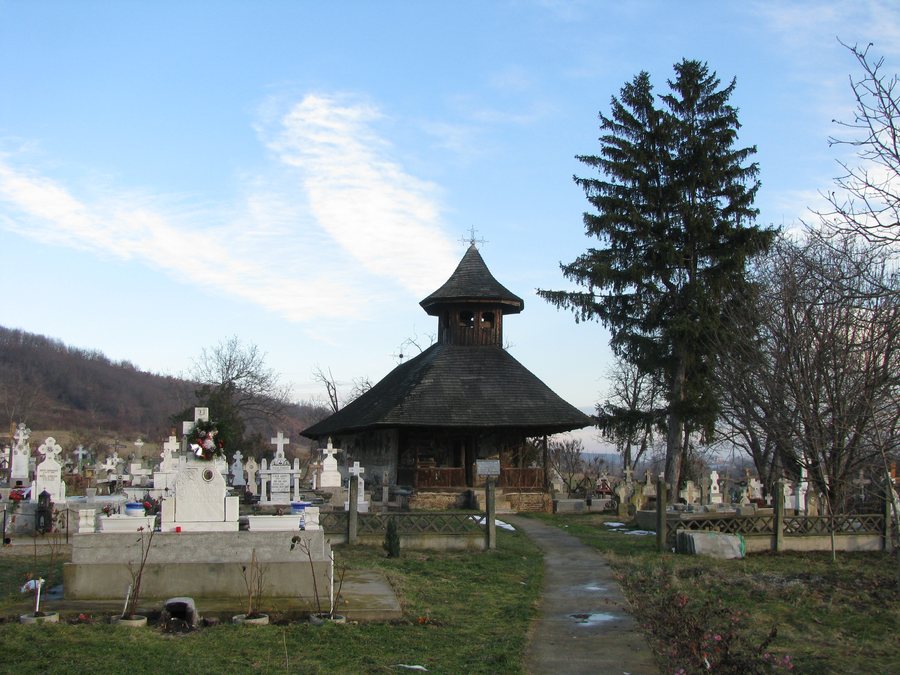 File:Biserica de lemn Nasterea Domnului din satul Glambocata Deal comuna Leordeni judetul Arges Romania 1.jpg
Photo: David Chifiriuc via Source, CC BY 3.0
File:Biserica de lemn Nasterea Domnului din satul Glambocata Deal comuna Leordeni judetul Arges Romania 1.jpg
Photo: David Chifiriuc via Source, CC BY 3.0
Another notable sacred building is the wooden church of Glâmbocata-Deal (Călugărița) in the municipality of Leordeni in Argeș County. It is dedicated to “Nașterea Domnului”, is an architectural monument of national interest, and dates from 1746. The church served as the place of worship of a nuns’ skete.
The present-day church of Leordeni-Cretulescu was built between 1858 and 1861 in place of an older church dating from 1745. Its structure has a trilobate floor plan with an altar area, naos, pronaos and vestibule. Two towers complete the complex: one stands above the pronaos, the other above the naos.
The dates reveal different historical layers: the older church from 1745, the new construction from 1858 to 1861, and the wooden church from 1746 represent different building periods. Comparisons therefore rely not only on the names of the places, but also on their respective functions and the stated architectural forms.
The Lahovary-Gussi manor ensemble is designated as an ensemble dating from the 17th to the 19th century. The church of Leordeni-Golescu was founded on 15 August 1835 by the grand boyar Iordache Golescu. For cultural classification, the sacred buildings can be compared by their period of origin, architectural form and former function.
The ensemble and the churches can thus be viewed as different architectural testimonies: for the manor ensemble, the period from the 17th to the 19th century is specified, while for the churches, individual construction years, the founder and spatial elements take center stage.
Nature and Landscape
The Lahovary-Gussi manor ensemble includes a 19th-century park. The vegetation in Leordeni includes forests of pedunculate oak, sessile oak and Turkey oak, as well as floodplain meadows with alders and willows. Forested areas and wet meadow areas therefore exist side by side as different landscape types.
The landscape descriptions distinguish between forests and floodplain meadows based on the tree species mentioned in each case. The architectural complexes, the park and the described vegetation types thus complement one another as several distinct factual topics, without implying any particular use or activity.
Leordeni’s autumn food culture included grapes, țuică and wine, which were also offered for sale. This seasonal reference adds a regional food aspect to the architectural and landscape themes.
Places of Interest in the Surrounding Area
The Casa Memorială “Dinu Lipatti” is a historic site in the immediate vicinity of Leordeni. Mânăstirea Pătroaia Deal is a monastery in the area surrounding Leordeni. Biserica Naşterea Maicii Domnului is a church in the immediate vicinity, while Biserica Baloteasca is a church in the area surrounding Leordeni.
La Fântâna de la Cruce is a spring in the area surrounding Leordeni. Dealul Călugăriţa is a hill in the immediate vicinity. Dealul Glâmbocelul and Dealul Glodu are hills in the area surrounding Leordeni.
The listed destinations therefore include sacred sites alongside a spring and several hills. The different designations show that the surrounding area encompasses both cultural and landscape-related points of interest.
Other Destinations
Rogojina, Argeșelu, Călinești, Linteşti, Bradu, Băiculeşti, Podu Dâmboviței, Pietroșani
To the higher-level travel overview: Argeş.

