
Bunești – Fortified Church, Scroafa and Via Transilvanica
Accommodation in Bunești
Bunești can be explored in particularly tangible ways through its fortified church, the Scroafa River and the paths in the surrounding area. The fortified ensemble of the Evangelical Fortified Church of Bunești comprises a church with a rectangular nave and a polygonal altar apse, as well as a fortified complex with four towers, a gate tower, a zwinger and storage chambers.
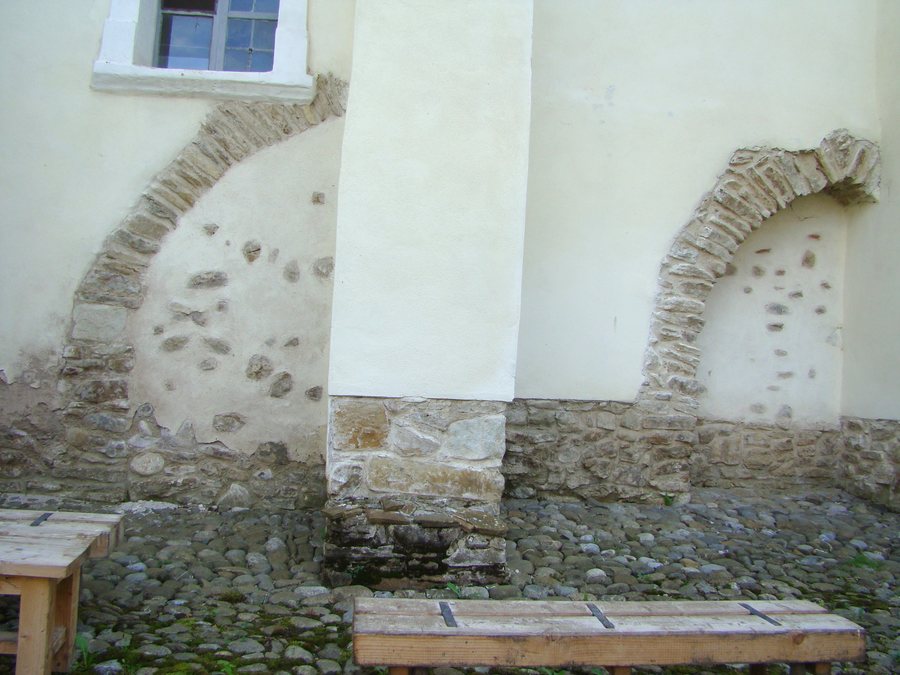 File:RO BV Biserica evanghelica din Bunesti (109).jpg
Photo: Țetcu Mircea Rareș via Wikimedia Commons, CC BY-SA 4.0
File:RO BV Biserica evanghelica din Bunesti (109).jpg
Photo: Țetcu Mircea Rareș via Wikimedia Commons, CC BY-SA 4.0
Culture and History
The Evangelical Fortified Church of Bunești was first mentioned in 1356 and built as a three-aisled basilica in the transitional style from Romanesque to Gothic. Inside, a 1.5-square-metre fragment of a medieval fresco has been preserved; there are also additional fragments and decorations.
When compiling your interests, you can distinguish between culture, religious sites, landscape and physical activity. It remains open whether you focus on one area or combine several topics.
The Biserica Fortificata Viscri is a church in the immediate vicinity of Bunești. The Biserica Ortodoxă Beia, the Biserica Lutherană Beia and the Biserica Paloş are churches in the area around Bunești.
For your own planning, it is worth treating the immediate vicinity, the surrounding area and the wider regional area as different spatial ranges.
Landscape
The Scroafa River flows through the villages of Bunești and Criț and empties into the Târnava Mare.
Piscul Frumos is a peak in the area around Bunești. Vârful Muşuroiului is also a peak in the area around Bunești. Vârful Pietrişului and Vârful Viilor are peaks in the wider regional area around Bunești.
The different spatial references help you organize the landscape points mentioned according to their respective range, rather than treating them as destinations that are equally close.
Religious Sites
At Mănăstirea Sfântul Mare Mucenic Gheorghe Bunești, there is a Stations of the Cross with 14 stations on one of the hills overlooking the monastery complex, where the faithful pray.
You can take religious sites and landscape points into account separately in your personal planning, without forcing the different topics into a single category.
To compare hotels in Bunești, compare the travel dates, room category and cancellation conditions on the offers page. Especially when planning on a budget, differences between offers remain easy to assess. Check the three fields against your travel dates and priorities before choosing a specific option.
Routes
For your own planning, roads, routes and cycle paths can be considered as different types of ways.
The municipality of Bunești is crossed by the European route E60, which connects Brașov and Târgu Mureș.
One variant of Via Transilvanica leads from 500 metres after the exit from Roadeş through the meadow floodplain of the stream and then along agricultural paths to Bunești.
A dedicated cycle path runs along the Scroafa stream between Bunești and Criț.
Further destinations: Drumul Carului, Rupea, Cincșor, Deutsch-Weißkirch, Recea, Viștișoara, Zărneşti, Râşnov
To the higher-level travel overview: Brasov.

.jpg)