
Păltiniş: Churches, Archaeology and Fossil Site
Accommodation in Păltiniş
Four clearly distinguishable thematic areas come together in Păltiniş: religious architecture, archaeology, palaeontology and culinary culture. For visitors with different interests, they can be considered separately and compared with one another.
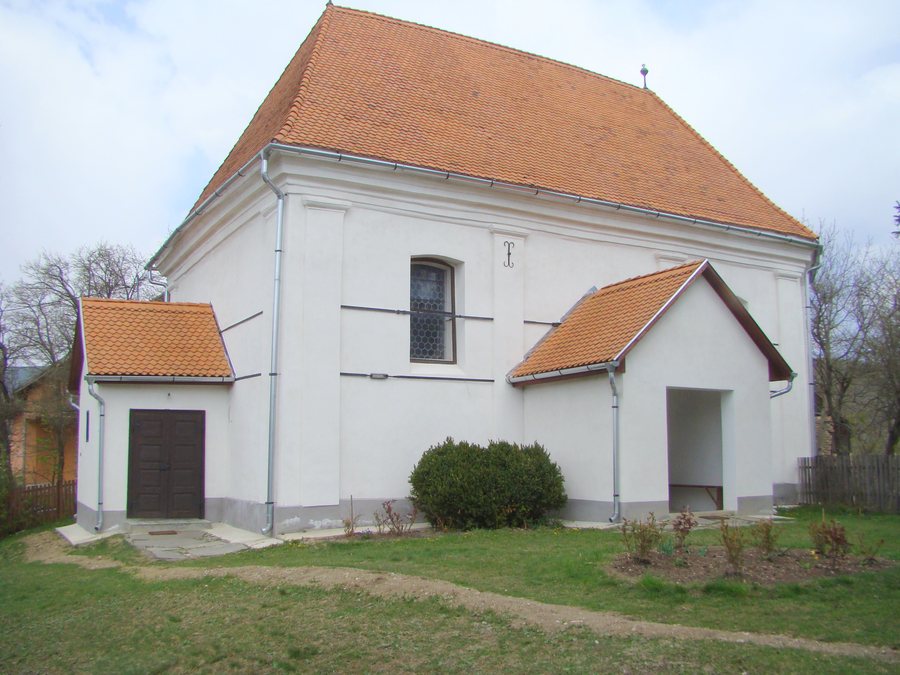 File:Biserica reformata din Paltinis.jpg
Photo: Țetcu Mircea Rareș via Wikimedia Commons, CC BY-SA 4.0
File:Biserica reformata din Paltinis.jpg
Photo: Țetcu Mircea Rareș via Wikimedia Commons, CC BY-SA 4.0
When comparing hotels in Păltiniş, you can review travel dates, room category and cancellation conditions side by side on the respective offer pages. The three details represent different parts of your personal travel planning and can be considered together before making a decision.
Other places
Other place pages: Oravița, Eftimie Murgu, Sasca Montană, Reşiţa, Berzasca, Franzdorf, Novákfalva, Poiana Marului
Culture
The Church of the “Naşterea Maicii Domnului” and “Sfântul Arhidiacon Ştefan” in Păltiniş was built in 1811. The parish church of Păltiniş was built in the Baroque style from stone and bricks. Its wall paintings were executed in oils in 1906 by Bartolomeu Delliomini from Caransebeş.
The “Învierea Domnului” Church in Delineşti was built in 1838. The present-day church of Delineşti was built in the Baroque style, stands on a hill and is surrounded by a stone wall. In 1869, the painter Mihail Velceleanu from Vasiova decorated the church with frescoes.
The church in Rugi was also built on a hill. Today it stands in isolation on the edge of the village, after the villagers moved their houses farther down into the valley. The year of construction, building materials, painting technique and topographical location provide several objective lines of comparison for these churches. These features allow architecture, painting and location to be considered separately.
On the themed route “The Roman Roads”, Caput Bubalis near Păltiniş in Banat forms part of the connection to Tibiscum near Jupa-Caransebeş.
Archaeology
The medieval rural settlement at Dâmbul Bisericii lies northwest of Păltiniş. It dates from the Middle Ages, from the 8th to the 13th century. The Păltiniş-Topliţa archaeological area includes settlement and burial remains from the Bronze Age, the Neolithic and the Hallstatt period.
The Hallstatt-period necropolis of Păltiniş lies 100 metres southwest of the settlement at Dâmbul Bisericii. Several periods and the clearly stated distance between the two archaeological points allow for a separate chronological and spatial classification.
Nature
Romanian protected-area legislation lists the Delineşti fossil site under the municipality of Păltiniş, with an area of 4 hectares. Within the municipality of Păltiniş, the Delineşti fossil site is a nationally protected palaeontological area.
The Delineşti fossil reserve lies on the Ogașul Ursului in the catchment area of the Pogăniș Valley northeast of Delineşti and contains fossils from the Tortonian. The area designation, protection status, landscape context and geological dating each place a different emphasis within the same natural-history subject.
Culinary culture
On 20 July 2025, a Ukrainian culinary event took place in the village of Cornuţel, which belongs to Păltiniş. It included Ukrainian dumplings called “Perohe”, filled with cheese or potatoes, as well as sarmale filled with cornmeal and also known as “holopci melaini”. The different fillings clearly distinguish the two dishes within this single event.
For the higher-level travel overview: Caraş-Severin.

