
Moldovenești: Piatra Secuiului, Cycling Route and History
Accommodation in Moldovenești
Moldovenești can be viewed from several perspectives: the Piatra Secuiului peak, cycling route 01MB45, and historical as well as everyday cultural heritage. For planning your day, you can consider these focal points separately and decide what type of visit should take priority. There is no need to follow a fixed order; nature, local history and rural culture can be classified as different themes alongside one another.
 File:RO CJ Moldovenesti 14 retușat.jpg
Photo: Țetcu Mircea Rareș via Wikimedia Commons, CC BY-SA 4.0
File:RO CJ Moldovenesti 14 retușat.jpg
Photo: Țetcu Mircea Rareș via Wikimedia Commons, CC BY-SA 4.0
A personal selection can start with the themes: nature and activity offer a different perspective from architectural history or everyday culture. You can consider these perspectives separately rather than deriving a single, uniform expectation of the place from them. When comparing different interests, you can first distinguish by content: a route, a peak, religious and fortification-related buildings, and a museum each place the focus elsewhere. This structure remains open and does not prescribe an itinerary.
Nature
Piatra Secuiului is a 1,171 m-high peak in the Trascău Mountains on the boundary between the municipalities of Moldovenești and Rimetea. The Moldoveneşti – Piatra Secuiului – Moldoveneşti cycling route (01MB45) begins in Moldoveneşti next to the local tourist information centre. It leads via Pietroasa and Podeni, climbs to Piatra Secuiului and returns to Moldoveneşti. The two outdoor themes can be given different weight: a specific cycling tour on the one hand, and a named mountain peak on the other.
Culture and History
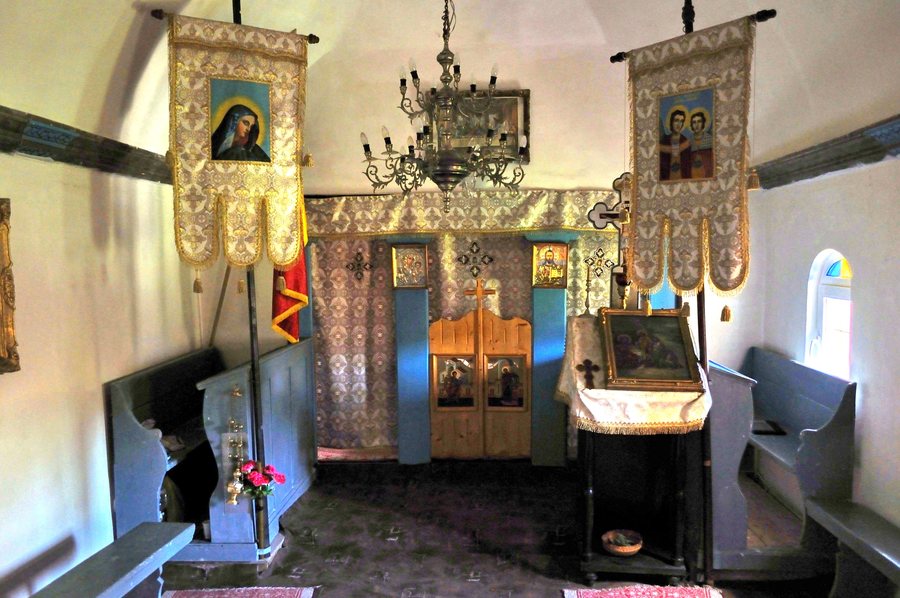
The architectural heritage includes Castelul Jósika, a Baroque-style building. The Unitarian church of Moldovenești is a protected historic monument. Cetatea Moldovenești was built on the site of an older Roman fort associated with the defence of the gold transport route from the Apuseni Mountains.
Muzeul Satului Moldovenești presents the most important features of a traditional household in an exhibition space within a traditional house. According to an inscription at the cellar entrance, this house was built in 1823. The museum opened in summer 2019 and houses a collection of traditional objects from local everyday life, donated by residents.
For your cultural selection, you can distinguish between architecture, the fortification-related historical context and the documented everyday life of a traditional household. The opening, the house inscription and the residents' donations mark three different levels: the museum's chronological context, the age of the exhibition building and the origin of the collection. This distinction helps ensure that the building and its contents are not understood as the same historical element.
Visitor Information
The local tourist information centre of the municipality of Moldovenești assists visitors and provides information about attractions in Moldovenești and the surrounding areas. The restored Unitarian church of Várfalva can be visited by prior arrangement.
When comparing hotels in Moldovenești, you can compare travel dates, room category and cancellation policies side by side. Such a comparison keeps the offer details transparent and bases your accommodation decision on your actual travel dates and the desired range of services.
Other Places
Other local pages: Muntele Băişorii, Cluj-Napoca, Apahida, Săvădisla, Câmpia Turzii, Turda, Frata, Nădăşelu
For the higher-level travel overview: Cluj.

