
Discover Turcineşti: History, Landscape and Culture
Accommodation in Turcineşti
Turcineşti combines local history with a landscape shaped by wooded hills and floodplains. Historic architecture, a cultural route and recurring events offer different starting points for planning your trip.
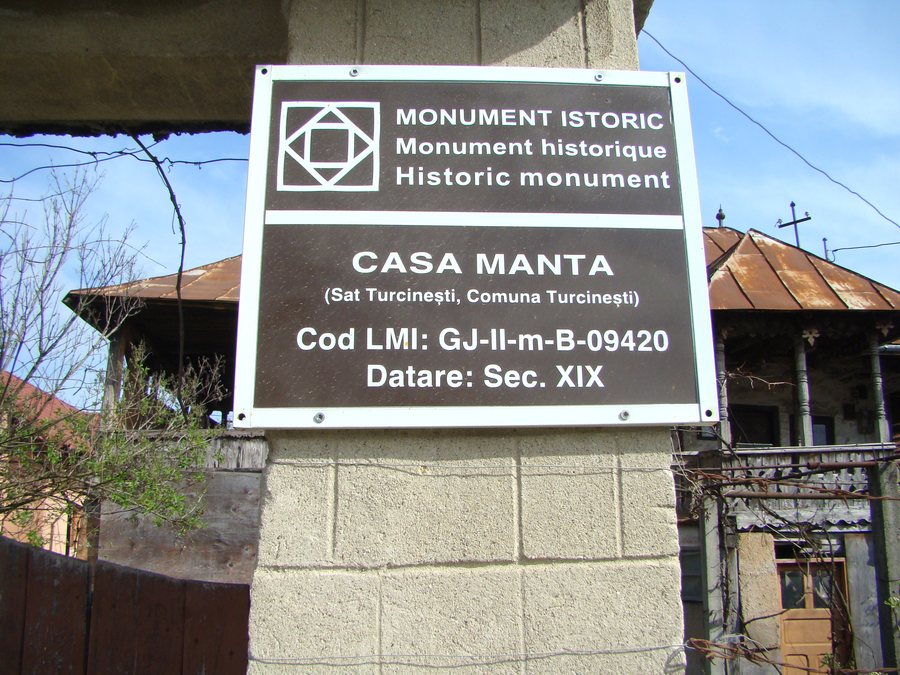 File:RO GJ Casa Manta din Turcinesti (1).jpg
Photo: Țetcu Mircea Rareș via Wikimedia Commons, CC BY-SA 4.0
File:RO GJ Casa Manta din Turcinesti (1).jpg
Photo: Țetcu Mircea Rareș via Wikimedia Commons, CC BY-SA 4.0
Key facts about Turcineşti
- Turcineşti is first mentioned in a document dated 5 August 1424 and also in a document dated 28 October 1428.
- Casa Manta is listed as a historic monument under LMI code GJ-II-m-B-09420 and dates from the 19th century.
- The municipality's landscape consists mainly of wooded hills and floodplains formed by the local waterways.
- The “Târgu Jiu–Turcineşti–Schela–Bumbeşti-Jiu/Petroşani” cultural route passes through Turcineşti.
What historic traces can you find on site?
The two mentions dated 5 August 1424 and 28 October 1428 place Turcineşti within a long local history. Casa Manta provides a specific architectural reference. The building is listed as a historic monument and dates from the 19th century. Those interested in regional architectural history can take this aspect into account when planning their trip.
The historical perspective can be combined with the landscape. The municipality is shaped mainly by wooded hills and floodplains formed by the local waterways. In Turcineşti, therefore, the focus is not only on individual cultural themes but also on a rural landscape character.
How can Turcineşti be incorporated into a cultural trip?
The “Târgu Jiu–Turcineşti–Schela–Bumbeşti-Jiu/Petroşani” cultural route passes through Turcineşti. For a round trip, the village can be included as one section of this route. The route name also mentions Târgu Jiu, Schela and Bumbeşti-Jiu/Petroşani, providing geographical orientation for further planning.
The “În vale pe Cărtior” folklore festival is also one of the cultural events mentioned. The first edition took place on 27 June 2024 at Casa Cartienilor and the Turcineşti Cultural Centre; the programme at the Cultural Centre included a performance of the traditional Hora Satului. The 2025 edition was held on 11 October at Casa Cartianu in Turcineşti. If you are looking for accommodation around a specific date, you should plan these dates separately from general sightseeing in the area.
Which events shape the annual planning?
In Rugi, the open-air event Ziua Cireșului takes place every year in June. In addition, Zilele Comunei Turcinești is held every year from 1 to 2 October. These recurring annual dates provide a fixed framework for travel planning. The folklore festival, by contrast, took place on 27 June 2024 and 11 October 2025. If you are looking for accommodation, you can use the event that is decisive for your trip as a guide when making your selection.
Which other destinations can you compare?
If you would like to compare different destinations, you can also find information about Muşeteşti, Săcelu, Dobriţa, Târgu Jiu, Runcu, Aninişu din Deal, Rânca and Novaci. Use the respective local information to define the focus of your trip more precisely.
FAQ
When is Turcineşti first mentioned?
Turcineşti is first mentioned in a document dated 5 August 1424. A further mention dates from 28 October 1428.
What is Casa Manta?
Casa Manta is a historic monument in Turcineşti. It is listed under LMI code GJ-II-m-B-09420 and dates from the 19th century.
What type of landscape characterizes the municipality of Turcineşti?
The landscape consists mainly of wooded hills and floodplains formed by the local waterways.
Which cultural route passes through Turcineşti?
The “Târgu Jiu–Turcineşti–Schela–Bumbeşti-Jiu/Petroşani” cultural route passes through Turcineşti.
Which events take place regularly?
Ziua Cireșului takes place every year in June in Rugi. Zilele Comunei Turcinești is held every year from 1 to 2 October.
To the overarching travel overview: Gorj.

.jpg)