
Ieud – Wooden Churches, Muzeul Satului and Historical Testimonies
Accommodation in Ieud
The Biserica din Deal stands in the village cemetery on a rocky slope by the Ieudișor stream. The Muzeul Satului din Ieud is housed in a former peasant homestead dating from 1890 and includes a collection of traditional garments as well as tools typical of this area.
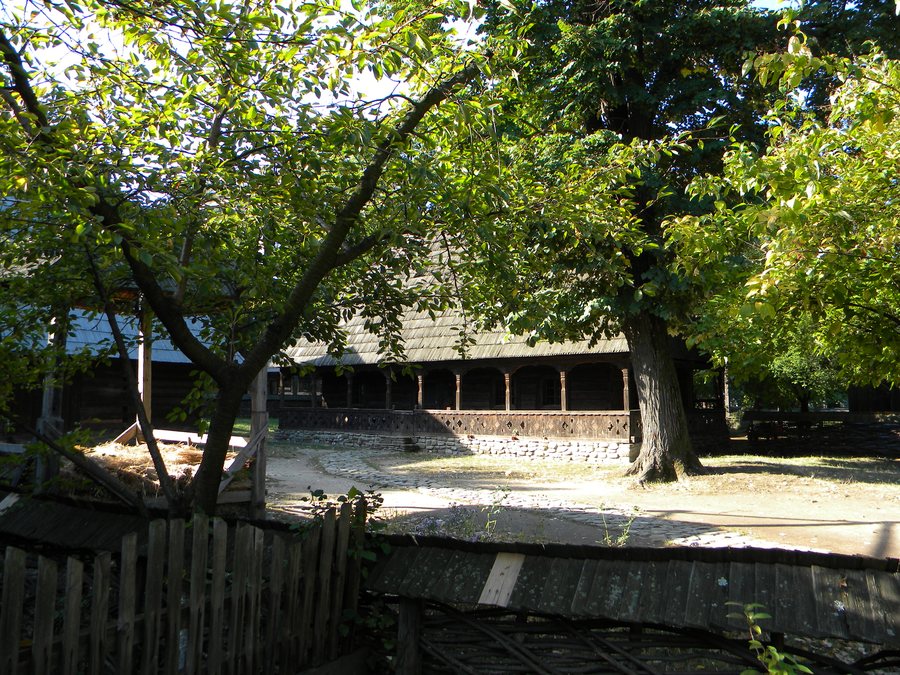 File:Bucuresti, Romania, Muzeul National al Satului; B-II-a-A-18994 (Casa in comuna Ieud-Maramures).JPG
Photo: Britchi Mirela via Source, CC BY-SA 3.0 ro
File:Bucuresti, Romania, Muzeul National al Satului; B-II-a-A-18994 (Casa in comuna Ieud-Maramures).JPG
Photo: Britchi Mirela via Source, CC BY-SA 3.0 ro
When comparing hotels in Ieud, you can check travel dates, room category and cancellation policies side by side on the respective offer pages. These three fields are among the specific details that can be considered separately before making a booking decision.
Culture and Everyday History
Access to the Muzeul Satului din Ieud is through a monumental oak gate with a fir-shingle roof; the gate is decorated with carved rope and geometric motifs. The most common ornamental motifs on the gravestones in the Jewish cemetery include the lion, the bird, the griffin, the menorah, the tree of life, the blessing hands and the Torah. The gravestones in the Jewish cemetery are remarkable for their shape and size, as well as for the interplay between inscription and ornamentation.
Churches and Architectural History
The Biserica Ieud-Deal complex includes a staircase leading to the tower, made from a single piece of wood. The complex also includes a Way of the Cross with 14 small masonry stations. The Biserica din Șes houses a valuable collection of reverse-glass icons from Nicula and other centers of icon painting in Transylvania.
The Mănăstirea Ieud, the second wooden church in Ieud, is also known as the Church in the Plain or Valley Church and was built in 1717 after the last Tatar invasion. Due to its spiritual, architectural and cultural values, the Mănăstirea Ieud is designated as a historic monument. Dendrochronological studies date the construction of the Biserica de lemn „Naşterea Maicii Domnului” din Ieud Deal to the first decade of the 17th century (1611–1621).
Written Records and Dates
The “Manuscrisul de la Ieud” was discovered in 1921 in the attic of the old church. The first Romanian school in Maramureș was located in Ieud. The “Codicele de la Ieud” is considered the oldest Romanian religious book and is dated to 1391. In Comuna Ieud, the cultural event “Întâlnirea cu Fiii satului” takes place every year on the first Sunday after August 15.
For your planning, the topics can be arranged according to interest: architectural history, religious art, everyday culture, cemetery ornamentation and written records stand alongside one another as different focal points. The local visit and the regional tour represent two different scales, without prescribing a fixed order. Those who wish to assign different importance to historical details can consider years, names and architectural features separately.
Village Outskirts and Regional Route
On the outskirts of the village, the traditional workshop is located in front of the new wooden church, on a narrow road beyond the water. A tour through historic Maramureș leads from Baia Mare via Ieud, Botiza and Poienile Izei.
More Destinations
Băile Borşa, Leordina, Săliștea de Sus, Baia Mare, Vadu Izei, Lăpușel, Onceşti, Recea
To the higher-level travel overview: Maramureş.

.JPG)