
Hetiur: Churches, Archaeology and Panorama
Accommodation in Hetiur
In Hetiur, sacred architectural history and archaeological evidence converge. The Evangelical Church of “Nașterea Maicii Domnului” was built in the 15th century in the Gothic style. Biserica Buna Vestire was built in 1808–1809; its origins are connected with the emergence of a Romanian community.
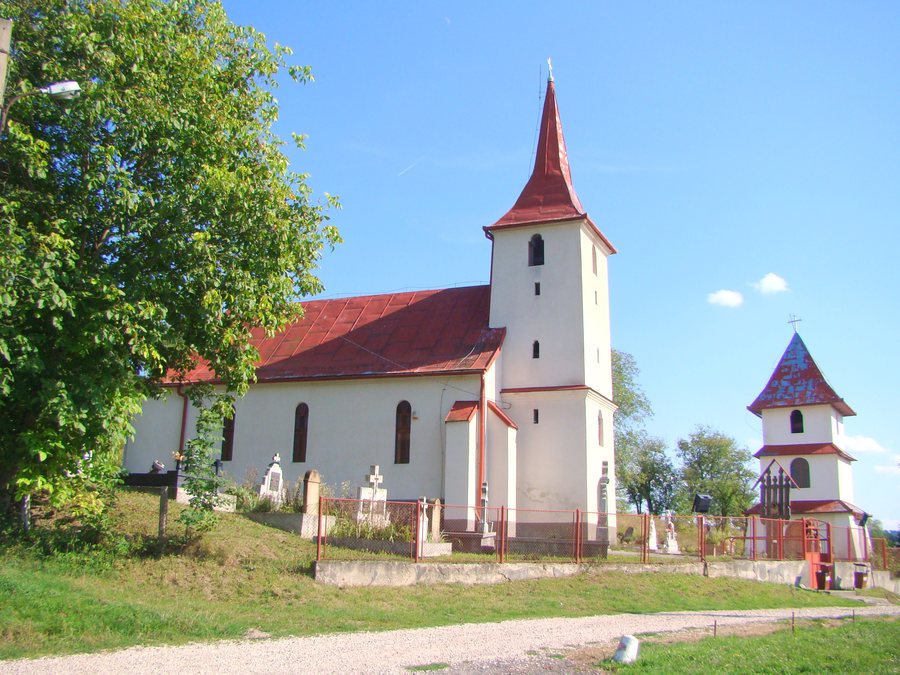 File:RO MS Biserica Buna Vestire din Hetiur (16).jpg
Photo: Țetcu Mircea Rareș via Wikimedia Commons, CC BY-SA 4.0
File:RO MS Biserica Buna Vestire din Hetiur (16).jpg
Photo: Țetcu Mircea Rareș via Wikimedia Commons, CC BY-SA 4.0
Culture and History
Biserica Buna Vestire is built of stone and brick and has an old iconostasis, painted in 1814. Settlement traces from the 2nd century, dating from the time of Emperor Hadrian, have been identified in Hetiur. Dacian objects and objects from the La Tène culture have also been found. The church in Hetiur is a prominent landmark beside the national road.
The two churches emphasize different aspects: the Evangelical Church is defined by its Gothic design and its 15th-century origins, while at Biserica Buna Vestire, the construction years, materials and painted iconostasis take center stage. The archaeological evidence broadens this spectrum with settlement traces and groups of finds from different periods.
The historical information offers several ways of approaching Hetiur. Architectural features, religious furnishings and archaeological finds represent different levels of observation. You can read these topics separately and then compare them without combining the information into a single period. This distinction records whether a piece of information concerns a building, its furnishings or a find in Hetiur.
Landscape
In the wider regional surroundings of Hetiur are the peaks Vârful Spre Cetate and Vârful Pietros. The hills Dealul Cărărilor and Dealul Nucilor are also located in the wider regional surroundings.
The churches in the wider regional surroundings of Hetiur include Capela Ortodoxă Curciu, Biserica Sfânta Treime and Biserica Fortificată Lutherană Curciu. Peaks, hills and churches thus form three clearly distinguishable subject areas in the wider regional surroundings of Hetiur.
The regional overview can be read according to landscape forms and sacred sites. For your planning, you can compare the two subject areas separately; the list does not indicate any ranking, but rather different types of information. The personal weighting is left to your own planning.
View
Belvedere cu cruce offers a 360-degree panorama. Together with the churches and archaeological evidence, the site therefore encompasses cultural, historical, landscape and viewpoint-related facets.
When staying at a hotel in Hetiur, travel dates, room category and cancellation conditions apply to different parts of the selection: they relate to the period, type of accommodation and flexibility. The three details therefore mark different decision-making levels.
More destinations
Other destinations in the same overview include Saschiz, Gorneşti, Trei Sate, Schaas, Ungheni, Lunca Bradului, Târnăveni, Weichseldorf.
Nature
The downy oak forests along the Târnava Mare form a protected area of Community importance (SCI) in the Târnava Mare region. The area includes the administrative territories of the city of Sighișoara and the communes of Bălăușeri, Daneș and Nadeș, as well as the city of Dumbrăveni and the commune of Hoghilag.
The regional information about nature connects the protected area with an administrative classification. You can consider both levels separately: on the one hand, the protected area is the focus as a nature-related topic; on the other, its assignment to cities and communes. This combination organizes the landscape both according to its character and according to the spatial administrative framework. The two perspectives complement the regional classification with different viewpoints.
For the overarching travel overview: Mures.

.jpg)