
Eremitu: Limes, Niraj and Mountain Landscape
Accommodation in Eremitu
Eremitu is located along the upper reaches of the Niraj stream at an elevation of 560 metres, on the southwestern side of the Gurghiu Mountains, at the foot of Mount Becheci. The Niraj River runs through the municipality, which can be reached via county road 153A.
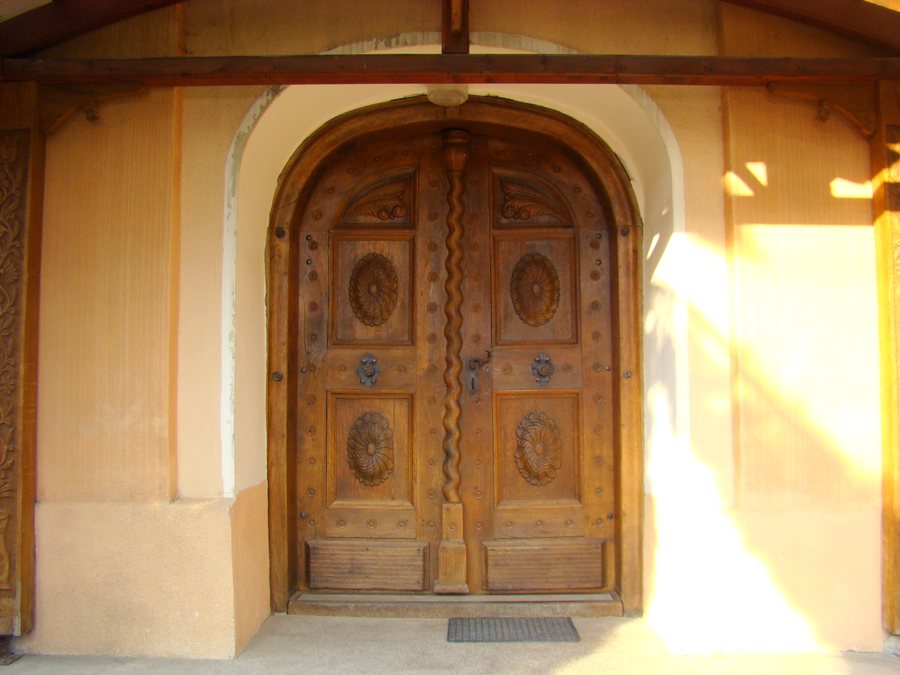 File:Biserica romano-catolică din Eremitu (13).jpg
Photo: Țetcu Mircea Rareș via Wikimedia Commons, CC BY-SA 4.0
File:Biserica romano-catolică din Eremitu (13).jpg
Photo: Țetcu Mircea Rareș via Wikimedia Commons, CC BY-SA 4.0
Landscape
Visitors can hike through the surrounding forests to Lacul cu Arini. Traces and ruins of Cetatea lui Vityál, which may have belonged to the surrounding fortifications, can still be found in these forests today. According to archaeologists, this fortification was built in the Middle Ages on the foundations of a Bronze Age fortification.
History
The Roman road Drumul lui Traian led from Nirajul Mare to the Călugăreni fort; its paved roadway was approximately five metres wide. The Roman archaeological site at Călugăreni is part of the extensive defensive system of the Roman Empire known as the Limes. One of the most significant monuments at the site to have survived to the present day is a stone fort.
The Călugăreni Archaeological Park was established in 2015 and is managed by the Research Centre for the Roman Limes of the Mureș County Museum. Among other features, the park offers the Busola viewpoint. The TIME BOX exhibition pavilions present aspects of Roman civilian and military daily life, as well as information about the archaeological excavations. In the development project for the Călugăreni Archaeological Park in the municipality of Eremitu, Mureș County, its Roman heritage is associated with the borders of Roman Dacia, which were added to the UNESCO World Heritage List in 2024. The Călugăreni Limes Park enables first-hand experiences, interactive activities and close contact with the cultural landscape of the Roman Limes.
Culture
The Franciscan monastery and Franciscan church in Călugăreni are among the most significant religious monuments in the Niraj Valley. The present-day building of the Franciscan monastery can be dated approximately to 1634. From 1669 onwards, a grammar school operated there for more than a century. The cross of the Roman Catholic church in Eremitu was erected between 1808 and 1812 and may have been created in the 14th century.
Teatrul Șură has taken place annually in Călugăreni since 2002, with regular music and dance events held there. The R-Festival (Roman, Renaissance, Rural) is also held annually in Călugăreni. The Parada baloanelor cu aer cald, a hot-air balloon parade, also takes place in the municipality of Eremitu.
Getting Around
The narrow-gauge railway section between Sovata and Câmpu Cetății was restored in 2011 and is used for tourism. In summer, visitors can travel 14 kilometres to Câmpu Cetății on the Mocănița. The Mini Niraj visitor centre is located in the building at the end of the narrow-gauge railway and displays a detailed model of the entire Niraj Valley. At some locations in Câmpu Cetății, visitors can catch trout from the sites’ own ponds, have them prepared on site or take them home. When comparing different types of activity, the forest path, railway, exhibition and viewpoint can be considered separately.
Further destinations: Târnăveni, Gorneşti, Hetiur, Reen, Weissenkirch, Weichseldorf, Burgfeld, Răstolița
To the higher-level travel overview: Mures.

.jpg)