
Câmpina: Museums, Churches and Hilltop Views
Accommodation in Câmpina
Câmpina can be explored through art, places of remembrance, sacred buildings and the surrounding landscape. Reconstructed interiors, archival material, Bronze Age finds and named peaks offer different ways of approaching a place whose themes can be clearly compared.
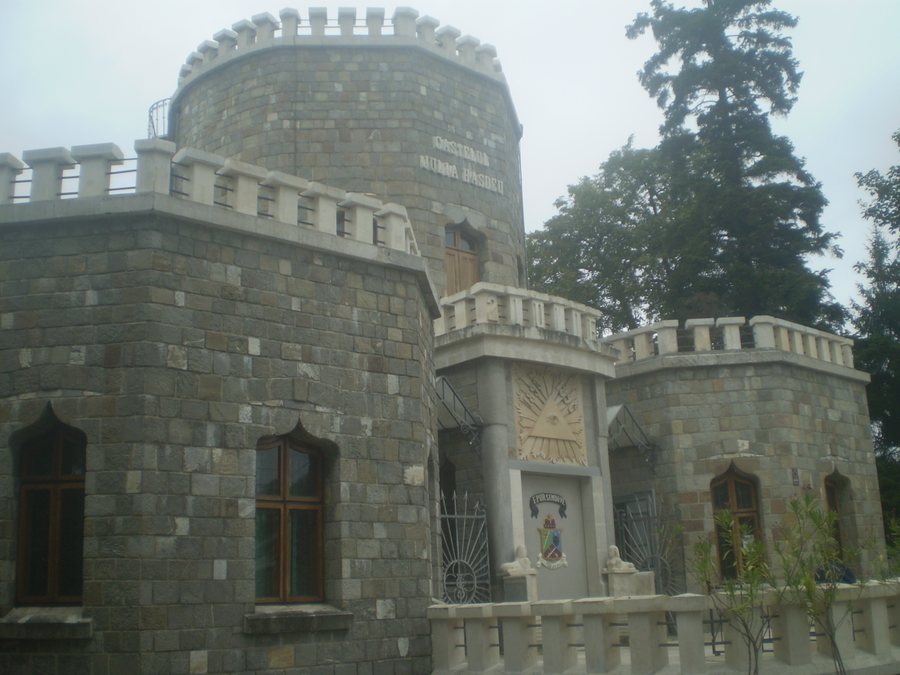 File:Castelul Julia Haşdeu din Câmpina.jpg
Photo: RobertCodescu via Wikimedia Commons, CC BY-SA 3.0 ro
File:Castelul Julia Haşdeu din Câmpina.jpg
Photo: RobertCodescu via Wikimedia Commons, CC BY-SA 3.0 ro
For your own planning, a thematic comparison is more useful than a ranking. You can distinguish between a reconstructed artists’ house, documented family collections, sacred spaces, archaeological finds and landscape viewpoints, and weigh the areas of focus according to the time available and the budget planned.
Culture
The Nicolae-Grigorescu Memorial Museum presents important works by the artist in the original setting in which they were located, and reconstructs the interiors as well as the entire house. The exhibition at the B.-P.-Hașdeu Memorial Museum includes family photographs, documents, manuscripts, furniture, personal belongings, old books, portraits, the archive of Bogdan Petriceicu Hașdeu, his designs for Iulia Hașdeu Castle, as well as first editions of his works and those of Iulia Hașdeu; in total, there are around 300 exhibits.
The Slobozia Parish Museum was opened in 2022 by the “Sf.Nicolae” Orthodox Parish. It is housed in the basement rooms of the former metochion of Sinaia Monastery; the former metochion now serves as the parish house. On display are archaeological finds from a unique Bronze Age necropolis containing remains of the three Tei, Noua and Monteoru cultures.
Casa cu Grifoni was the first electrically lit building in Câmpina. After the First World War, it was assigned to the Școala de Maiștri Sondori și Rafinori. The school had been founded in Câmpina in 1904 and was considered the first school of its kind in the world.
The “Schițe și desene” exhibition by Nicolae Grigorescu in Câmpina presents 202 sketches of portraits, humorous drawings, studies of the War of Independence, village life, animals and landscapes.
The weighting remains open when planning the trip. Some visitors place greater emphasis on art and biographies, while others focus on historic interiors, archaeology or landscape; no fixed order is prescribed. The themes can be considered independently and only connected with one another afterwards.
Landscape
The peaks of Satul Banului, La Copacul Ocolit, Gâlma cu Corni and Tulici are located around Câmpina. The churches Biserica Sfinţii Voievozi, Biserica Ortodoxă Cocorăştii Caplii, Biserica Sfânta Treime and Biserica Ortodoxă Tufeni are also located in the surrounding area.
Muscel Hill, which is 550 metres high, offers views of Câmpina and the surrounding landscape.
Parcul Soceram is located on the Muscel Plateau at the northern exit from Câmpina. It offers opportunities for relaxation, sports, leisure and public dining.
When comparing hotels in Câmpina, you can check travel dates, room category and cancellation conditions side by side on the offer pages. These three details help you organise your own travel plans based on the specific offer details before choosing an option.
More Places
Other places that you can access from this page include Azuga, Buşteni, Măgurele, Aluniş, Homorâciu, Manastirea Suzana, Provița de Sus and Bucov.
For the higher-level travel overview: Prahova.

