
Sânpetru Almașului – Churches, Settlement Traces and Rural Architecture
Accommodation in Sânpetru Almașului
Sânpetru Almașului is a village set back from the main roads, with buildings closely connected to the natural surroundings. For your own planning, you can read the information separately by culture, village structure, surroundings and routes.
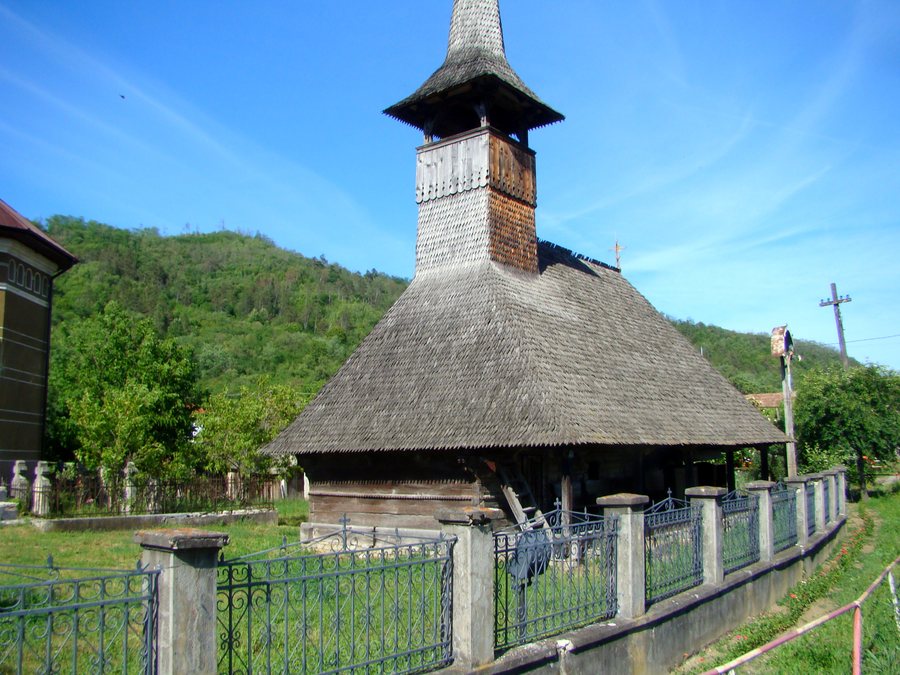 File:Biserica de lemn din Sânpetru Almaşului 2025 (3).jpg
Photo: Țetcu Mircea Rareș via Wikimedia Commons, CC BY-SA 4.0
File:Biserica de lemn din Sânpetru Almaşului 2025 (3).jpg
Photo: Țetcu Mircea Rareș via Wikimedia Commons, CC BY-SA 4.0
Culture and History
The wooden Church of the Holy Apostles Peter and Paul was built at the beginning of the 17th century from five massive oak beams on the site of an older church dating from 1494. The building thus combines an early date for the present church with a reference to an older place of worship.
Archaeological settlement traces are also among the specific local points of reference. A Paleolithic settlement is located at Dâmbul Cremenii on the right slope of the Valea Strâmba valley, about 1 km east of the village. The Neolithic settlement at Cârcu is recorded in Sânpetru Almașului.
Among the villages mentioned, Sânpetru Almașului has the greatest number of wooden wayside crosses. Those viewing the place through the lens of its history can thus distinguish between sacred architecture, prehistoric settlements and religious signs in the rural landscape.
Rural Architecture
Sânpetru Almașului is characterized by barns with an adjoining ancillary room built under the same roof. The outbuildings are arranged in groups. Both details draw attention to the village’s structural organization rather than only to individual detached buildings.
For a personal selection of priorities, these features can be considered independently of the churches and settlement traces. This keeps the rural structure recognizable as a topic in its own right.
Surroundings
The Mănăstirea Strâmba Monastery and the Dealul Bălanului summit are located in the surroundings of Sânpetru Almașului. Also nearby are the Biserica Sfinţii Arhangheli church, the Biserica Ortodoxă Nouă Racâş church, the Biserica Baptistă Racâş church and the Vârful Ţigla summit.
Dealul Dumbrava hill is in the immediate surroundings of Sânpetru Almașului. The Vârful Cucului summit lies in the village’s wider regional surroundings. You can take the different spatial connections into account separately when planning your trip and comparing local destinations with those farther afield.
Around Sânpetru Almașului, religious sites therefore stand alongside summit and hill landscapes. The names of the destinations provide clear starting points for thematic preparation, without combining the different ranges into a single excursion destination.
Routes and Pilgrimage Connections
County road DC 50 connects Hida with Sânpetru Almașului and Păduriș. Access to the Mănăstirea Strâmba Monastery leads from Zalău via Românași, Sâmnihaiu Almașului, Hida and Sânpetru Almașului.
The “Calea Precistii” pilgrimage is a prayer route dedicated to the miraculous icon “Dulcea Sărutare”, which is kept at the Mănăstirea Strâmba Monastery. Alongside the architectural and landscape points of reference, this provides an explicitly spiritual connection to the route.
When comparing a hotel for Sânpetru Almașului, you can review travel dates, room category and cancellation conditions together. If your plans bring together cultural sites, landscape connections and a prayer route, these details will help you keep the trip’s time and financial framework clearly in view.
Other Places
Cuzăplac, Vălişoara, Boghiş, Crasna, Șimleu Silvaniei, Meseșenii de Sus, Bodia, Sâg
For the higher-level travel overview: Salaj.

.jpg)