
Solca between Monastery, Springs and Hiking Trails
Accommodation in Solca
Solca combines its location on the eastern edge of the Obcina Mare with a monastery, historic buildings, springs and various hiking connections. For your travel planning, this creates a place where cultural themes, mountain landscapes and road connections can be compared objectively.
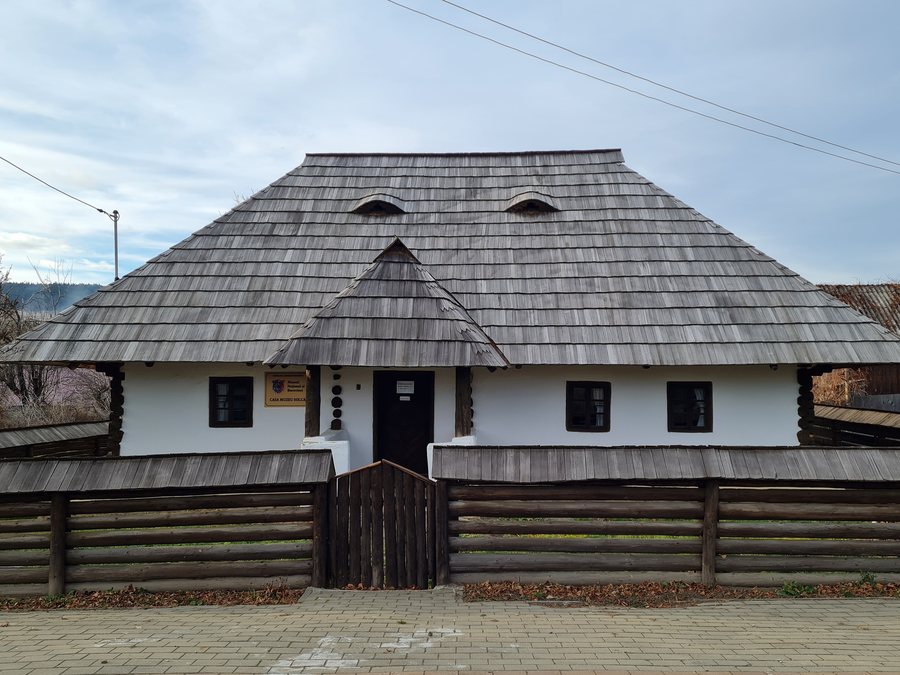 File:Oraș Solca - Casa-muzeu Saveta Coturbaș.jpg
Photo: Musichistory2009 via Wikimedia Commons, CC BY 4.0
File:Oraș Solca - Casa-muzeu Saveta Coturbaș.jpg
Photo: Musichistory2009 via Wikimedia Commons, CC BY 4.0
Solca lies on the eastern edge of the Obcina Mare. Solca Monastery was built between 1612 and 1622 as a foundation of Prince Ștefan Tomșa.
Solca is also characterized by springs, rocks and hiking trails. The specific local features range from the Burcut mineral spring to the large rocks west of the town. This natural setting is complemented by historic destinations such as the Solca Museum House.
What landscape characterizes Solca?
A mineral spring called Burcut is located on the left slope of the Solcuța stream below Mount Cerbul.
West of Solca, behind several wooded ridges, lies a group of large rocks locally known as Pietrele Muierilor. The chlorosodic springs in Slatina Mare are also among the prominent natural features. They are located at an elevation of 650 m and are the most frequently visited locally.
Which road connections are important for planning?
National road DN 2E from Păltinoasa to Marginea passes through the central part of Solca. It connects European route E576 with the tourist road route to the religious sights of Putna and Moldovița.
Another important connection is national road DN 2K. Via Arbore and Milișăuți, it leads from Solca to a connection with European route E85. DN 2E and DN 2K run via different reference points. If you choose accommodation in Solca for a round trip or a culture-focused route, these road connections may play a role in prioritizing your personal planning. This does not imply specific driving times or distances.
What hiking connections are there around Solca?
On the Obcina Mare, hiking trails with easy to moderate difficulty levels begin near Solca. This classification provides initial guidance for travelers who take different requirements into account when planning.
The Dragoșa–Pietrele Muierilor–Pârâul Șoarecu–Voivodeasa hiking route continues in the direction of Solca.
Which cultural destinations are part of the townscape?
Solca Monastery is dedicated to the Apostles Peter and Paul.
The Solca Museum House dates from 1670 and is included on the list of folk architecture monuments in Suceava County. In the surroundings of Solca, it is located on the access road to the Arbore and Humor monasteries.
For travelers who want to combine culture and nature, Solca offers a clear sequence of themes: historic buildings in the town, springs and rocks in the landscape, hiking trails on the Obcina Mare, and route connections toward further religious sights. Those who focus more on a road trip can include the two national roads in their considerations. Those who want to compare different physical requirements will find a specific point of reference in the easy-to-moderate classification of the hiking trails.
If you would like to consider additional destinations for your travel planning alongside Solca, you can find Pârteștii de Sus, Dărmăneşti, Cacica, Rădăuţi, Văleni-Stânișoara, Pojorâta, Frumosu and Cârlibaba.
FAQ
Where is Solca located?
Which hiking trails begin near Solca?
Which cultural destinations are associated with Solca?
The cultural townscape includes Solca Monastery and the Solca Museum House; the monastery is dedicated to the Apostles Peter and Paul.
For the overarching travel overview: Suceava.

