
Băile Olănești: Mineral Springs, Mountain Trails and Culture
Accommodation in Băile Olăneşti
Băile Olănești lies at the foot of the Căpățânii Mountains and has more than 35 hydromineral springs. These include natural springs as well as springs from boreholes and mining facilities, including wells and adits. Fifteen mineral springs are captured for drinking treatments; two mineral springs and four mineral-water wells are used for external treatments (balneation). The mineral waters of Băile Olănești received a gold medal at the Vienna Exhibition in 1873.
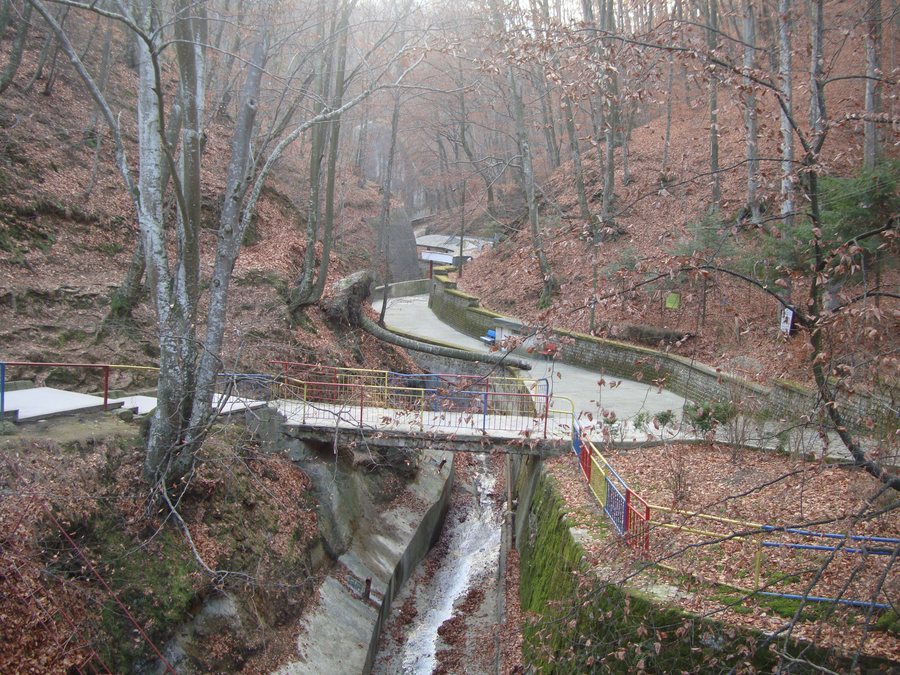 File:Baile Olanesti, Romania - panoramio (2).jpg
Photo: Akrep Scorpion via Wikimedia Commons, CC BY-SA 3.0
File:Baile Olanesti, Romania - panoramio (2).jpg
Photo: Akrep Scorpion via Wikimedia Commons, CC BY-SA 3.0
When comparing hotels in Băile Olănești, you can check travel dates, room category and cancellation conditions side by side on the offers page.
Nature
Access to the Cheile Olănești leads from the resort through the Valea Olănești, continuing for 14 km along a forest road. The Cheile Cheia are among the narrowest and wildest gorge sections in the country. Peştera Caprelor is a 0.50-hectare protected natural area within the administrative territory of Oraşul Băile Olăneşti. In Buila-Vânturarița National Park, visitors may use only marked hiking trails or approved, marked climbing routes. Mountain biking is one of the recreational activities in Băile Olănești. Walks in the open air are possible in the central park of Băile Olănești.
Culture
The wooden Sf. Pantelimon Church in Băile Olănești dates from 1746. It was the first wooden church in Romania to be saved as a historic monument. Another wooden monument of Romanian folk architecture is the Bisericuța lui Horea din Albac in Băile Olănești. Historically, it is associated with Vasile Nicula Ursu, known as Horea, who led the largest peasant uprising in Transylvania in 1784. In 1954, the Bisericuța was brought to Băile Olănești and reconstructed there; it was consecrated on October 12, 1958.
History
The Schitul Iezer is located at the foot of the Cheia Mountains, in a clearing surrounded by old forests. It can be reached via the village of Cheia; from the last bus stop, a forest road that is passable year-round leads there, except in winters with heavy snowfall. On foot, it can be reached from the central spring group via the former village of Tisa. The Schitul Iezer became a pilgrimage site; a monk was canonized in 1996. According to an inscription from 1720, the monastery was completed in 1567–1568.
The Schitul Bradu is located in Gurguiata and can be reached via Tisa and then by approximately five kilometers of walking. The church of the Schitul Bradu is dedicated to Saint John the Baptist and was founded in 1784. Hiking trails include a local route from Olănești to Tisa and Gurguiata; a red-marked route leads from Olănești through the Valea Olănești and over Muntele Stogu to Cantonul Cheia; a route marked with a red cross leads from Olănești via the Schitul Iezer and the Schitul Pahomie to the Schitul Pătrunsa.
More destinations
Getting there
Travel by train via Râmnicu Vâlcea railway station; from there, continue by road for approximately 18 km to the resort.
To the overarching travel overview: Vâlcea.

.jpg)