
Perişani: Cozia Massif, Trails and Crafts
Accommodation in Perişani
Perișani lies in an intramontane depression framed by the ridges of the Munții Negoiului and the Masivul Cozia. The Masivul Cozia is a rocky Carpathian formation with unusual rock formations. Within the municipality of Perișani, Pripoare de Jos lies in a gorge through which the Valea Băiașului runs between the Culmea Mamurilor and the Masivul Cozia. In the surroundings of Perișani, the small Pripoare gorge on the Băiașu stream separates the Cozia Massif from the Poiana Spinului ridge.
You can consider the spatial details separately when making your own plans: the depression, rock formations, gorges and ridges each represent a distinct landscape reference. This keeps the various names and geographical relationships within the municipality clearly distinguishable from one another.
Trails and winter
A tourist route leads from Perișani via Poiana Lungă, Clăbucet, Coarneșu and Scara to Negoiu. Another tourist route runs from Stâna La Mocirle to Poarta de Piatra. The BR trail crosses the Cozia Massif, connects the Olt Valley with the Drumul Loviștei and passes by Cabana Cozia, with a stop there along the way. The different starting, destination and intermediate points help you compare the routes separately.
The route to Negoiu is characterised by a longer sequence of named intermediate points, while the connection from Stâna La Mocirle to Poarta de Piatra is described with a starting point and a destination. The BR trail supplements these two details with the connection between the Olt Valley and Drumul Loviștei, as well as the stop at Cabana Cozia.
For winter activities, the “Dalia” ski slope is located at an altitude of 900 m between the villages of Perișani and Mlăceni. It is 750 m long and has an average width of 80 m. Its altitude, length and average width provide three different objective comparison values.
Orientation in the area
The DN7D is the main road in Perișani.
Hotel offers for Perișani can be interpreted differently based on travel dates, room category and cancellation conditions. These details stand alongside the area’s landscape and cultural topics; they form a separate practical level of travel planning and make organisational and financial differences visible.
Culture and crafts
The church in Perișani is classified as a historic monument. The Biserica de Lemn wooden church in Perișani was built around 1797–1799. Traditional crafts such as woodworking and blacksmithing are practised in Perișani. These include making wooden implements and wicker baskets.
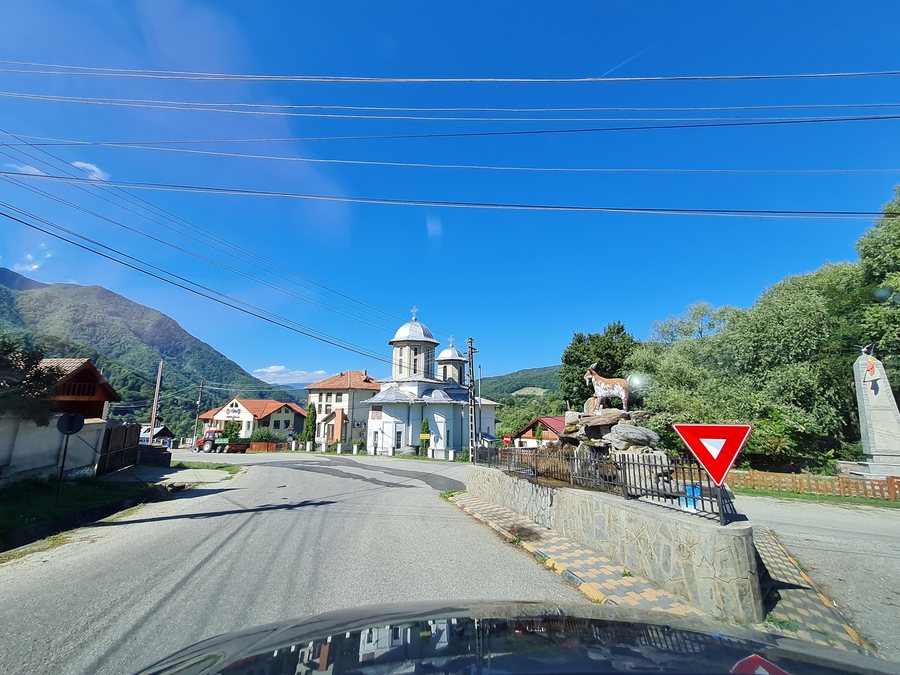
Perișani has a tourist information and promotion centre. Its courtyard contains an open-air museum. Within the municipality of Perișani, near Pripoare at a road junction, there is a monument commemorating the Battle of Posada. You can consider the cultural topics separately from one another.
Perișani therefore has several different cultural points of reference alongside one another: the church classified as a historic monument, the wooden church built between 1797 and 1799, the open-air museum in the courtyard of the information centre and the monument near Pripoare. Dairy products are available in the village of Pripoare within the municipality of Perișani.
Other destinations
Other destinations for comparison include Băile Olăneşti, Horezu, Gura Văii, Costeşti, Călimănești, Ocnele Mari, Marița and Voineasa.
For the higher-level travel overview: Vâlcea.

.jpg)