
Focşani: Culture, City Routes and Vrancea
Accommodation in Focşani
In Focşani, the exhibition at the Muzeul Unirii focuses on Mihail Kogălniceanu and Prince Alexandru Ioan Cuza. It presents documents, publications, personal objects, paintings and lithographs from this period. The connection between people, written testimonies and images gives this museum visit a clear historical focus.
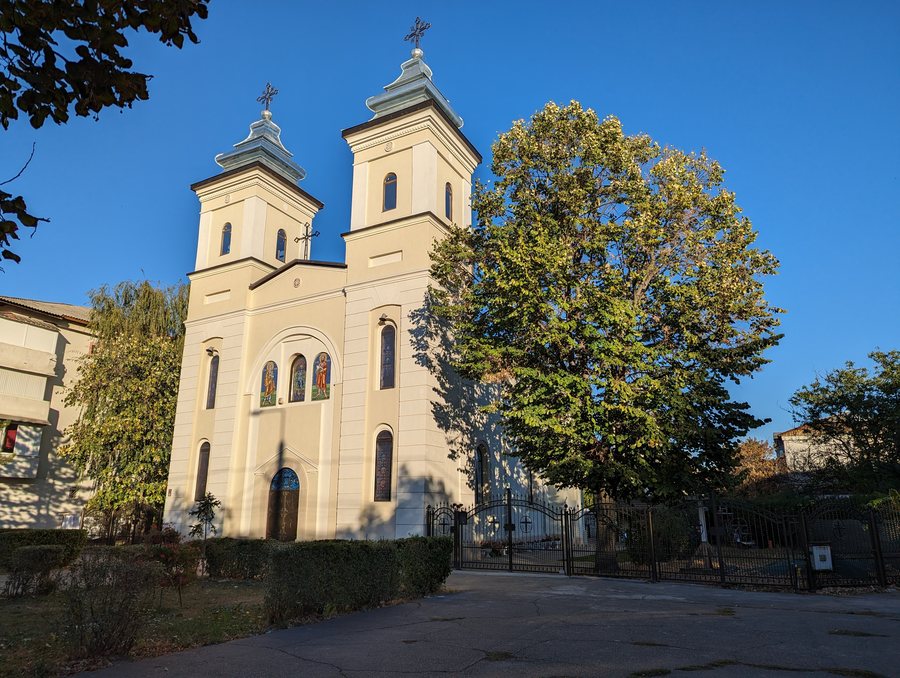 File:Biserica „Sf. Apostoli” de la Ocol, Focșani 02.jpg
Photo: Adrian Neata via Wikimedia Commons, CC BY-SA 4.0
File:Biserica „Sf. Apostoli” de la Ocol, Focșani 02.jpg
Photo: Adrian Neata via Wikimedia Commons, CC BY-SA 4.0
Culture
The natural sciences section of the Muzeul Vrancei is a natural history museum area in Focşani, at 35 Strada Cuza Vodă. This means that, alongside the historical exhibition at the Muzeul Unirii, there is a clearly separate natural sciences museum area within the city. The two institutions have different focuses and can be considered separately in terms of content.
The exhibitions at the Archaeology Museum in Casa Alaci are dedicated to the Armenian civilization of Focşani. The religious aspect includes the Armenian Church “Sf. Gheorghe”: it belongs to the Gregorian faith and was built in the 18th century by the Armenian community of Focşani. Casa Alaci and the church thus present two different approaches to the local Armenian history, archaeological and religious.
The “Maior Gh. Pastia” Popular Athenaeum was established in 1926 through generous donations from the philanthropist Maior Gh. Pastia of Focşani. The “Maior Gheorghe Pastia” Theatre was inaugurated in 1913. The two dates can be recorded separately in chronological terms: the theatre points to an earlier inauguration, while the Athenaeum was established later.
City and Routes
Grădina Publică is located in the centre of Focşani. A cultural route in Focşani runs from Bariera Bucureşti to Bariera Mărăşeşti. Green space and a cultural route represent different forms of exploring the city side by side.
History
The Mausoleum of the Romanian Heroes of the First World War is located at 9 bis Bulevardul București, in the southern part of the city of Focşani. The boundary marker between Moldova and Muntenia was unveiled in 1931 in the presence of Nicolaie Iorga.
Getting There
Focşani railway station is located at 1 Bulevardul Gării in Focşani, Vrancea. From the Bucharest–Buzău direction, Focşani can be reached via the E85 (DN2) through Bariera Bucureşti. The railway station and the road connection thus provide two separate reference points for travelling to Focşani.
A hotel in Focşani can be matched during travel planning with your travel dates, the desired room category and the respective cancellation policies. These three details help you consider the cost and flexibility of a stay separately, without mixing up the city’s different cultural and historical focuses.
Regional Perspective
In the Romanian county of Vrancea, the International Festival of Wine and Viticulture “Bachus” takes place every year in October; guests can sample selected wines from Vrancea there. The festival date adds a regional focus on wine and viticulture to the city’s cultural and historical themes.
Other places: Valea Neagră, Golești, Adjud, Soveja, Vulcăneasa, Tulnici, Vidra, Odobești
For the higher-level travel overview: Vrancea.

