
Vidra: Culture and Landscape on the Putna River
Accommodation in Vidra
In Vidra, the Muzeul Țării Vrancei is housed in the first school of the former Vrancea district. The museum comprises five rooms with pottery from Irești, traditional carpets, folk costumes, old documents, historical documents and pictures.
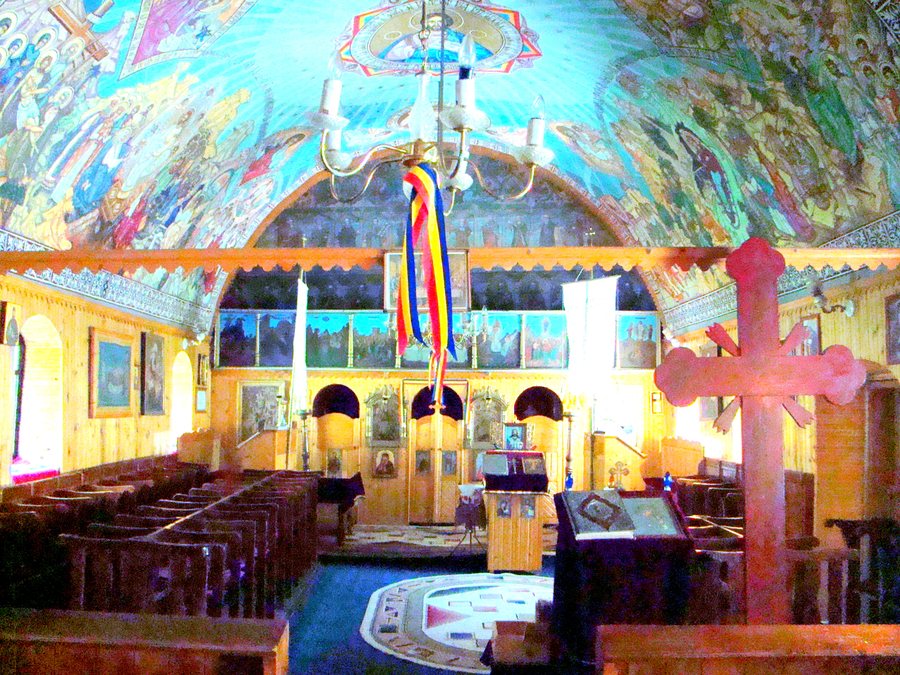 File:Biserica Sfinții Arhangheli din Vidra (2).jpg
Photo: Țetcu Mircea Rareș via Wikimedia Commons, CC BY-SA 4.0
File:Biserica Sfinții Arhangheli din Vidra (2).jpg
Photo: Țetcu Mircea Rareș via Wikimedia Commons, CC BY-SA 4.0
Culture and History
The village of Vidra has been documented since the year 1400. In the village of Tichiriș, Vidra commune, an archaeological site dating from the Upper Paleolithic period is located on the terrace of the Putna River.
The monument known as “Crucea lui Chilian” takes the form of a two-metre-high bronze cross and was erected in 1936 by local residents on a cube-shaped stone base. It commemorates four heroes from Vrancea who were sentenced to death and executed by firing squad in Focșani, as well as all the heroes from Vrancea who fell in the war for national reunification.
The “Monument al eroilor căzuți în Primul Război Mondial” in Vidra is a war memorial. The “Şcoala cu Coloane” in Vidra was built in 1850 and is considered to be of great significance for the history of Vrancea and the Romanian education system.
The artistic ensemble “Poarta Vrancei” was founded in 1980 and comprised a vocal group, boys’ and girls’ groups, and traditional dances from Vrancea.
In Irești, Doru Fecioraș is one of the few people in Vrancea who still master the craft of pottery; he may possibly be the only one. A weekly communal market takes place on Sundays in Vidra commune. There are also nine traditional local fairs, held every year at monthly intervals from 23 April to 6 December.
Landscape and Rivers
Vidra is situated on a plateau, surrounded by gentle hills and dominated by Măgura Odobești and the Vrancea Mountains. The landscape combines the open setting of the plateau with the distinctive ridges in the surrounding area.
Vidra commune lies in the hill country at the transition between the Curvature Carpathians, the Subcarpathian hills and the Putna Valley. In the Vrancea Depression, it forms the entrance to the basin and mountain area of Vrancea County; this entrance symbolically bears the name “Poarta Vrancei”.
Vidra commune lies on the banks of the Putna River, where it receives the waters of the Vizăuți River. The Putna is just as much a part of Vidra’s geographical setting as the plateau, the hills and the surrounding mountain ranges.
Routes and Dates
Vidra commune is crossed by national road DN 2D, which connects Focșani with Târgu Secuiesc and Brașov. The road connects Focșani with Târgu Secuiesc and Brașov.
A cycling tourism event followed a route with several tourist destinations, including Vidra – Muzeul Vrancei, and promoted the digital map of the Țării Vrancei route. In addition, the Sunday communal market and the nine traditional local fairs, held every year monthly from 23 April
For your planning, market dates, cultural venues, the river landscape and the cycling route can be considered as separate focal points. This allows visitors to view the time-specific events separately from the permanently described sites and landscape features.
For a hotel in Vidra, the offer pages allow you to compare travel dates, room category and cancellation conditions based on your own travel plans. This information provides an objective framework for making a choice without mixing the town’s different cultural, market and landscape topics.
Other Places
Other places: Valea Neagră, Adjud, Focşani, Golești, Soveja, Nănești, Vulcăneasa, Odobești
To the higher-level travel overview: Vrancea.

.jpg)