
Discover Tulnici: Nature, Monasteries and Waterfalls
Accommodation in Tulnici
The Putna-Vrancea Nature Park offers the public opportunities for recreation and tourism; bears, wolves, lynxes and otters live in the area. The administrative territory of Tulnici commune, near the village of Lepșa, is also home to Cascada Putnei, a nature reserve of national interest.
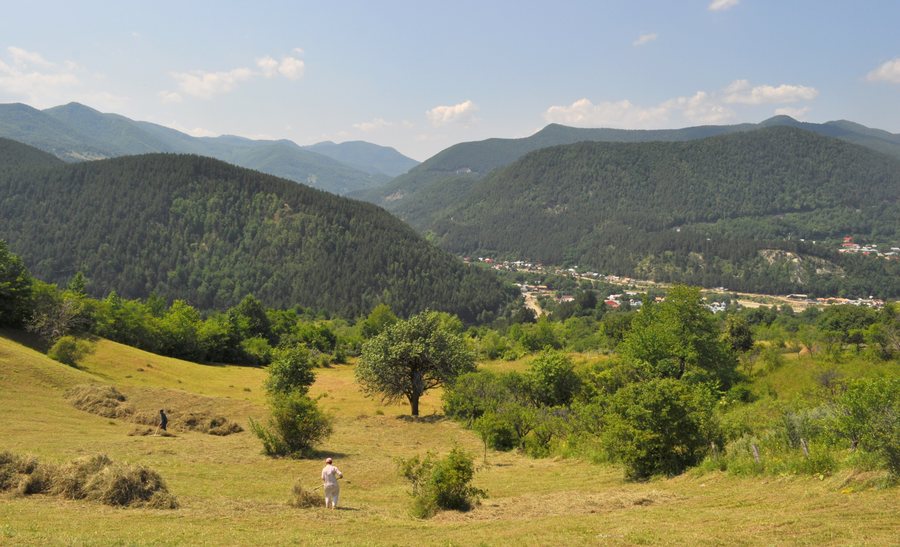 File:RO VN Tulnici 2.jpg
Photo: Utilizator:Țetcu Mircea Rareș at ro.wikipedia via Wikimedia Commons, CC BY-SA 3.0
File:RO VN Tulnici 2.jpg
Photo: Utilizator:Țetcu Mircea Rareș at ro.wikipedia via Wikimedia Commons, CC BY-SA 3.0
Nature
The “PinePit from Tulnici” is listed among the protected natural monuments of Vrancea County. Cascada Din Horn is almost 25 metres high. From the village of Tulnici, it can be reached via a local road and then a 16-kilometre forest road; 11 kilometres of this route can be travelled by a vehicle with higher ground clearance, as far as the vicinity of the Alunu forestry district.
The Tișița Gorge nature reserve has a hiking trail marked with a red triangle; the circular route through the area is approximately 7 kilometres long and takes 5–6 hours there and back.
Different distances and time estimates help you compare excursions by length and duration. A kilometre figure and a time range should be read separately: one describes the route, while the other refers to the stated circular-route timeframe.
For personal planning, you can organise the nature information by landscape type and time required: protected areas, a natural monument, waterfalls and a gorge are presented alongside details about access, route length and duration. The information about Cascada Din Horn and the Tișița Gorge thus describes different aspects of a day in nature without prescribing a fixed itinerary.
When putting together a day in Tulnici, the nature information can be considered according to different decision criteria: the description of Cascada Din Horn makes access a separate point to check, while the information about the Tișița Gorge shows the time required for a circular route. The details about the nature park and protected areas, on the other hand, provide context for the landscape. This keeps access, walking time and protection status from being combined into a single blanket recommendation.
Culture
Lepșa Monastery was founded as a skete in 1774. The monastery grounds contain the wooden church “Adormirea Maicii Domnului”; it is classified as a local architectural monument and was built between 1930 and 1936.
Tulnici commune offers interactive virtual tours of cultural, religious and educational sites in its area, including Biserica Tulnici. The museum in Tulnici opened the previous year and has more than 150 traditional costumes.
The cultural information also covers different aspects: the monastery and church represent founding and architectural history, while the virtual tours and costume collection provide other ways of engaging with the cultural topics. You can classify this information by history, architecture, religion and regional clothing traditions.
For the cultural information, it makes sense to distinguish by type of access: the monastery grounds and museum are location-based topics, while the virtual tours represent a digital form of presentation.
Anyone comparing a hotel in Tulnici can consider travel dates, room category and cancellation conditions as separate details side by side. This brief overview keeps the accommodation decision separate from the nature and cultural information, leaving room for you to assess the financial parameters of your own travel plans.
Other destinations: Odobești, Golești, Vulcăneasa, Valea Neagră, Focşani, Adjud, Soveja, Nănești
For the higher-level travel overview: Vrancea.

