
Gelnica: Mining History, Culture and Hotels
Accommodation in Gelnica
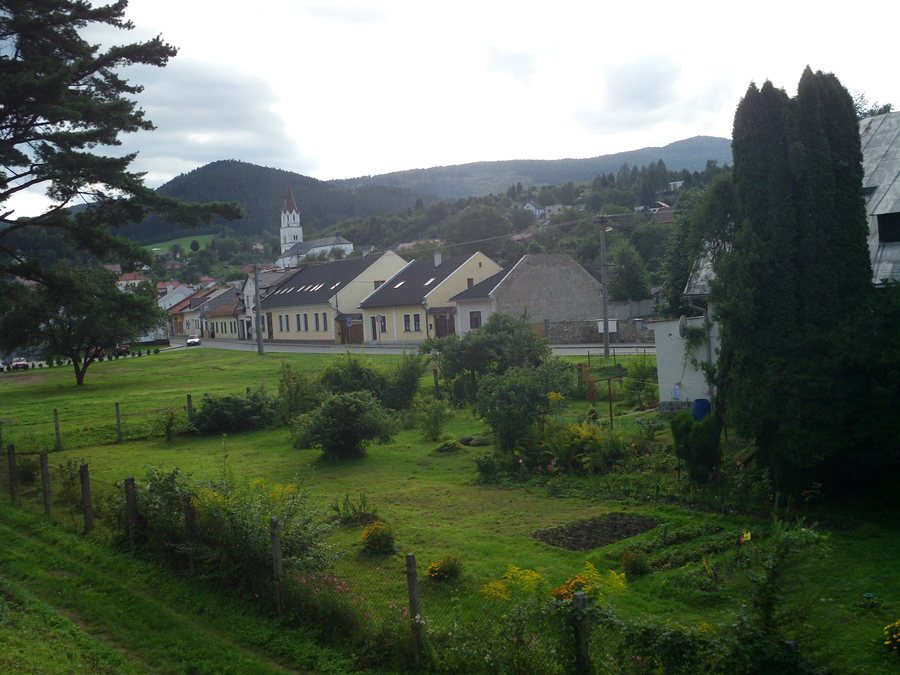
Gelnica combines mining history with churches, monuments, hiking trails and bodies of water. The town lies in the Hnilec Valley in the northeastern part of the Volovské vrchy, northwest of Košice.
Culture
An important starting point for the history of the town is the Banícke múzeum. It is housed in a building constructed in 1805 from stone taken from the ruins of Gelnica Castle. Its collections document mining, folklore, the history of Gelnica, geology and the guild system. The exhibits include mining tools, mining lamps, old mining maps, wooden models showing how ore was extracted from the mine, miners’ work and festive clothing, mining symbols and a scale model of a mine entrance. The Štôlňa Jozef is also connected with this context: it was opened to the public in August 2016 and became part of the Banícke múzeum exhibition in Gelnica.
The Rímskokatolícky kostol Nanebovzatia Panny Márie is a Gothic church dating from the 14th century and, at the same time, a Classicist tolerance church built in 1784, with the layout of a Greek cross and no tower. Its Gothic elements include original rib vaults in the side aisles and sanctuary, a pastophorium with figurative decoration resting on a high, spiral-twisted, tower-like pedestal, and a stone sedile on the southern side of the sanctuary. The Gotická cesta names this church in Gelnica as its best-known monument. The centre of Gelnica was declared a monument zone in 1992.
Hrad v Gelnici is also designated as a national cultural monument of Slovakia. The site is now used as a park, recreational area and destination for walks. The balustrade of the so-called baníckeho chóru in Gelnica’s Evangelical church contains an elongated niche with a sculptural mining scene and two flanking miner figures. Preserved miners’ cottages bear witness to the old mining tradition.
History and Water
The technical side of this history is particularly evident in Gelnica. The Banský skanzen, which is currently being established, features a unique historic stamp mill and crushing plant in operation, powered by the water of nearby Turzovské jazero. A unique type of smelting furnace, specifically characteristic of the areas around Smolník, Gelnica and the Hnilec Valley, was reconstructed after 300 years. Hydropower also helped Gelnica become the first town in the territory of present-day Slovakia to establish a public electricity supply, in 1894.
The historic building stock also includes the stone bridge over the Hnilec. It was built between 1837 and 1845 as a solid two-arch structure made of rubble stone and is currently used by pedestrians.
Trails and Landscape
The Banský náučný chodník begins at Banícke námestie, which is easily accessible from Gelnica mesto railway station. The trail is self-guided and linear, can be walked in both directions and is used year-round. The Banský náučný chodník and the mining sites along it are maintained.
From Gelnica, Vyhliadka mládeže / Gloriet can be reached via a blue-marked mountain trail. It consists of a rocky outcrop with a rest area at an elevation of 785 m; from there, there is a view of the whole of Gelnica. Cycling route No. 2858 also starts in Gelnica and is suitable for touring bikes. It is 40 km long and is considered relatively demanding.
The lakes are also part of the town’s surroundings. Fishing is possible at Spodné jazero. Horné jazero is 17 m deep and serves as a natural swimming pool. Thus, in addition to trails and mining sites, the landscape also includes bodies of water with different uses.
Other Destinations
Other destinations: Kluknava, Margecany, Nalepkovo.
For a specific hotel decision, you can compare the location, accommodation type, occupancy, included services, price components, and booking and cancellation conditions for the respective offers.
For the higher-level travel overview: Gelnica District.

