
Rybník: Church, Wine Growing and Paths through the Landscape
Accommodation in Rybník
Rybník can be explored through its church, wine-growing tradition and several paths through the landscape. There are also archaeological traces, an ethnographic museum and a regional cycling route that runs through the centre of the village.
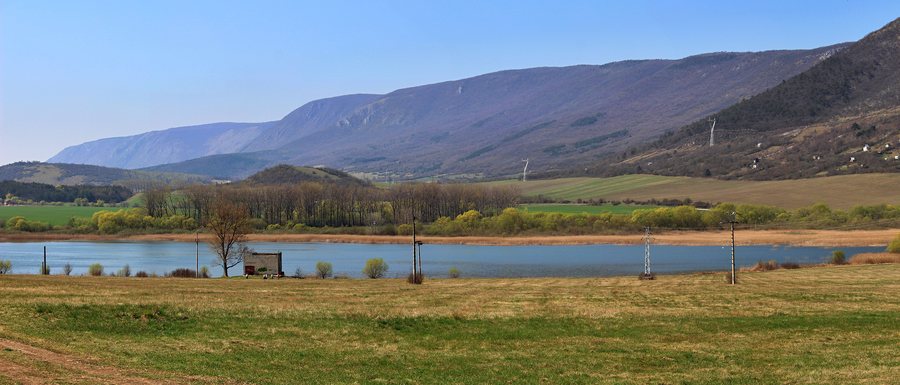 File:Turniansky rybník a Horný vrch 2017-04-01.jpg
Photo: Govisity / Tip na Trip / kosice.guide via Wikimedia Commons, CC BY 2.0
File:Turniansky rybník a Horný vrch 2017-04-01.jpg
Photo: Govisity / Tip na Trip / kosice.guide via Wikimedia Commons, CC BY 2.0
Culture and History
The Roman Catholic Church of the Most Holy Trinity was built from 1767 to 1771 during the reign of Maria Theresa and has a Baroque interior. A memorial plaque at the church in Rybník commemorates Benedikt Szöllösi, who was born in Rybník and is known as the editor of the Slovak hymnal Cantus Catholici from 1655. In front of the church is a crypt dating from 1806. It contains the graves of 36 priests, officials of the Svätý Kríž estate and their family members.
The fortified settlement of Nad Hronom is also part of the history of the village. It is an archaeological site dating from the Early Bronze Age. Along its entire perimeter, it was surrounded by a rampart made of a timber-and-earth structure. In the Slovenská brána area, Nad Hronom was an important strategic cultural and trading centre.
Nature and Paths
In the surroundings of Rybník, the Krivín Nature Reserve is also an archaeological site. It protects steep slopes formed of andesite, as well as numerous protected, rare and endangered plant and animal species. Hradisko Krivín is also located nearby, a landscape of volcanic origin with wooded rocky cliffs above the Hron. The rocky cliffs offer views of the surrounding landscape and the Hron River.
The Náučný chodník k Hradisku Krivín nature trail begins and ends in Rybník. It is 6 kilometres long and takes about 4 hours. Alongside shorter paths, this provides a longer route with a clear connection to the landscape and Hradisko Krivín.
The Náučný chodník obcou Rybník nature trail is a self-guided circular route for pedestrians that can be walked year-round, with a focus on natural history and local history. It is 3.5 kilometres long, has an elevation gain of 45 metres, takes about 1.5 hours and includes 10 stations. The trail begins at the Železničná–Hlavná crossroads and runs through the built-up area of Rybník.
The regional cycling route 5126 Tlmače–Rybník–Čajkov–Nová Dedina also runs through the centre of Rybník. It leads to the highest-elevation inhabited parts of the municipality.
Wine Growing and Local Life
Rybník has a wine-growing tradition that is among the oldest documented wine-growing traditions in Slovakia. The Rybnícke vinobranie is held in the centre of the village as a recurring local wine harvest festival.
The ethnographic museum Ľudový dom „Na Teplici“ documents the life and traditions of the local population of Rybník. Prior contact with the administrator is required for a visit.

