
Sheki, Azerbaijan: The Khan’s Palace, the Silk Road and travel planning
Sheki, Şəki in Azerbaijani, lies in the northwest of the country on the forested slopes of the Greater Caucasus. The historic city brings together the Khan’s Palace, caravanserais, crafts, old-town lanes and regional cuisine. Its location on ancient trade routes makes Sheki especially appealing to travelers looking to combine architecture and cultural history with a compact city stop. For the broader context, see the Azerbaijan travel guide.
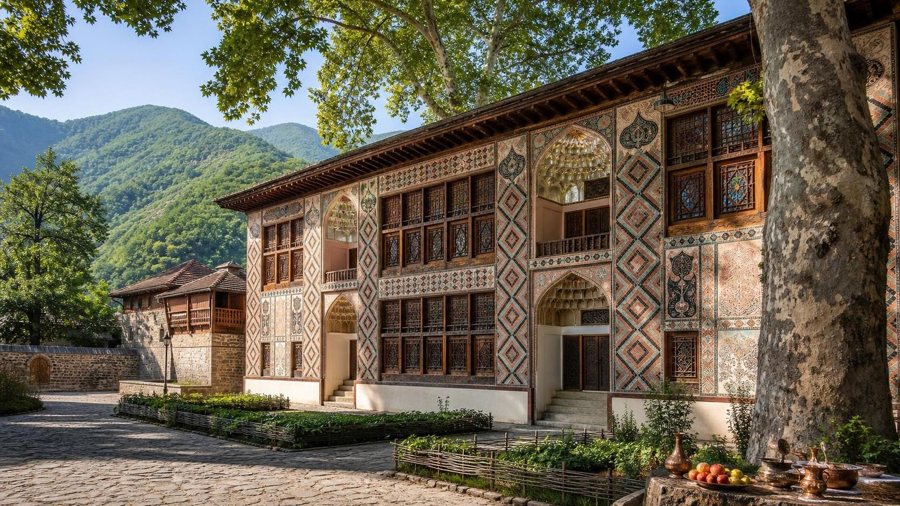 AI-generated illustration: an ornamented façade overlooks a paved courtyard beneath forested mountains.
Sheki at a glance
- Sheki is in northwestern Azerbaijan, at the edge of the Greater Caucasus.
- The historic center and the Palace of the Sheki Khans have been a UNESCO World Heritage Site since 2019.
- Caravanserais and old-town lanes recall the city’s role on the Silk Road.
- The Khan’s Palace is known for its colorful windows, decorative interiors and traditional architecture.
- Crafts, sweets and the dish piti are among the region’s specialities.
- Check opening hours, weather and return transport on the day of your visit, especially for indoor attractions, walks and excursions.
The Khan’s Palace and the historic city
The Palace of the Sheki Khans is the city’s main cultural landmark. Its colorful windows, ornamented surfaces and combination of living and reception rooms showcase a distinctive regional architectural style. Since 2019, the historic center and the palace have been on the UNESCO World Heritage List. Allow time to take in the details: the façades, courtyards and decorative craftsmanship deserve more than a quick photo stop.
The official Azerbaijan Tourism Board website highlights Sheki as a historic city, a center of crafts and a former trading hub. Caravanserais and old streets make its trading history visible in the cityscape. Shops and workshops may keep different hours, so if you’re looking for souvenirs or handmade items, avoid packing your itinerary too tightly.
Crafts, cuisine and the rhythm of the city
Crafts and cuisine are part of the travel experience in Sheki. Small shops and workshops showcase textiles, woodwork and decorative items. If you’re buying something as a keepsake, ask about how it was made, the materials and where it comes from. When it comes to sweets and local dishes, try comparing a few eateries rather than pinning your hopes on one particular place.
Piti, a slow-cooked dish made with meat, chickpeas and other ingredients, is often associated with Sheki. Recipes, portions and preparation methods can vary from restaurant to restaurant. The food makes a particularly good addition to a cultural itinerary after visiting the palace or a caravanserai. To discover other sides of Azerbaijan’s cities, add Baku with its Old City and Caspian Sea, or Ganja with its literary history and parks.
Mountains and excursions
Sheki’s location in the Caucasus makes it a good base for scenic excursions. Depending on the weather and route, villages, forested slopes and viewpoints can extend your time in the area. For a first visit, however, don’t cut short your time in the historic city in favor of too many outlying stops. Gabala is a good comparison if forests, lakes and mountain activities are a higher priority.
A route through the Caucasus can connect Sheki with Georgia, Tbilisi or Mtskheta. The Kazbegi region has a more distinctly alpine character. Armenia and Yerevan can also be included in a longer cultural trip. Border crossings, road conditions and current traffic conditions should each be checked separately.
Getting there and the best time to visit
Before setting out, check transport connections, transfers and the location of your accommodation. Sheki is more compact than Baku, but the Khan’s Palace, caravanserais, markets and outlying viewpoints are not necessarily close to one another. Two full days allow for a relaxed cultural itinerary; a third day is useful if you’re planning scenic excursions.
Spring and autumn are often good seasons for exploring the old town and paths on the slopes. Summer brings long, bright days, though midday can be hot. In winter, snow and road conditions may limit excursion options. Check current opening arrangements for indoor attractions, museums and the palace before your visit.
For photography, the changing perspectives between the lower town, hillside neighborhoods and mountain backdrop are especially rewarding. At the same time, don’t photograph private courtyards, religious sites or workshops without asking. It’s worth building a little flexibility into the day in case a conversation in a workshop, a market visit or a longer break extends your itinerary.
Sheki FAQ
What is Sheki known for?
Sheki is known for the Khan’s Palace, its historic center, caravanserais, Silk Road history, crafts and regional cuisine.
How much time should I plan for Sheki?
Two full days are enough for the palace, old town, caravanserais and cuisine. A third day is a good idea if you’re planning to visit the mountains, villages or other nearby destinations.
Can I combine Sheki with Gabala?
Yes. Both destinations are in northern Azerbaijan and complement each other with culture and nature, respectively. Check current journey times and arrange a suitable overnight stay in advance.
When is Sheki especially pleasant to visit?
Spring and autumn are often good for walks around the city. In summer, early sightseeing is best; in winter, take the weather and road conditions into account when planning excursions.
Your choice of accommodation affects the flow of your day: staying near the old town puts the palace, caravanserais and restaurants closer together, while a quieter spot on the slopes means extra walking. If you’re traveling with children or have limited mobility, take slopes, ground surfaces and places to sit into account when planning ahead. That way, you’ll have time for culture, food and breaks.
