
Lutsk Castle: Fortress, History and Visiting
Lutsk Castle is the symbol of the city of Lutsk and its greatest attraction. The city is very proud of its castle. It appears under three names in guidebooks: Lutsk Castle (the most common), the Upper Castle (because there is also a ruined Lower Castle), and Liubart’s Castle (named after its owner). It was built by the Lithuanian prince Liubart as a princely residence.
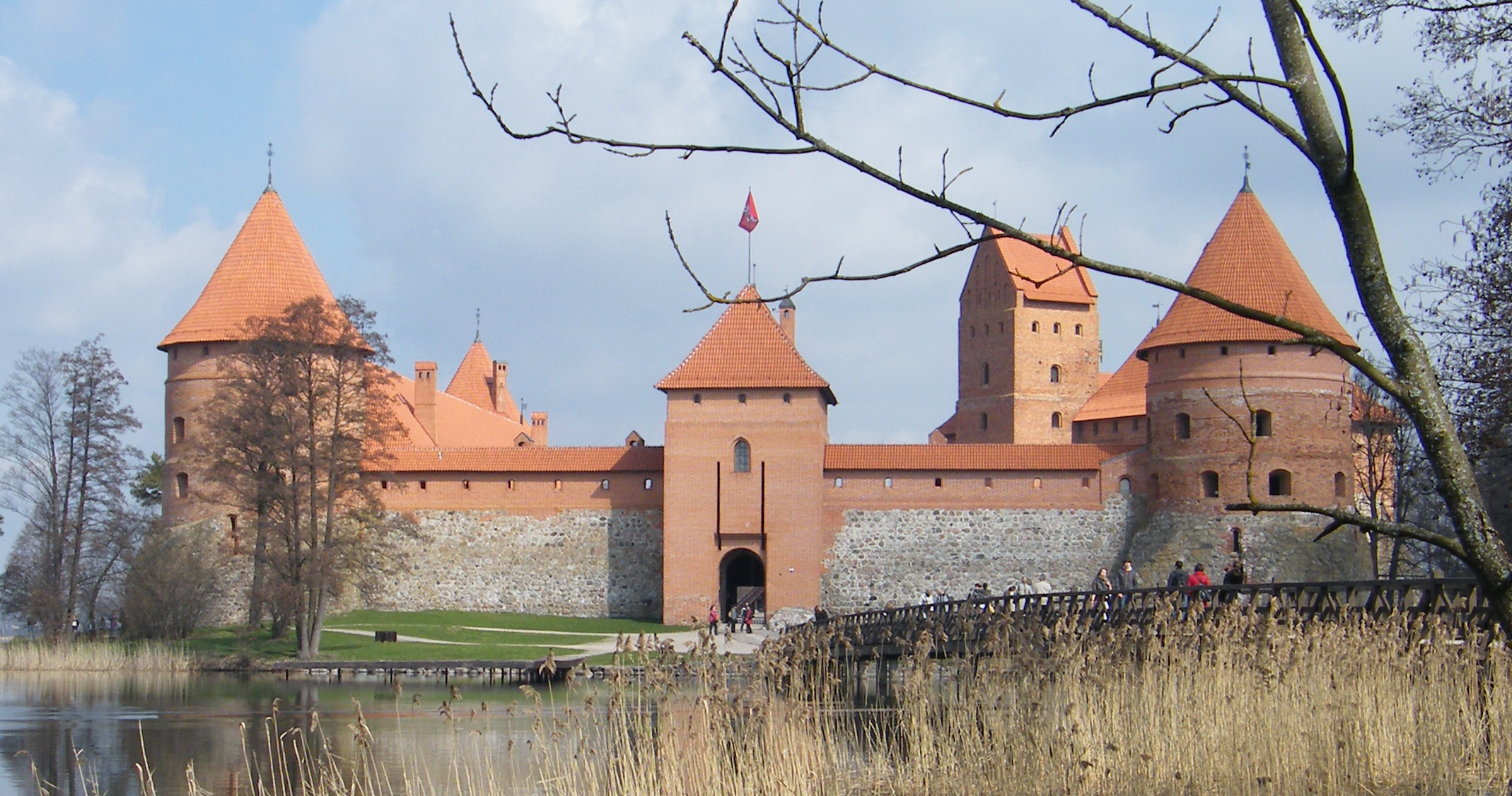 Burganlage mit Türmen, Wassergraben und einer Brücke durch eine historische Parklandschaft.
Photo: daddy
Burganlage mit Türmen, Wassergraben und einer Brücke durch eine historische Parklandschaft.
Photo: daddy
The construction of Lutsk Castle took almost 40 years and was completed around 1340. A fortification had stood on the same site even earlier: a wooden fortress was built on Castle Hill as early as the 11th century. This first castle stood for two centuries before being replaced by a sturdier stone castle.
Construction of the new stone castle took more than 40 years. The defensive towers were built first: the towers known today as “Vyezdnaya,” “Styrovaya,” and “Vladychya” are still standing. The walls were added later to connect the towers. Lutsk Castle took on its present appearance in the early 19th century. In particular, new buildings were erected in the inner courtyard, including the residential building (18th century) and the Bishop’s House (19th century).
The legends surrounding the princely castle are tragic and bloody. The best-known legend tells of the castle’s owner, Prince Liubart, and his love for a capricious beauty named Oksana. When the young woman did not return Liubart’s ardent feelings, the powerful prince ordered Oksana imprisoned in the Styrovaya Tower. She was to be released only if she married him. Proud Oksana refused to marry the prince, and the rejected ruler handed the young woman over to his soldiers, who abused and murdered her. Oksana’s body was thrown into the Styr River.
The ghost of Oksana is said to still haunt the princely castle: two of her tormentors fell victim to her terrible revenge and are said to have died in great agony. Another of the soldiers disappeared as if he had never existed. Oksana’s ghost has been seen time and again, gliding headless through the rooms of the princely castle. During the Second World War, people claimed to have seen Oksana on the battlements of the Styrovaya Tower and heard her calling for her parents. They, too, had been brutally murdered by Prince Liubart. The story goes that the poor girl will find eternal rest only when a ring stolen from her, and sold at the Lutsk market, is found and brought back to the castle.
Key facts: Lutsk Castle
- Lutsk Castle is a medieval fortification in Volhynia.
- The towers, walls, and inner grounds each offer a different focus for a visit.
- Construction history and traditional legends should be considered separately.
- Stairs, wall walks, wet surfaces, ice, and darkness can make access more difficult.
- Poltava and Ivano-Frankivsk are independent travel destinations, each with its own routes and conditions.
- Check the latest safety, transport, and access information before travelling to Ukraine.
Visit Lutsk Castle as a historical stop
Lutsk Castle is well suited to travellers looking to combine medieval fortification architecture, city history, and the historic region of Volhynia. The towers, walls, and interior areas require varying amounts of time, depending on access. Other stops could include Poltava or Ivano-Frankivsk, but only with realistic travel times and an up-to-date safety check.
Before visiting, check opening hours, admission, accessibility, how to get there, and current regional advice. Paths along the walls and towers can be more challenging when wet or icy. Legends and traditional stories add to the historical atmosphere, but do not replace an objective account of the castle’s construction history. If travel is possible, plan transfers and a safe return route with plenty of time to spare.
Visit Lutsk Castle as a historical stop
Lutsk Castle is well suited to travellers looking to combine medieval fortification architecture, city history, and the historic region of Volhynia. The towers, walls, and interior areas require varying amounts of time, depending on access. The geographic context of Ukraine provides a broader perspective, while Lutsk should be planned as a separate city stop. Further information about Ukraine can help with practical preparations.
Legends such as the story of Oksana are part of local tradition and should be identified as such. The historical account of the site should be kept separate. Other destinations could include Poltava or Ivano-Frankivsk, but only with realistic travel times and sufficient contingency.
Check routes, weather, and current conditions
Before visiting, check opening hours, admission, accessibility, how to get there, and regional advice. General travel and transport information and travel preparation can help with planning. Stairs and paths along walls or towers can be more challenging in wet or icy conditions or in strong winds.
For a specific trip, also add entry requirements and documents, staying safe while travelling, language and communication, and a clear return route to your checklist. The latest Ukraine travel advice from the German Federal Foreign Office takes precedence over older travel reports.
FAQ about Lutsk Castle
What can you see at Lutsk Castle?
The towers, walls, and interior areas reveal different aspects of the history of medieval fortifications and the city.
Are the stories about Oksana historically substantiated?
The story of Oksana is part of local legend. It is considered separately from the verifiable history of the castle’s construction and the city.
How much time should you allow?
It is worth setting aside a dedicated block of time for the site, its paths and towers, and its historical context. Allow extra time for weather, access, and additional destinations in the city.
What should be checked before visiting?
Confirm opening hours, admission, accessibility, transport, weather, the security situation, and your return route for the specific day.
