
Minsk Guide: City Walks, Parks and Museums
Minsk is a sprawling capital with broad avenues, imposing squares, parks, museums and a strongly planned urban layout. The city cannot be understood through a compact old town alone: many routes run along major thoroughfares, through green spaces and across diverse postwar neighborhoods. For the latest information on attractions and travel conditions, consult the official Belarus travel portal. Older guidebooks may be out of date on access, transport and entry requirements.
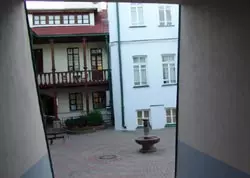 Die Altstadt von Minsk ist eines der Kleinode der Stadt. Nahe dem Fluss kann man hier in den typischen, überdachten Straßencafes auch Importbier trinken und lecker essen.
Photo: Ilya Kalachev
Die Altstadt von Minsk ist eines der Kleinode der Stadt. Nahe dem Fluss kann man hier in den typischen, überdachten Straßencafes auch Importbier trinken und lecker essen.
Photo: Ilya Kalachev
Quick facts: Minsk guide
- Independence Avenue and the central squares define the city’s grand, formal character.
- The old town is compact, but it explains only part of the city’s development.
- The metro, buses and broad streets shape travel between neighborhoods.
- Parks and the Svislach River offer quieter stretches between museums and squares.
- Museums, memorial sites and theaters require dedicated time and often an up-to-date check on access.
- Check entry requirements, currency, payment methods, opening hours and local rules before traveling.
- Independence Avenue and the central squares define the city’s grand, formal character.
- The old town is compact, but it explains only part of the city’s development.
- The metro, buses and broad streets shape travel between neighborhoods.
- Parks and the Svislach River offer quieter stretches between museums and squares.
- Museums, memorial sites and theaters require dedicated time and often an up-to-date check on access.
- Check entry requirements, currency, payment methods, opening hours and local rules before traveling.
The city center, avenues and squares
A first walk can begin along Independence Avenue, at Independence Square and near Victory Square. The grand avenues show how Minsk was reorganized as a modern capital after the destruction of the Second World War. Wide sidewalks, symmetrical facades and monumental buildings feel very different from the narrow lanes of many Central European old towns. Allow plenty of time for crossing streets, covering distances and stopping for photos.
The Upper Town and the area around the Cathedral of the Holy Spirit offer glimpses of the city’s older history. When planning what else to see in Minsk, consider the city center, parks, museums, transport and the length of your stay together. More information about Minsk can help with practical planning. Those interested in historical context can compare Minsk with Vitebsk or Gomel, other Belarusian cityscapes; neither is a quick trip within the city.
The river, parks and everyday city life
The Svislach River and the green spaces along its banks offer quieter views of Minsk. Gorky Park, Chelyuskinites Park and other green spaces are used for walks, sports and recreation, depending on the season. Paths, lighting, events and open facilities may change. On a short stay, one park makes a good break between two city-center sights; larger parks merit a dedicated visit.
Everyday city life is especially visible at transit stops, markets, cafés and shopping streets. Visitors should look beyond photographing grand buildings and pay attention to distances, places to take a break and how the squares are actually used. Minsk’s parks and the Minsk Metro can both serve as useful landmarks for getting around.
Museums and remembrance
Minsk has museums devoted to national history, art, literature and the Second World War. Choose where to visit according to your interests, as major exhibitions and memorial sites can be emotionally and time intensive. Check labels, opening hours, photography rules and current exhibitions directly with each institution. Treat historical sites respectfully rather than merely as unusual backdrops.
The National Art Museum and other museums are not all located along the same avenue. Minsk’s museums can be combined with a walk or a short metro ride. For regional comparisons, Warsaw, Kraków and Ukraine offer different historical experiences; check the political and practical conditions for each separately.
The metro, daily itinerary and best time to visit
The metro is useful for longer journeys and helps connect the avenues, which are far apart. Take rush hours, station entrances and walks at street level into account. For one day, a central neighborhood, one museum, a park and a flexible break are realistic. If you also want to visit the surrounding area or larger memorial sites, plan a separate leg and leave extra time for the return trip.
Spring and summer are often good for parks and long walks, while in winter indoor attractions and warm breaks become more important. Weather, daylight and events can change your plans. Before traveling, check the latest entry and safety advice, transport connections, accommodation and payment options. Do not rely on older advice about visa-free entry or open attractions without checking it first.
Plan avenues, parks and museums by neighborhood
A first city walk can begin along Independence Avenue, at Independence Square and in the Upper Town. The grand avenues, the Svislach River and the area around the Cathedral of the Holy Spirit reveal different layers of the city. Minsk is a good starting point; parks and Gomel offer further perspectives on Belarus. More information about Minsk, Minsk’s parks and Gomel can help with practical planning.
The metro and buses help cover the long distances between the city center, parks and museums. Plan for the Minsk public transport system in combination with walking and rush hours. For culture and remembrance, consider Minsk’s museums; Vitebsk, Brest and Nesvizh are separate trips beyond the capital.
Before traveling, check entry requirements and documents, money and payments, and the latest transport and safety advice. The official Belarus travel portal offers additional information about the city; the latest country information on Belarus from the German Federal Foreign Office remains authoritative. Older guidebooks are no substitute for current information.
Minsk guide FAQ
How many days do you need in Minsk?
A weekend is enough for the main avenues, the Upper Town, a park and a museum. Three days leave more time for memorial sites, other neighborhoods and a more relaxed pace.
Is Minsk easy to explore on foot?
Some central areas are, but the city as a whole is not, because distances are long. It makes sense to combine the metro and buses with walks.
Which museums are good for a first visit?
The choice depends on your interest in national history, art, literature or remembrance. Check opening hours, access and current exhibitions directly before your visit.
What should I check before traveling?
Entry requirements, documents, current safety and transport advice, payment methods, opening hours and local rules should all be part of your preparations.
