
Museum Minsk
Museum Minsk can be considered as a travel idea when the route, season, distances and current conditions all fit together. Not every historical description corresponds to an offering available today. For this reason, check specific locations, access, opening hours and safety information again before making a decision.
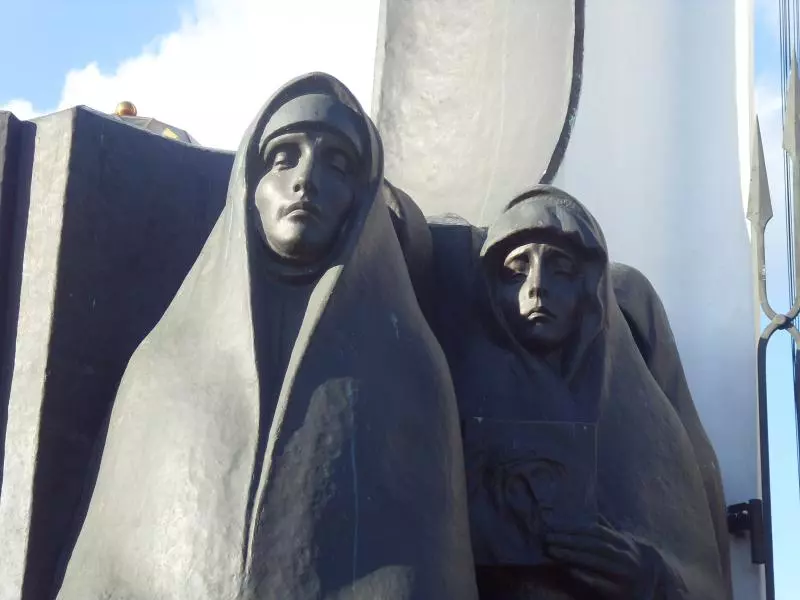 Minske hat viele Museen und Denkmäler
Photo: M. Lenk
Minske hat viele Museen und Denkmäler
Photo: M. Lenk
Quick facts: Museum Minsk
- The subject can look very different depending on the region, season and your personal travel plans.
- Plan a specific route around realistic distances and allow enough time for breaks.
- Current information on operations, entry requirements and safety matters more than old accounts.
- Local rules, photography permissions and consideration for residents or staff should all be part of your preparations.
- Planning alternatives helps you stay flexible if the weather, transport or available options change.
The largest and best-known museums in Minsk are the National Museum of History and Culture of the Republic of Belarus, the National Art Museum of the Republic of Belarus and the Belarusian State Museum of the History of the Great Patriotic War. These leading museums of Belarus are located in central Minsk, not far from one another.
It is very convenient to combine a city walk with a museum visit. If you walk from the main railway station towards the city centre along Karl Marx Street, you will find the building housing the Museum of Nature and Ecology and the National Museum of History and Culture (12 K. Marks Street. The museum is open Thursday to Tuesday, 11 a.m.–7 p.m.).
Continue along this street as far as the cross street and turn right; you will then see the doors of the country's art museum, the National Art Museum (20 Lenin Street. The museum is open Wednesday to Monday, 11 a.m.–7 p.m.).
From here, it is easy to walk to Central Square, where, next to the Palace of Culture, you will find the Museum of the History of the Great Patriotic War (25a Independence Avenue. The museum is open Wednesday to Sunday, 11 a.m.–7 p.m.). Behind the immense Palace of the Republic is the light-green town house that contains the Vankovich House Museum, devoted to the culture and art of the first half of the 19th century (33a Internatsionalnaya Street. The museum is open Wednesday to Sunday, 11 a.m.–7 p.m.).
If you are interested in contemporary Belarusian art, it is also worth visiting an exhibition gallery. For example, the “University of Culture” Gallery is located underground in the Palace of the Republic (October Square, 1. The gallery is open Wednesday to Sunday, 11 a.m.–7 p.m.). Minsk also has a Museum of Modern Art, which is easy to reach by metro (47 Independence Avenue. Ploshchad Yakuba Kolasa metro station. The museum is open Wednesday to Sunday, 10 a.m.–6 p.m.).
Ancient Belarusian and folk art can be seen at the Museum of Ancient Belarusian Culture of the National Academy of Sciences of the Republic of Belarus (1/2 Surganov Street. Akademiya Nauk metro station. The museum is open Thursday to Sunday, 11 a.m.–4 p.m.) and at a branch of the Museum of History and Culture (19 Frunze Street. The museum is open Wednesday to Sunday, 10 a.m.–6 p.m.).
Addresses of some specialist museums in Minsk:
The State Museum of the History of Theatre and Music of the Republic of Belarus
14 Starovilenskaya Street. The museum is open Monday to Friday, 9 a.m.–6 p.m.
The Museum of Modern Sculpture named after A. Bembel
29a Yakub Kolas Street. Open 10 a.m.–7 p.m.
The State Museum of the History of Belarusian Literature
15 Maksim Bogdanovich Street. The museum is open Tuesday to Sunday, 10 a.m.–5 p.m.
The Museum of the History of Medicine of Belarus
28 Fabrizius Street. Open Monday to Friday, 10 a.m.–4 p.m.
The House-Museum of the First Congress of the RSDLP
31a Independence Avenue. Open Tuesday to Thursday, 10 a.m.–6 p.m.
Choosing Minsk museums thoughtfully
When visiting museums in Minsk, it is worth choosing them according to their subject, location and the time available. Art collections, historical exhibitions, city history and memorial sites appeal to different interests and cannot always be combined sensibly in a single day. A route through the centre is practical, as many venues can be combined with walks along broad avenues, squares and through parks. Before visiting, check current opening hours, tour languages and any temporary closures.
Practical preparation
For an overview of the area, Museums and exhibitions is a good starting point. A travel checklist, current information about getting there and local transport, and maps saved for offline use can all help with preparations. Double-check your documents, addresses and booking details before setting out. If you are visiting several places, do not plan to catch the last possible connection back. For Museum Minsk, compare the location of your accommodation with the main routes for the day and allow realistic breaks.
Museums and exhibitions and History and memorial sites and Cities and architecture and Rivers, waterfalls and canyons can help with planning when routes, time and current conditions are considered together.
Lakes and wetlands and peaceful escapes in nature and Travel checklist and itinerary and more holiday ideas can help with planning when routes, time and current conditions are considered together.
The best travel decisions come from choosing a suitable pace and checking the information. Compare the specific reason for your trip with its duration, budget, distances and the kind of stay you want. If part of the plan remains uncertain, a shorter leg or a different type of trip may be the more reliable choice. For Museum Minsk, in addition to the reason for visiting, consider the condition of the route, weather, daylight and a safe return.
FAQ
How can I fit this subject into a route?
Make it part of a realistic day trip or multi-day itinerary, and plan for travel time, breaks and an alternative.
Which details need to be up to date?
Check access, opening hours, transport, costs and any safety or entry requirements shortly before your trip.
What should I keep in mind about older information?
Older texts can explain history and geographical context; current decisions require additional sources.
