
Prague Attractions: Old Town, Castle and Vltava
Prague cannot be defined by a single landmark, even though the Castle, Charles Bridge and Old Town often shape a visit. If you are planning Prague’s attractions into a trip, first decide what role the destination should play in your itinerary: a starting point, a stop on a round trip, a city base, a nature break or a longer stay. This creates an itinerary that does more than collect names—it works well on the ground.
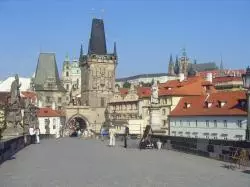 Ein Blick über die karlsbrücke in Prag
Photo: Markus Lenk
Ein Blick über die karlsbrücke in Prag
Photo: Markus Lenk
Quick facts: Prague attractions
- Prague is the capital of the Czech Republic, on the Vltava River, and has several historic districts.
- Prague Castle, the Old Town, Charles Bridge and Josefov each offer a distinct cultural focus.
- Many routes can be covered on foot, but cobblestones, stairs, hills and crowds can make the day longer.
- Museums, churches and memorial sites have their own opening hours, admission rules and expectations for visitor conduct.
- Kutná Hora, Karlovy Vary, Brno and other destinations are standalone excursions outside a Prague walking tour.
- Check tickets, opening hours, local transport, weather, accommodation and current advisories before your visit.
Organising Prague’s attractions by location and interest
The city brings together medieval lanes, Baroque churches, bridges, viewpoints, museums, Jewish history and lively neighbourhoods. For planning, it is important to consider distances, border crossings, the season and transport options together. Especially between the Balkans, Central Europe and Central Asia, short distances on a map can take much longer because of mountains, borders, timetables or poor connections.
For visitors, the key question is how much time to spend on the major highlights and how much room to leave for quieter neighbourhoods. With realistic planning, it is better to choose a few fixed stops and leave time for getting between them. This helps on arrival days, after long bus or train journeys, and in regions where weather, season or local holidays can change the day’s plans.
Connecting the Old Town, Castle District, Vltava and museums
Prague Castle, St Vitus Cathedral, Charles Bridge, Old Town Square, the Astronomical Clock, Josefov, Malá Strana and the Vltava riverbanks are key stops. A good itinerary combines well-known places with quieter stretches. Capitals, old towns, museums and markets help you get your bearings, while coastlines, mountains, rivers, lakes or spa towns change the pace and make a trip feel less packed.
Prague feels more immersive if you set out early or late in the day and connect its busiest spots with quieter routes. It is especially helpful to give each day a clear focus. A museum, neighbourhood, viewpoint or stretch through the countryside is easier to remember than a schedule that crams too many stops into a short time.
Planning walks and excursions in the Czech Republic
Prague attractions work well for walking tours, museum visits, routes along the Vltava and excursions to other regions of the Czech Republic. Prague Prague neighbourhoods Czech RepublicThe best combinations follow actual transport routes and link nearby themes. A country page can help you organise your options, but it does not replace checking specific routes, places to stay and seasonal connections.
A well-planned walking tour keeps the Castle side, Old Town and New Town in separate sections rather than trying to squeeze everything into a few hours. For round trips, two to four carefully chosen bases are often more comfortable than changing locations every day. From there, excursions, city visits and nature destinations are easier to combine. If you are travelling by car, consider parking and road conditions; by bus and train, frequency, transfers and the return journey matter more than the straight-line distance.
Planning visit times, routes and the rhythm of the day
Spring and autumn are pleasant for city walks, summer brings long days and large crowds, while winter has a quieter atmosphere. Spring and autumn are often good for cities, round trips and active days outdoors. Summer is especially suited to the coast, lakes, long evenings and mountain regions, but can put greater pressure on accommodation and transport. In winter, short routes, museums, cafés, thermal baths or winter sports resorts become more important.
Before booking, check current entry requirements, timetables, opening hours, public holidays, local rules and weather conditions. In border regions, national parks, islands, mountain areas and historic sites, it is worth checking again shortly before you travel. Leaving some slack in your daily schedule is not a waste of time; it allows for spontaneous discoveries and breaks. When planning Prague attractions, compare your accommodation’s location with the main routes for each day and realistic break times.
Experience Prague with a realistic itinerary
Prague’s attractions are best enjoyed with clear stages for each day, time for breaks and views beyond the main routes. If you plan your trip around your own interests, it is easier to find the right balance of well-known sights, regional culture and quieter stretches. This keeps routes, breaks and the choice of stops realistic in terms of both time and geography.
Organising the Castle District, Old Town and Vltava
Prague is easier to navigate when you plan its attractions by district. The official Prague tourism information provides additional current information on events, facilities and sightseeing. Prague Castle, Charles Bridge, the Old Town and Josefov do not automatically fit into a short walking tour; allow separate time for routes, entry and breaks.
For regional context, see the Czech Republic, Prague, Český Krumlov, Kutná Hora, Karlovy Vary, Brno and Terezín. These destinations add to a trip around the Czech Republic, but they are not spontaneous add-ons between two central Prague stops.
Before booking, check getting there and transport, transfers and local transport, trip preparation, money and payments and culture and history. Booking an early time slot can be helpful at very popular sites; confirm current entry and reservation rules directly with the relevant venue.
FAQ about Prague attractions
Which attractions should I see on my first visit to Prague?
Prague Castle, Charles Bridge, the Old Town and a stretch along the Vltava are common highlights. Add Josefov, museums and other neighbourhoods depending on your time and interests.
How many days do you need in Prague?
Two to three days allow you to visit several districts with time for breaks. If your stay is shorter, it is better to make a focused selection than plan a long list.
Can you explore Prague on foot?
Many central attractions are within walking distance. Take cobblestones, stairs, hills, heat and crowds into account when planning your own route.
Do you need to reserve attractions?
It depends on the venue, season and date. Check opening hours, admission, time slots and current reservation rules with the relevant venue.
