
Prague Neighborhoods: From the Historic Old Town to Vinohrady
Prague brings together historic riverside districts, hillside residential neighborhoods, and modern cultural venues. Riverbanks, bridges, slopes, and the exact location of your accommodation all shape how the Old Town, Josefov, Malá Strana, Hradčany, Vinohrady, Žižkov, and Holešovice fit into a day’s itinerary.
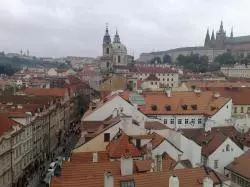 prag teilt sich in verschiedene Bezirke
Photo: Mikhail Hnot
Quick facts: Prague’s districts
- Official city districts and established neighborhood names such as the Old Town or Josefov are different systems of division.
- Staré Město is on the right bank of the Vltava; Holešovice, Letná, and Malá Strana are on the left bank.
- The Old Town, Josefov, Malá Strana, and Hradčany are home to many historic sights, but crossing the river and walking uphill take extra time.
- Vinohrady and Žižkov lie east of the historic center; cultural venues and green spaces are spread across several neighborhoods.
- When choosing accommodation, the street location, nearest transit stop, slope, and route back at night matter more than the name of the district.
City districts and tourist neighborhoods
Prague’s municipal structure distinguishes between city districts and administrative districts. Names such as Staré Město (the Old Town), Josefov, and Vinohrady refer to historic and established neighborhoods that help visitors find their way around. For planning a day, the street address, which side of the Vltava it is on, and its elevation are more useful than a district number.
The Vltava runs through the center, separating the Old Town on the right bank from the western areas. Bridges connect the riverbanks; depending on your destination, the walking route may take you across a bridge farther away than the map’s straight-line distance suggests. The Old Town on the right bank forms the historic core of Prague’s center; bridges connect it with Malá Strana and Hradčany. Old Town Square, the lanes leading toward Charles Bridge, and nearby Josefov make up a conveniently connected central area.
The Old Town, Josefov, and the New Town
Staré Město and the Jewish Quarter
Staré Město, the Old Town, is the historic core on the right bank of the Vltava. Old Town Square is surrounded by lanes, churches, historic buildings, and routes to Charles Bridge. A busy day exploring sights in Prague can be organized by riverbank; if you plan to go inside, factor opening hours and travel time into your itinerary. To the north lies Josefov, the former Jewish Quarter. The Jewish Museum’s sites are close together in Josefov, just a few minutes’ walk from Old Town Square. The synagogues and cemetery can therefore be visited as part of a single walking tour; check the current opening days of each site before you go.
The main historic sites are in the center, while crowds and event schedules can affect how quickly you walk. For a tour taking in several sights in Prague, it’s practical to visit attractions on the same riverbank in one stretch and allow time for crossings and visits inside.
Nové Město and Vyšehrad
The New Town (Nové Město) extends south and east of the Old Town. Its squares and shopping streets connect the historic center with residential neighborhoods farther out. Farther south, Vyšehrad rises above the Vltava. The castle complex and its surroundings make a destination in their own right; from the Old Town, Vyšehrad adds another leg to the journey and can be combined with a walk along the southern riverbank.
Malá Strana, Hradčany, and Letná
Malá Strana, or the Lesser Town, lies on the left bank of the Vltava below the castle hill. Cobblestones and uphill routes shape the walk between the river, Malá Strana’s lanes, and Prague Castle. Kampa lies close to Charles Bridge, beside the Vltava. Hradčany refers to the area around the castle on the ridge. If you visit the castle and Malá Strana on the same day, you can combine the climb up from the river with the return route down the slopes.
Letná is also on the left bank of the Vltava, on a raised plateau between Holešovice and the Old Town. A walk leads from Holešovice through Letná Park to the metronome and across the bridge into the northern Old Town. The green space and elevated paths offer views of the river and city center; bear in mind the change in elevation between the riverbank and plateau when planning a walk.
Vinohrady, Žižkov, and Holešovice
Vinohrady lies east of the historic center on hilly terrain. The neighborhood’s name recalls the vineyards planted here in the 14th century. Squares, villas, and green spaces make for pleasant walks, though the slopes mean walking routes and gradients vary from street to street. A walking tour can continue from Vinohrady to Vršovice and Žižkov. Žižkov combines cultural venues with nightlife, making it easy to extend a stroll into an evening out.
Holešovice lies on the left bank of the Vltava, in a large bend in the river north of the Old Town. The neighborhood and Letná’s green spaces are across the river from the Old Town on the right bank. A four-kilometer walking tour starts at the Veletržní palác stop in Holešovice, goes through Letná and past the metronome to the Svatopluk Čech Bridge, and continues into the northern Old Town. Galleries, event venues, and parks are spread across the area; for individual destinations, it helps to know the nearest transit stop and the specific river crossing.
If you’re traveling between several districts, factor in the river crossing when planning your day. This makes it possible to explore the Old Town and Josefov, Malá Strana and the castle, and Holešovice and Letná as connected sections.
Choose accommodation to suit your itinerary
If you want to reach historic sights on foot, compare addresses in the Old Town, Josefov, Malá Strana, or on the edge of Hradčany. Vinohrady, Žižkov, Smíchov, and Holešovice offer different starting points for culture, parks, and nightlife. When comparing hotels in Prague and vacation rentals in Prague, you can use the address and distance to the nearest transit stop as booking criteria.
If you’re weighing proximity to the city center against a neighborhood with a different kind of itinerary, compare neighborhoods and accommodation types when searching for a place to stay in Prague. Before booking, check the exact location against your plans: a hotel near the Vltava makes riverside walks easier, while an address on the plateau or castle hill means extra climbing. For the journey back after an evening event, connections to the tram or metro are also important.
If you’re arriving by train, plane, or car, include the journey from the station or airport to your chosen neighborhood in your plans; getting there and onward travel also means figuring out how to get from your arrival point to your accommodation. Before setting off, make sure your travel documents are valid and your booking details are confirmed as part of your personal travel preparations.
Combine Prague with other Czech cities
Prague is a good starting point for a trip around Czechia with several city stops. For an additional stop, consider Mělník, Kutná Hora, or Český Krumlov. A tour of Czechia can combine Prague with other cities as separate overnight stops. Synagogues, the cemetery, and Old Town buildings reflect Prague’s cultural history; historic townscapes also shape a trip focused on culture and history. If you’re attending events as well as exploring the neighborhoods, plan your day around the current Prague events calendar.
Frequently asked questions about Prague’s neighborhoods
Is Holešovice on the same side of the Vltava as the Old Town?
No. Holešovice is on the left bank of the Vltava, while the Old Town is on the right. From the left bank, the route to the northern Old Town on the right bank goes via Letná and across a bridge.
How far apart are the sights in Josefov?
The main sites of the Jewish Museum are close together in the former Jewish Quarter, just a few minutes’ walk from Old Town Square. The synagogues and the Old Jewish Cemetery can therefore be visited as part of one connected walking tour.
Can you visit the Jewish Museum in Josefov on Saturdays?
The sites run by the Jewish Museum in Prague are closed on Saturdays and Jewish holidays. Seasonal opening hours may vary; the museum lists different hours in particular for the Old-New Synagogue. Plan your visit to the museum sites for a regular opening day.
Which area is best for a first visit?
The Old Town, Josefov, Malá Strana, and Hradčany are close to many historic sights. Vinohrady and Žižkov offer different starting points for culture, parks, and dining. When choosing, consider your itinerary, budget, hills, and evening transport back to your accommodation.
