
Mljet, Croatia: National Park, Salt Lakes and Island Nature
Mljet lies in southern Dalmatia and is one of Croatia’s quieter island destinations. The island is best known for its national park in the west, with its salt lakes, forest trails and the small island of Sveta Marija. Mljet is less suited to a packed sightseeing itinerary than to nature, water and unhurried days. If you’re planning just a short visit, take particular care to coordinate ferry times and routes around the island.
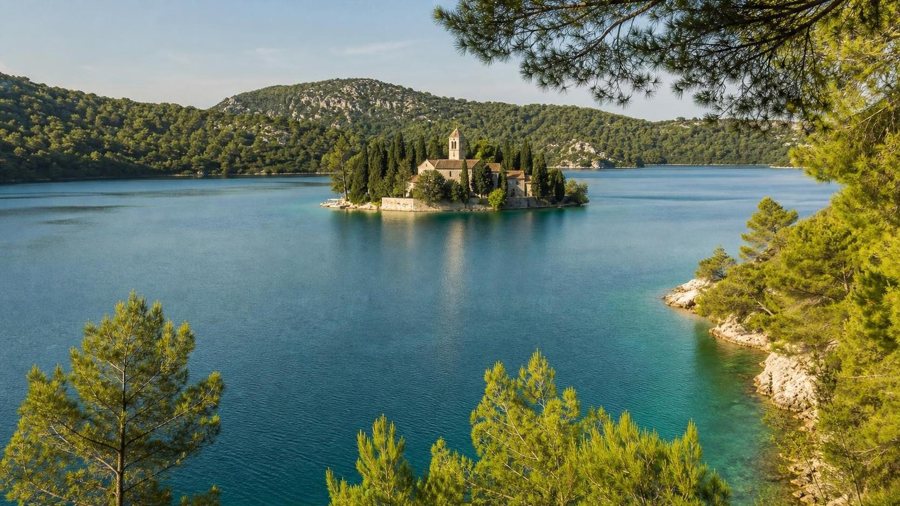 AI-generated illustration of a small monastery island in a lake, surrounded by woodland on Mljet.
Mljet at a glance
- Mljet lies off the coast of southern Dalmatia and is especially known for its national park in the west.
- The salt lakes Veliko Jezero and Malo Jezero, along with the island of Sveta Marija, define the national park area.
- Boat connections, timetables and routes around the island shape the day more than distances alone.
- Forests, shorelines and protected habitats call for care and respect for park rules.
- Dubrovnik, Hvar, Brač and other islands are separate legs of a trip, each requiring its own crossing.
- Check the weather, ferry schedule, tickets, shade, water and the last return connection before setting out.
National park and salt lakes
The national park in the west of the island is its best-known highlight. Trails around Veliko Jezero and Malo Jezero pass through Mediterranean landscapes. You can combine the lakes with walks and, depending on current regulations, boat trips. Water, sun protection and sturdy shoes are essential, as shade and facilities are not equally available along every stretch.
The island of Sveta Marija, with its former Benedictine monastery, is a distinctive part of a visit to the park. Access depends on the applicable boat and park regulations. During the high season, don’t assume you’ll be able to find a connection at the last minute. An early start and some extra time for the return journey make for a more relaxed visit.
Villages, coves and island rhythms
Mljet is more than just its national park. Small villages, coves and roads winding through the landscape offer a different impression from the busier coastal towns. For a peaceful stay, it makes more sense to choose accommodation near the places you want to visit than to move around every day. If you want to swim, hike and visit the park, realistically assess the distances between the port, your accommodation and your destinations in advance.
For regional trip planning, start with Dalmatia. Dubrovnik can serve as a mainland and cultural stop before or after Mljet. To compare other islands, see Hvar, Brač and the information on the islands of Croatia. The information on Croatia can help you plan a longer itinerary.
Getting there and practical preparations
Ferry and catamaran services vary by season, day of the week and weather. Before booking, check the departure port, arrival point, luggage arrangements, vehicle transport and route to your accommodation together. For a day trip, confirm your return journey before planning extra walks or a boat trip.
A car can be useful on Mljet, but it isn’t essential for every stay. If you’re travelling without a car, check transfers, buses, bicycles or other local options in advance. For hikes, pack water, sun protection, suitable shoes and an offline map. In remote areas, don’t count on shops or mobile service being readily available.
The ideal length of stay depends on what you want to do. A full day may be enough for the national park if you arrive early and leave plenty of time for the return journey. Two or more nights also allow time for swimming, visiting smaller villages and adjusting your plans if the weather changes. Mljet is especially rewarding for travellers who don’t want to squeeze nature experiences between frequent changes of location.
When choosing accommodation, being close to the places you want to visit matters more than comparing villages in general. If you have a long drive to the park every morning, you’ll lose time; a central location can be an advantage on a short stay. Before setting out, also plan your luggage, swimwear, drinking water and return journey together, so your island visit isn’t derailed by a missing transfer.
National park, salt lakes and island trails
The western part of Mljet is a natural area and excursion destination with its own rules, protected as a national park. Check the official information from Mljet National Park for entry, boats, trails and current visitor guidance. If you only have a few hours, choose one main focus and allow time for the crossing and the return to the port.
For a broader itinerary, see Dalmatia, Dubrovnik, Hvar, Brač and the Croatian islands. Every additional island brings its own schedules and waiting times. Mljet is therefore a better fit for a peaceful overnight stay or a carefully planned day trip than for a tightly packed island-hopping itinerary.
Before booking, review getting there and transport, travel preparations and staying safe while travelling. Sturdy shoes, drinking water, sun protection and a realistic return route are essential parts of the plan. Swimming, cycling and boat trips should be considered only in light of current park regulations and weather conditions.
FAQ about Mljet
What is Mljet known for?
Mljet is best known for its national park in the west, salt lakes, forest trails and the island of Sveta Marija.
How many days should you spend on Mljet?
One day can be enough for a focused visit to the national park. Several nights are more relaxing if you want to explore island trails and coves and work around changing ferry times without feeling rushed.
Can you visit Mljet on a day trip?
Yes, as long as the outward and return journeys, park access and time on the island fit together. Check for timetable changes, consider the weather and leave a buffer for the last connection.
What should you know about Mljet National Park?
Follow current park information on admission, boats, trails, nature and waste rules, and permitted activities.
