
Dubrovnik: Old Town, city walls and southern Dalmatia
Dubrovnik is one of the most impressive historic cities on Croatia’s Adriatic coast. Behind its city walls are narrow lanes, squares, churches and stone houses; beyond them lie the harbour, the sea and the steep coastal landscape of southern Dalmatia. Its remarkable setting makes a visit memorable, but also calls for realistic planning. On hot days and when day-tripper numbers are high, the walkways, steps and entrances can feel very different from how they look in a peaceful travel photograph.
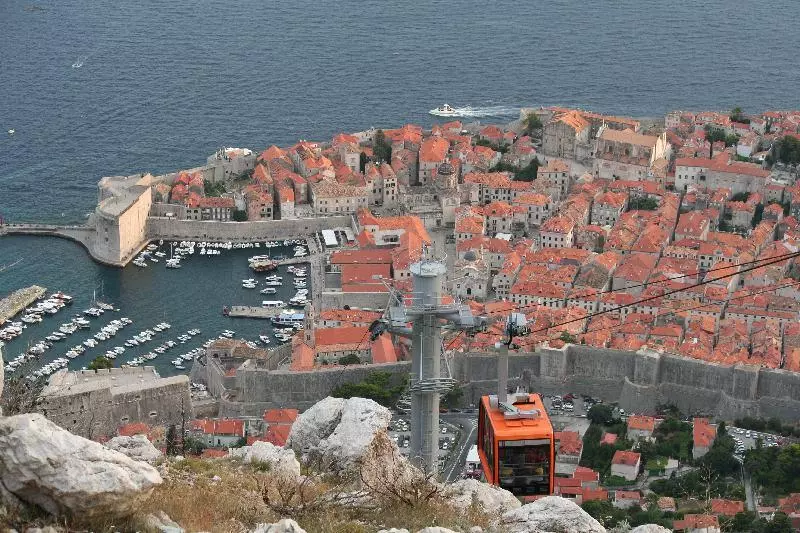 Blick vom Fort Imperial auf die Stadtmauer, die roten Dächer der Altstadt von Dubrovnik und die Adria.
Photo: Dago Wiedamann
Blick vom Fort Imperial auf die Stadtmauer, die roten Dächer der Altstadt von Dubrovnik und die Adria.
Photo: Dago Wiedamann
Quick facts: Dubrovnik
- Dubrovnik is on Croatia’s Adriatic coast in southern Dalmatia.
- The Old Town, Stradun, harbour and city walls form a compact historic cityscape.
- Stairs, heat and crowds affect a walk around the city more than distances on a map might suggest.
- Staying outside the Old Town can be a practical alternative when considering luggage, parking and price.
- Split, Zadar, Kotor and the islands are separate stops that require additional travel or boat time.
- Check admission, opening hours, transport, weather and current advisories before your visit.
- The historic Old Town lies within a completely preserved city wall.
- Stradun, the harbour and routes to viewpoints can all be reached on foot.
- Stairs, heat and crowds shape a walk around the city more than they would in a flat city.
- Early morning or late afternoon is often more pleasant than the middle of the day.
- Staying outside the Old Town can be more practical in terms of price, luggage and getting around.
The Old Town, city walls and Stradun
A first walk usually starts at Pile Gate and follows Stradun through the Old Town. Rather than making a beeline for every sight, it is worth first getting a sense of the city’s layout: the main street, side lanes, stairways and routes to the harbour. The city walls offer sweeping views, but a walk along them is no casual stroll. Sun, wind, crowds and your own schedule all affect whether the experience is truly enjoyable. Check current access times and admission requirements with the relevant authorities before your visit.
If you are visiting Dubrovnik for only a few hours, it is better to focus on one clearly defined area: the Old Town and harbour, the city walls and viewpoints, or a relaxed evening walk. With more time, you can add museums, swimming coves and a view from Fort Imperial. Comfortable shoes, water and a break away from the main routes help you experience the city as more than just a backdrop.
Dubrovnik in the context of southern Dalmatia
The city is a major highlight, but it is not the whole coast. Dalmatia connects Dubrovnik with islands, smaller harbour towns and cities farther north. Cavtat offers a quieter coastal contrast, while Mljet brings nature and an island atmosphere. For a longer itinerary, Split, Šibenik and Trogir can be planned as separate stops.
Information about Croatia helps put the different coastal areas into context. Those who want to include islands will find that Croatia’s islands offer a different kind of trip from a city-only itinerary. The key is not to schedule transfers and overnight stays too tightly: Dubrovnik is best enjoyed when there is still time for a quiet evening or a second look at the Old Town after your visit.
Getting there and finding accommodation without the stress
When choosing accommodation, consider how its location fits your travel plans. Staying in the Old Town puts you right in the atmosphere, but stairs and luggage can be tiring. Accommodation outside the walls is often easier to reach by car or bus. If you are arriving by rental car, check parking and the route to your accommodation before booking. If travelling by plane or bus, plan your arrival so that your first walk does not start during the hottest or busiest part of the day.
Crowds and choosing your own route
Dubrovnik is at its most enjoyable when your route is about more than visiting the best-known photo spot. A stretch of the city walls, a view over the Old Harbour and a break in a side street can often offer more than a long, uninterrupted walk. Taking cruise-ship and day-trip schedules into account can make your visit more flexible. For swimming or a quieter view of the sea, places outside the narrow confines of the Old Town are often more suitable. Always check the latest information on access, ship arrivals and local traffic routes as part of your final travel preparations.
Families with children and visitors with limited mobility should also plan their route realistically: cobblestones, steps and changes in elevation are part of the cityscape. Accommodation with a straightforward transfer option and a less packed day plan leave more room to enjoy the city itself.
Take your time exploring the Old Town, city walls and harbour
A first walk around Dubrovnik can take in Pile Gate, Stradun, the harbour and a chosen part of the Old Town. Allow a separate block of time for the city walls, with their steps, sunshine and sweeping views. Dalmatia provides the regional context; Split and Zadar represent other coastal cities.
Early morning or late afternoon may be more pleasant in hot weather and when crowds are heavy, but the best time depends on opening hours, weather and the season. Kotor and Brač are appealing additional destinations, but should not be treated as casual add-ons to an already packed day in the Old Town. The official Dubrovnik tourist information provides current information about the city.
Before travelling, check the latest information on getting there and transport, travel preparations, money and payments and culture and history. The official Croatian tourist information offers additional regional advice. Confirm details of the city walls, museums, parking, ferries and transfers for your specific travel dates.
Dubrovnik FAQ
What is Dubrovnik known for?
Dubrovnik is known for its walled Old Town, Stradun, harbour, city walls and Adriatic coast.
How much time do you need for the Old Town?
Half a day may be enough for a focused walk. The city walls, museums, breaks and viewpoints require additional time.
When is it more pleasant to visit?
Visiting early or later in the day can help avoid the heat and crowds. Check opening hours, weather, season and current advisories for your travel dates.
Can you combine Dubrovnik with Kotor or Split?
Yes, as part of a longer Adriatic itinerary. Plan travel time, border or ferry arrangements, accommodation and return journeys separately for each leg.
