
Sayram near Shymkent: History, Local Character, and Trip Planning
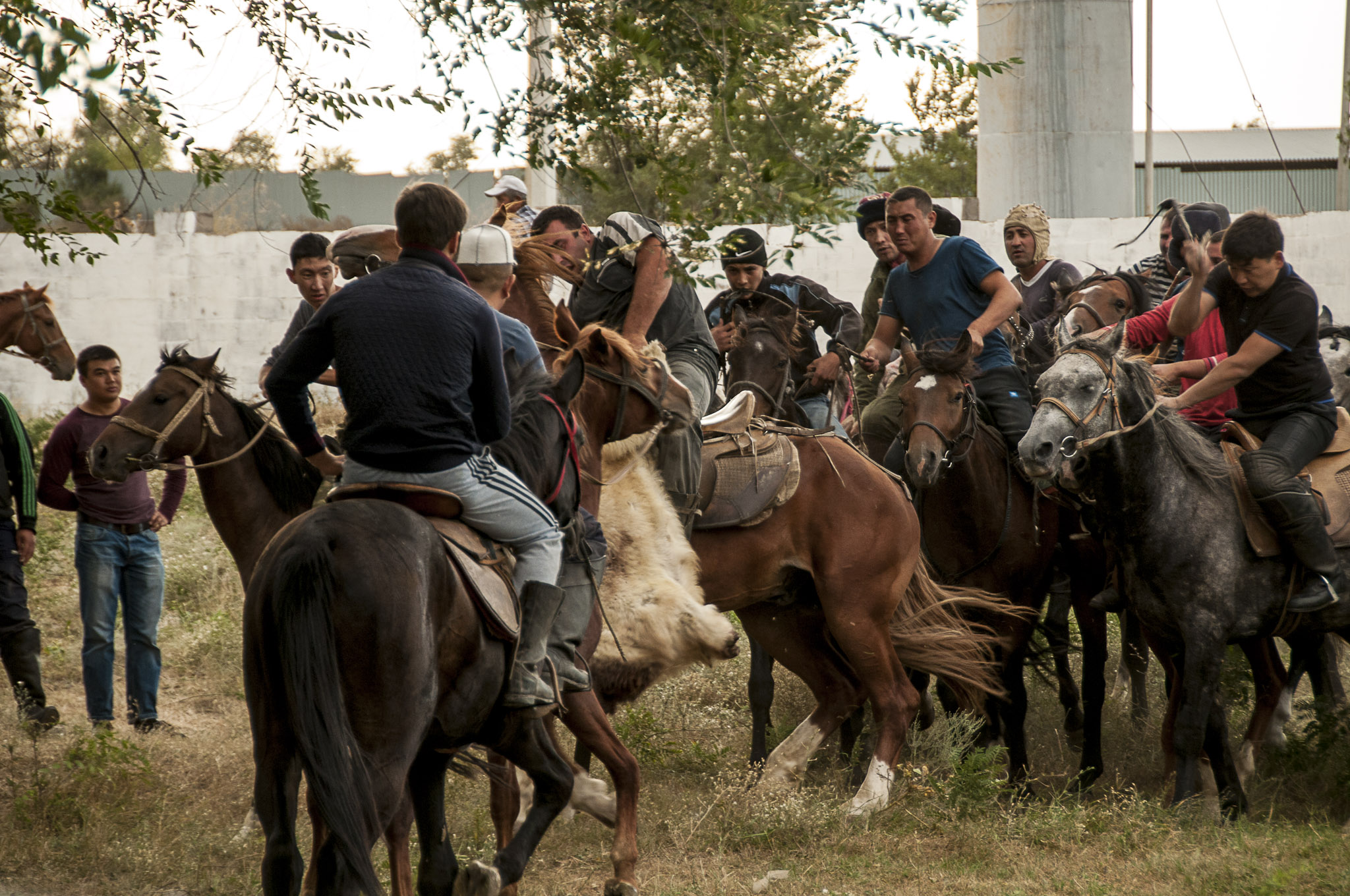 Reiter bei einem traditionellen Pferdespiel in Zentralasien.
Photo: Alesia
Sayram at a glance
- Sayram is also known as Sajram and Sairam; the historical name Ispidjab is associated with its medieval past.
- Local sights include the mausoleums of Karashash Ana and Ibrahim Ata, the shrines of Mirali Baba and Abdel-Aziz Baba, a medieval minaret, and the Sairam Local History Museum.
- The Karashash Ana Mausoleum stands in the old settlement near the intersection of Yusuf Sairami and Amir Timur streets.
- The present mausoleum was built in 1851–1852 and is recognized as a protected architectural monument and pilgrimage site.
- The site’s heritage brings together religious life, regional trade, and several periods of construction.
- Sayram works well as a focused excursion or as a standalone stop on a trip through southern Kazakhstan.
Ispidjab and the caravan routes
The names Sajram, Sayram, and Sairam refer to the present-day town; Ispidjab is associated with its medieval history. Ispidjab was an important city on the caravan route between Shash (Tashkent) and Shymkent. Markets and covered trading arcades were part of its economic life at the time. Sayram is therefore interesting not only for its individual monuments: it was part of the trade and travel networks of southern Kazakhstan.
A visit today takes place on a very different scale from that of the once-thriving caravan city. Its surviving heritage includes mausoleums, shrines, and a medieval minaret within a settled community. Routes between the sites pass through everyday streets and religious grounds; the monuments are not enclosed within a single museum complex. A journey through Kazakhstan can include Sayram to explore this layer of local history alongside the region’s larger archaeological sites.
The Karashash Ana Mausoleum
The Karashash Ana Mausoleum stands in the center of Sayram, at the edge of an old cemetery, near the intersection of Yusuf Sairami and Amir Timur streets. Kazakhstan’s register of monuments dates the present building to 1851–1852 and lists it as a protected architectural monument and pilgrimage site. The name is associated with the religious tradition identifying Karashash Ana as the mother of Khoja Ahmed Yasawi.
The building is a single-chamber portal-and-dome mausoleum made of fired brick. Its modest size and position beside the old cemetery shape the impression it makes.
Other historic sites in Sayram
Local cultural heritage also includes the Ibrahim Ata Mausoleum, associated with Khoja Ahmed Yasawi’s father, as well as the mausoleums of Abdel-Aziz Baba and Mirali Baba. A medieval minaret, the Sairam Local History Museum, and Mar Tobe add to the visit beyond Karashash Ana. These sites represent different layers of religious history, architecture, and local memory. Focusing on a few destinations leaves time to appreciate their different settings and architectural forms.
Religious sites are living cultural places as well as historic monuments. Modest dress, quiet behavior, and consideration for local use all contribute to a respectful visit. Follow local instructions and the wishes of those responsible when taking photographs. For a short visit, the main mausoleum and nearby old streets make a good itinerary; a longer visit can include the local history museum and other shrines.
Where to stay and how to explore southern Kazakhstan
Sayram can be combined with a stay in Shymkent or visited as a cultural stop in its own right in the south. Choose your accommodation in Kazakhstan according to whether the day starts in the city or continues to another region. Getting there and getting around depend on your actual starting point, planned visits, and return journey; no single short circuit connects all the sights.
A trip can continue to Turkistan, whose Yasawi Mausoleum is an important architectural and pilgrimage site, or to Otrar, an archaeological landscape. Taraz adds a distinct city and mausoleum stop to the route. Each of these places deserves time of its own; plan the order according to overnight stays and the distances between stops. On a trip through Central Asia, onward travel to Almaty is a separate long-distance leg.
When preparing for a trip with several stops, make sure you have complete addresses and a practical plan for the return journey. Language and communication can help with place names and meeting points; using the destination name in Latin script makes navigation easier. Cross-border travel also involves entry requirements and documents. Local transport and admission costs fall under money and payments. The wider Kazakhstan itinerary can be adapted to the time available, with Sayram, Turkistan, and Otrar planned as separate stops.
Frequently asked questions about Sayram
What is distinctive about the layout of the Karashash Ana Mausoleum?
It is a single-chamber portal-and-dome structure with two portals at one corner of the building. The western portal contains the entrance, while the southern one has a latticed window.
What connects Sayram with Ispidjab?
Ispidjab is the historical name associated with medieval Sayram. The city stood on the caravan route between Tashkent and Shymkent.
Which places can be combined on a short visit?
The Karashash Ana Mausoleum and nearby historic streets make for a focused stop. If you have more time, you can add the local history museum, the medieval minaret, and other shrines.
How can Sayram fit into a regional itinerary?
Sayram can be combined with a stay in Shymkent or serve as a stop between Turkistan, Otrar, and Taraz. Each place has its own historical focus and requires a separate journey.
