
Central Asia: the Silk Road, mountains and steppes
Central Asia is a vast travel region between the Caspian area, the Silk Road, the steppes and the high mountains. When planning a trip to Central Asia, first decide what role the destination should play in your itinerary: a starting point, part of a tour, a city base, a nature stop or a longer stay. This helps create an itinerary that does more than string together place names—it works well on the ground.
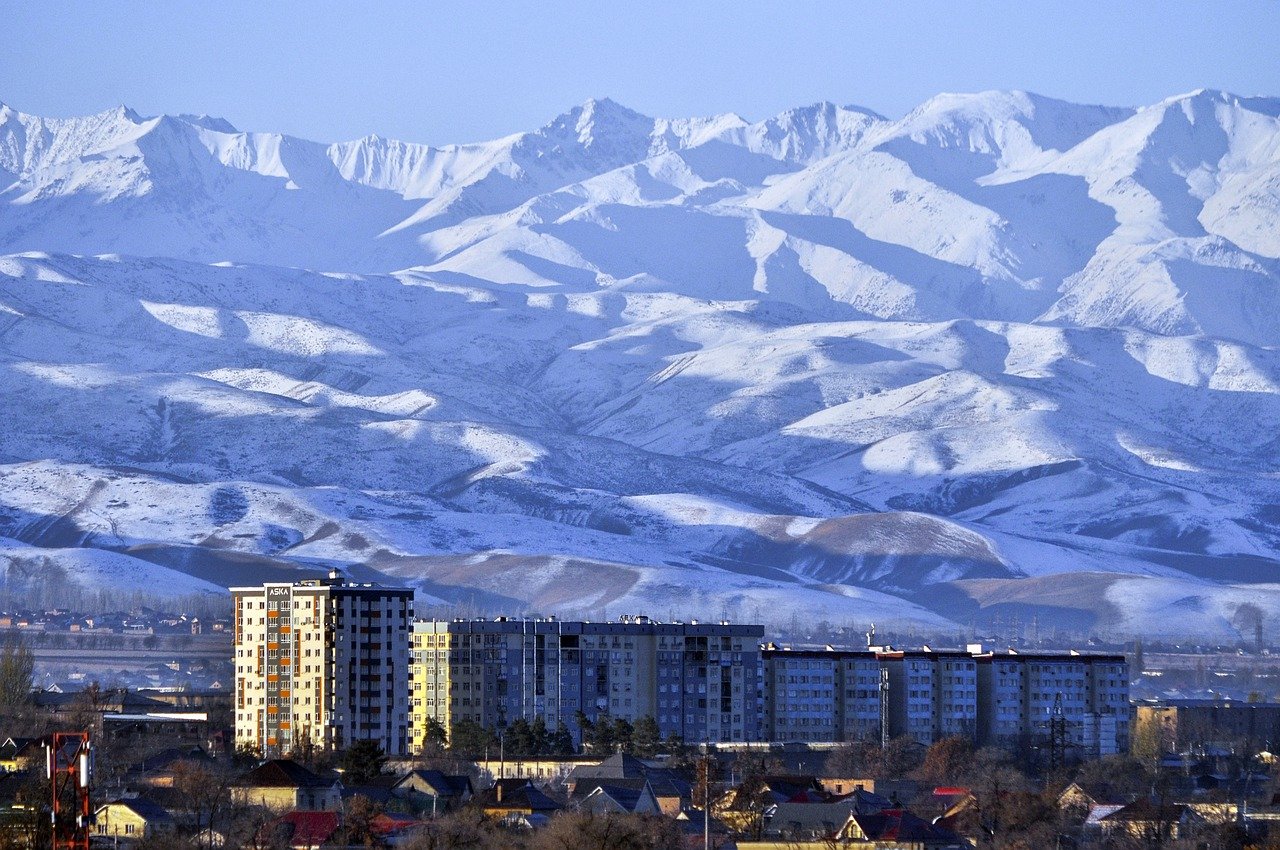 Biskek
Photo: Eldiiar Isakov auf Pixabay
Biskek
Photo: Eldiiar Isakov auf Pixabay
An overview and the character of the trip
Kazakhstan, Uzbekistan, Kyrgyzstan, Tajikistan and Turkmenistan differ greatly in landscape, infrastructure and travel style. When planning, it is important to consider distances, border crossings, the time of year and transport together. In particular, short distances on the map between the Balkans, Central Europe and Central Asia can take much longer because of mountains, borders, timetables or poor connections.
For visitors, making a clear selection is especially important because distances are long and each country has very different requirements. Realistic planning means choosing a few fixed stops and allowing time for the journeys between them. This helps with arrival days, longer bus or train rides, and regions where weather, the season or local holidays may change the day’s plans.
Cities, landscapes and culture
Silk Road cities, bazaars, deserts, steppes, mountains, lakes, Soviet-era cityscapes and Islamic architecture define the region. A good itinerary combines well-known places with quieter stretches. Capitals, old towns, museums and markets provide a sense of orientation, while coasts, mountains, rivers, lakes or spa towns change the pace and make a trip feel less packed.
Central Asia becomes easier to understand when you avoid cramming too many countries into one trip and instead create thematically compatible stages. It is especially helpful to set a clear focus for each day. A museum, a city district, a viewpoint or a stretch through the landscape is easier to remember than an itinerary that packs too many stops into a short time.
Routes and combinations
Central Asia lends itself to country routes through Kazakhstan, Uzbekistan, Kyrgyzstan, Tajikistan and Turkmenistan. Kazakhstan Uzbekistan Kyrgyzstan The best combinations follow genuine transport corridors and connect neighbouring themes. A country page can help you sort through the options, but it is no substitute for checking specific routes, places to stay and seasonal connections.
Flights, long-distance train routes, border rules and mountain passes shape a trip more than the map alone. For tours, choosing two to four well-placed bases is often more comfortable than changing locations every day. From there, excursions, city visits and nature destinations are easier to combine. If you travel by car, consider parking and road conditions; by bus and train, frequency, transfers and the return journey matter more than the straight-line distance.
When to go and practical tips
Spring and autumn are favourable for many routes, while summer heat in low-lying areas and winter conditions in the mountains need to be taken into account. Spring and autumn are often well suited to cities, tours and active days outdoors. Summer is especially good for the coast, lakes, long evenings and mountain regions, but can put more pressure on accommodation and transport. In winter, short walks, museums, cafés, thermal baths or ski resorts become more important.
Before booking, check the latest entry advice, timetables, opening hours, public holidays, local rules and weather conditions. For border regions, national parks, islands, mountain routes and historic sites, it is worth checking again shortly before travelling. Allowing some flexibility in your daily plan is not a waste—it makes room for spontaneous discoveries and breaks. For Central Asia, check accommodation options against the main daily routes and realistic breaks.
Organising Central Asia by landscapes and routes
Central Asia offers very different kinds of trips: historic Silk Road cities, high mountains, steppes, desert regions and young capitals. Planning is easier when you distinguish between cultural routes such as Samarkand, Bukhara and Khiva, mountain trips in Kyrgyzstan or Tajikistan, and long overland journeys in Kazakhstan or Uzbekistan. Distances are often great, so flights, rail routes, border crossings and visa or entry requirements should be checked against current information before settling on a route.
Central Asia: practical preparations
Central Asia brings together vast open spaces, mountains, historic trade routes and very different cities. Distances and local conditions need to be checked anew for every itinerary. Planning the trip as a series of manageable stages makes it easier to balance distances, interests and time to relax.
Organising your route sensibly
When planning a trip, understanding the geography matters more than making the longest possible list. First decide which places genuinely fit together and how much time you will need to get there, find your bearings and return. A city stay, a landscape route and a visit to historic sites each have a different rhythm. If you plan several long journeys every day, transfers eat into your time and make the itinerary unnecessarily inflexible. Two or three accessible highlights can offer more than six destinations visited only briefly. For Central Asia, therefore, plan your departure point, transfers and return journey around the actual day-by-day itinerary.
Before making a decision, check the latest information on entry requirements, transport, opening hours, health and local rules with the relevant official authorities. General travel descriptions explain the context but cannot replace up-to-date advice. This is particularly important for border crossings, regional restrictions, seasonal road conditions and changes to public transport. It is a good idea to keep a printed or offline backup in case you do not have a reliable connection everywhere along the way. For Central Asia, therefore, plan your departure point, transfers and return journey around the actual day-by-day itinerary.
Comparing cities, landscapes and stages
Cities are often well suited to planning around a fixed base. From there, you can group museums, markets, historic buildings and parks by location. Landscape trips, by contrast, depend on supplies, weather, trail conditions and the distance to the next place to stay. Historic sites may have special opening hours or visitor arrangements, so an excursion should not be judged only by photos and the distance on the map. For Central Asia, check accommodation options against the main daily routes and realistic breaks.
For families, older travellers and people with limited mobility, short distances, places to sit, lifts and accessible toilets are practical considerations. Travellers with little time also benefit from a plan that explicitly includes breaks. For a long stage, prepare water, suitable clothing, medication and a way to get in touch with someone. These tips cannot guarantee a trouble-free trip, but they help reduce avoidable surprises. For Central Asia, plan routes and breaks with the capabilities of everyone travelling in mind.
Planning transport and time realistically
Timetables, border delays, roadworks and weather can change. A journey that looks quick on the map can take much longer because of transfers, walks or luggage. Before making a firm booking, check the departure point, transfer time, baggage rules and return journey. For overnight journeys and early departures, the location of your accommodation matters as much as the fare. Prices and availability should not be stated as general facts; check them with the relevant provider for current information. For Central Asia, check accommodation options against the main daily routes and realistic breaks.
If you use a rental car or your own vehicle, also check local traffic rules, documents, insurance and whether the route is actually passable. In remote areas, a long distance should not automatically be assumed to be an easy drive. Petrol stations, repair shops and mobile coverage may be unevenly distributed. A flexible daily plan with an accessible alternative is often more robust than a route planned down to the minute. For Central Asia, therefore, plan your departure point, transfers and return journey around the actual day-by-day itinerary.
Respect regional differences
A region is not one uniform place. Language, mealtimes, religious customs, payment options and social etiquette can vary between city and countryside. Travellers should take local advice seriously, ask permission before taking photos in religious or private spaces, and avoid photographing people without their consent. Individual experiences should not be generalised to an entire population. For Central Asia, weigh these points according to the route, time required and your own travel pace.
Historical and political topics also require a factual perspective. Place names, border issues and monuments may be interpreted differently. Where information conflicts, official institutions, museums, local communities and reputable specialist sources are more suitable than sweeping travel claims. Travel interests and current advice should be considered separately: an interesting destination is worthwhile only if access, timing and conditions are actually suitable. For Central Asia, plan indoor visits, access and the routes between individual highlights separately.
A reliable checklist
- Check the latest route, entry and transport information before departure.
- Plan stages according to actual travel time, not just straight-line distance.
- Plan accommodation, the return journey, breaks and a simple alternative.
- Check opening hours, reservations and any special visitor rules directly with each destination.
- Prepare documents, medication, payment methods and offline information.
- Do not make decisions based on unsupported claims or conflicting information.
This keeps the plan flexible enough to accommodate changes and specific enough to support a good decision. The right destinations depend on your timeframe, preferred travel style and the current conditions on the ground. Additional information about the linked regions can help you find your way; it is not a guarantee of availability, prices or any particular arrangements. For Central Asia, weigh these points according to the route, time required and your own travel pace.
For travel planning, Central Asia is first considered in terms of landscape, distance and the pace required. Kazakhstan, Kyrgyzstan and Uzbekistan offer different travel experiences; mountains and mountain landscapes require different time buffers from cities and historic centres. This turns a vast region into a series of manageable stages.
Before combining destinations, check arrival and transport, entry requirements and documents and staying safe on the road anew for each country and route. Travel preparation helps you keep track of accommodation, language, supplies and time buffers. For long distances, an extra rest day is often more realistic than another change of location.
Conclusion for travel planning
Central Asia is a travel region that calls for careful planning, clear priorities and enough time between major stops. Planning around your interests makes it easier to find the right balance of well-known places, regional culture and quieter stretches. This turns an overview into a useful starting point for a trip that works in terms of time, theme and geography.
Frequently asked questions
How many destinations can you fit into one day of travel?
It depends on distances, transport, opening hours and your personal pace. A few nearby destinations are usually easier to plan realistically.
What information should be checked shortly before travelling?
Entry requirements, transport, opening hours, weather, health advice and local rules can change and should be checked with the relevant authorities.
What helps when travelling long distances?
Stages, breaks, an accessible alternative and an up-to-date check of the route and transport. Straight-line distance alone is not enough.
