
Kazakhstan: Steppe, Almaty, Astana, and Mountains
Accommodation in Kazakhstan
Kazakhstan is the largest country in Central Asia by area; vast distances separate its cities, mountains, steppes, and historic centers. Astana and Almaty offer major-city destinations, while Turkestan and Baikonur have their own historical and technological significance. The route works best when it links a few suitable regions and takes the distances between them into account.
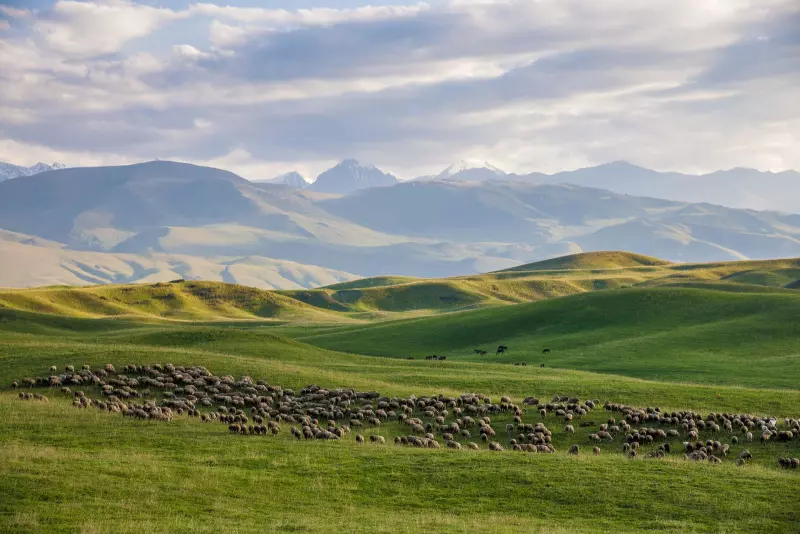 Weite Landschaften und Gebirge prägen das Land Kasachstan. Noch immer leben viele Menschen hier als Nomaden mit ihren Herden.
Photo: Alesia Belaya
Kazakhstan at a glance
- Kazakhstan brings together major cities, steppe, mountain regions, and historic sites across vast distances.
- Astana and Almaty have distinct urban characters and their own attractions.
- The southeast offers mountain scenery and excursion destinations around Almaty.
- Turkestan is defined by the Mausoleum of Khoja Ahmed Yasawi.
- Baikonur has controlled access rules and organized visitor arrangements.
- The German Federal Foreign Office describes the security situation across the country as stable; in Astana and Almaty, standard precautions against big-city crime apply.
Astana and Almaty as distinct city stops
Astana offers modern capital-city architecture and clearly defined sights such as Baiterek, Khan Shatyr, and the National Museum. Baiterek combines the shape of a tree with the legend of Samruk; its observation deck looks out over the new city center. Khan Shatyr, a large entertainment and shopping center, offers a different focus, while the National Museum brings together exhibitions on the country’s history and culture. Astana makes a distinct city stop on a trip to Kazakhstan.
Almaty combines urban attractions with the mountainous southeast. The city’s parks, museums, and markets make for urban outings, while Kok-Tobe and Medeo draw visitors toward higher ground and the surrounding landscape. Astana and Almaty are separated by a great distance, so they usually belong in separate legs of a trip.
Turkestan and Baikonur
The Mausoleum of Khoja Ahmed Yasawi makes Turkestan an important historical destination. An earlier mausoleum dates to the 12th century; beginning in the early 1390s, Amir Timur commissioned a monumental new complex. The building combines a mausoleum, mosque, Sufi lodge, and madrasa. In the central hall, Kazandyk, a monumental bronze cauldron stands beneath a high dome. The mausoleum is a destination in its own right, offering a focus on the city’s history and architecture.
Baikonur is associated with the history of space exploration and the work of the southern space center. The city and the spaceport have separate access systems; visits are subject to controlled entry and permit procedures. An organized visit must follow the requirements of the relevant authorities and an authorized tour operator.
Steppe, mountains, and scenic routes
The country’s landscapes range from vast steppes to mountain regions and lakes. In the southeast, city visits can be combined with mountain destinations; for a day in the countryside, elevation, distance, and the return journey all need to be factored into the plan. Mountain landscapes add a distinct nature-focused dimension to a city trip.
A route through Central Asia can combine Kazakhstan with other regions in the area, Kyrgyzstan or Uzbekistan. Border crossings and long distances each require dedicated travel time. The countries can be planned as independent stops rather than treated as brief layovers between cities far apart.
Accommodation, transport, and safety
In cities, accommodation, the train station or airport, and planned destinations all belong in the same day’s schedule. For longer routes, it helps to choose fixed bases and plan realistic travel legs. Accommodation options and getting there and getting around determine how much time remains for each place. Travel preparations, entry requirements and documents, money and payments, and staying safe while traveling are also part of planning a trip.
The German Federal Foreign Office describes the security situation in the country as stable. Petty theft, robbery, attempted scams, and fake police checks occur rarely in Astana and Almaty. Using official taxis, keeping important documents secure, and taking extra care when out at night are in line with current guidance. Avoid demonstrations and large crowds.
Frequently asked questions about Kazakhstan
Where does the cable car to Kok-Tobe in Almaty start?
The cable car starts on Dostyk Avenue, near the Kazakhstan Hotel; at the top, there are viewpoints and other recreational activities.
What makes Turkestan special?
The Mausoleum of Khoja Ahmed Yasawi combines the functions of a mausoleum, mosque, Sufi lodge, and madrasa. The monumental complex was built under Amir Timur beginning in the early 1390s.
Can you visit Baikonur without special permission?
No. The city and spaceport have controlled access and permit procedures; visits are arranged through the relevant authorities and authorized tour operators.
What precautions apply in the major cities?
The German Federal Foreign Office reports rare cases of petty theft, robbery, fraud, and fake police checks in Astana and Almaty. Using official taxis and keeping documents secure are among the practical precautions.
