
The Volga: River Landscapes, Cities, and Travel Ideas in Russia
The Volga is one of Russia’s defining rivers, linking very different landscapes, cities, and historic regions. Anyone seeking to understand Russia beyond its capitals will find plenty of clues along the river. When planning a trip along the Volga, it is important to choose suitable highlights, allow realistic travel times, and make sensible connections.
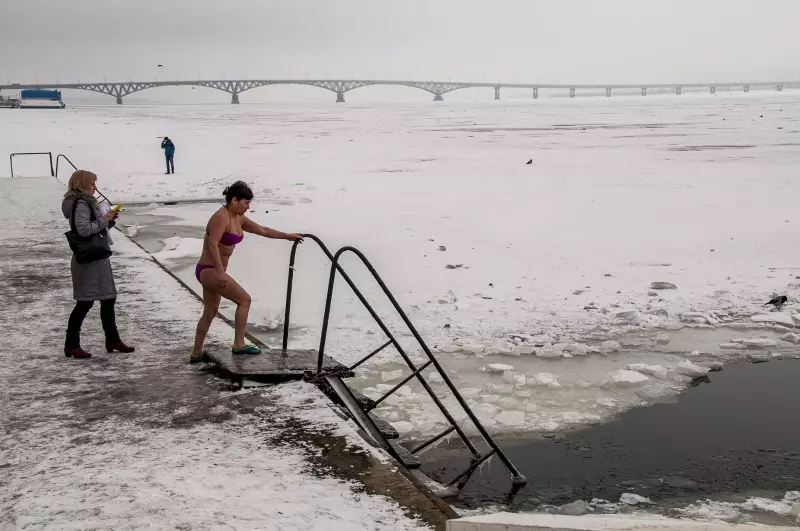 Auch zugefroren Badevergnügen in der Wolga? Die Wolga und eine Eisschwimmerin bei Saratov
Photo: Alesia Belaya
Auch zugefroren Badevergnügen in der Wolga? Die Wolga und eine Eisschwimmerin bei Saratov
Photo: Alesia Belaya
Getting your bearings
Volga: River Landscapes, Cities, and Travel Ideas in Russia is a destination that is easier to plan when its location, routes, and nearby places are clear from the outset. For a short visit, one main focus is often enough. With more time, museums, riverbanks, parks, day trips, and quieter neighborhoods become more appealing.
These pages can help with route planning: Russia, Golden Ring, Volga, Karelia, Pyatigorsk, Siberia, Saint Petersburg, Moscow Airports. They offer natural connections if your trip is to include more than just one place. For the Volga, departure points, transfers, and return journeys should therefore be tailored to the day’s itinerary.
What shapes the region
Its character comes from its history, cityscape, landscape, and how it is used today. The Volga is therefore about more than individual sights; it is also about routes, squares, riverbanks, viewpoints, and how much time a visit really requires.
- Cities such as Kazan, Samara, Volgograd, and Nizhny Novgorod
- River landscapes, waterfront promenades, and vast expanses of water
- Opportunities for river cruises and rail journeys
- Cultural history spanning Central Russia, Tatarstan, and the south
On the Volga, the distance between two interesting places often matters more than their proximity on a map. So first choose a city district, a riverfront walk, or a stretch through the countryside for your visit. Then check journey times, amenities, breaks, and how to get back to your accommodation. This leaves room to enjoy the river without rushing through several far-flung stops.
Planning your time there
A good day on the Volga starts with a clear idea of which stretch of the river you want to explore. A city tour, a riverside walk, and a longer excursion have different rhythms and should not automatically be combined. The upper, middle, and lower Volga are treated as distinct travel regions; for each connection, check current schedules, daylight hours, and a reliable return option.
The season mainly affects the balance between city, riverbank, and countryside. Warmer months leave more time for walks and open waterfront areas, but can also bring heat, traffic, and higher demand. Longer walks are often more comfortable in spring and fall; in winter, shorter outdoor visits, museums, and weatherproof connections between stops become more important.
Connections and excursions
The Volga is best understood as part of a longer route. If you have little time, focus on the main sights in the center. If you are staying for several days, you can add nearby towns, landscapes, or destinations that match your interests.
For a Volga itinerary, compare trains, buses, cars, and possible boat trips based on the specific section of the river. The long distances between cities cannot be covered with one standard day plan. Check the departure point, transfers, luggage, meals, and return journey for each leg. An extra overnight stay may be more reliable than a late-evening connection.
Practical tips
Location matters more than an apparently small price saving on the outskirts when choosing accommodation. Staying near the station, city center, riverfront, or main routes saves time and makes spontaneous breaks easier. On a multi-stop trip, choose accommodation that lets you start the next day without a detour. For the Volga, consider the location of your accommodation alongside your main daily routes and realistic breaks.
If you are taking photos, visiting museums, or traveling with children, it is better to plan fewer stops and allow more time for each. Great travel experiences often come not from a long checklist, but from well-chosen legs, clear priorities, and enough flexibility for weather, waiting times, and discoveries along the way. For the Volga, factor the season into your plans along with trail conditions, opening hours, and available daylight.
Routes and time needed
How much time you need for the Volga depends greatly on whether it is a brief stop or a destination in its own right. One day is enough for a first impression if the main sights are close together. Two days leave more time for museums, side streets, riverside walks, markets, or an excursion nearby.
A simple order of operations helps with planning: first sort out your arrival and accommodation, then set your main routes, and only after that add other destinations. This keeps the day manageable. If you are traveling by train or bus, pay particular attention to early and late connections. For longer distances, avoid scheduling the next leg too tightly after your visit. For the Volga, consider the location of your accommodation alongside your main daily routes and realistic breaks.
Seasons and your stay
The season makes a noticeable difference. Warmer months are ideal for long walks, waterfront areas, parks, and trips into the surrounding countryside. In the shoulder season, many places are quieter, bringing museums, architecture, cafés, and compact city walks to the fore. In snow, rain, or heat, a plan combining short indoor and outdoor stops is more comfortable. For the Volga, factor the season into your plans along with trail conditions, opening hours, and available daylight.
The time of day matters, too. Central sights are often more relaxed in the morning, while cafés, promenades, and viewpoints come to life later on. If you want to take photos, plan not only the well-known spots but also the routes between them. Those are often where you get a stronger feel for a city or region. For the Volga, weigh the places mentioned according to travel time, distance, and your own pace.
What travelers should know
The Volga is especially well suited to travelers who want more than just to tick a name off the map. Your visit will be more rewarding if you consider history, everyday life today, and practical routes together. This also means reading older descriptions with care and checking current conditions on the ground.
Families, groups, and slower-paced travelers benefit from making a clear selection. A few well-chosen stops are better than an overloaded day. If you want to see more, use one place as a base and explore the surrounding area in shorter stages. That leaves enough time for breaks, meals, finding your way, and spontaneous detours. For the Volga, plan routes and breaks together, taking into account what all members of your group can manage.
Before you go
Before setting out, it is worth checking a few key details. These include current entry and traffic rules, the location of your accommodation, access to train stations or bus terminals, and which attractions are actually open. At historic sites, museums, spa towns, and natural destinations in particular, some areas may have different access than expected due to the season, construction, or events. For the Volga, consider the location of your accommodation alongside your main daily routes and realistic breaks.
It is also helpful to make a short priority list. One main destination, two or three additional stops, and a quieter stretch are enough for many travel days. This keeps your visit flexible without making it aimless. If you are traveling with others, be realistic about routes and breaks: long distances within a city or region often take more out of you than the travel time alone suggests. For the Volga, weigh the places mentioned according to travel time, distance, and your own pace.
Finding your way along the Volga
The Volga is not just a long river but an important thread connecting many Russian regions. Travelers can organize their route around cities and landscapes: the upper, middle, and lower Volga differ considerably in climate, architecture, and cultural history. Kazan, Nizhny Novgorod, Samara, Saratov, Volgograd, and Astrakhan each offer very different experiences. When planning a trip, check distances, rail connections, river sections, and seasonal conditions separately.
Understanding the Volga as a route
For travelers, the Volga is less a single place than a vast region of very different cities, riverbanks, and landscapes. Places such as Kazan, Nizhny Novgorod, Volgograd, and Astrakhan each reveal a different part of the river. So start by deciding whether your priorities are city visits, river landscapes, history, or onward travel. Long distances, seasonal connections, and current travel advisories generally make a route with a few well-chosen stops more practical than an overly packed itinerary.
Making your Volga travel plans more specific
The Volga links long distances, varied landscapes, and cities, so a trip needs well-chosen stops along the way. The order depends on your available time, mode of transport, season, and interests.
Plan stages at your own pace
Reliable travel planning starts with asking what you can actually reach in one day. Maps show distances, but do not automatically account for transfers, walks, luggage, waiting times, or finding your way around an unfamiliar station. Group nearby destinations into one focus and treat longer excursions as separate legs. Allowing some extra time for weather, delays, and changes makes decisions easier once you are there. For the Volga, departure points, transfers, and return journeys should therefore be tailored to the day’s itinerary.
Before making a firm booking, check current information with official agencies, transport operators, accommodation providers, and attractions. A travel article explains the context but cannot replace advice on entry, safety, opening hours, permits, or schedules. This information can change. For the Volga, consider the location of your accommodation alongside your main daily routes and realistic breaks.
Combining cities, landscapes, and culture
You can organize city visits by neighborhood: a historic center, a museum or viewpoint, and a quiet place to take a break. For destinations in the countryside, consider the weather, trail conditions, amenities, and how to get back to your accommodation. Historic buildings, religious sites, and museums may have their own visitor rules. Photos do not guarantee access. For the Volga, consider the location of your accommodation alongside your main daily routes and realistic breaks.
Families, older travelers, and people with limited mobility benefit from short routes, places to sit, accessible restrooms, and good transport links. For natural and riverside areas, include water, suitable clothing, medication, and an offline alternative in your day plan. For the Volga, plan routes and breaks together, taking into account what all members of your group can manage.
Be realistic about transport
For trains, buses, cars, and excursion boats, check the departure point, transfers, luggage rules, and return route together. On long journeys, an overnight stop that is easy to reach is a good idea. If you are renting a car, check your documents, insurance, local traffic rules, fuel availability, and whether the route is passable. For the Volga, departure points, transfers, and return journeys should therefore be tailored to the day’s itinerary.
Even within a city, a straight-line distance is not a reliable guide to travel time. Stations, bridges, riverbanks, pedestrian zones, and changes in elevation can make routes longer. One main destination, one additional stop, and a break often make for a better day than a long checklist. Check reservations and opening hours directly with the provider. For the Volga, departure points, transfers, and return journeys should therefore be tailored to the day’s itinerary.
Travel respectfully and stay informed
Language, mealtimes, payment options, and customs can vary by region. Ask before taking photographs in religious or private spaces. Treat historical and political subjects objectively. If information conflicts, official institutions, museums, local communities, and reputable specialist sources are a better basis for decisions. For the Volga, plan indoor visits, access, and the routes between individual points of interest separately.
Practical checklist
- Check current entry, traffic, weather, and health advice.
- Plan each leg based on actual travel time, not straight-line distance.
- Plan accommodation, the return journey, breaks, and an alternative.
- Check opening hours, reservations, and visitor rules directly.
- Bring documents, medication, payment methods, and offline information.
- Do not make decisions based on uncertain or unverified information.
Frequently asked questions
How many places can I visit in one day?
It depends on distance, transport, opening hours, and pace. A few nearby places are usually more realistic.
What should I check shortly before traveling?
Entry requirements, transport, opening hours, weather, health advice, and local rules can change.
How can I keep my route flexible?
Choose one main destination, one additional place you can reach, allow time for breaks, and have an alternative in case of bad weather or transport issues.
When choosing places, also take into account your available time, distances, current transport routes, and a realistic return journey.
To plan a trip along the Volga, choose a specific stretch based on the landscapes and urban areas described above. Nizhny Novgorod and Astrakhan represent different parts of the river region. With rivers and waterways, getting there and transport, and enough time in reserve, you can make your final decision based on the actual length of each leg.
Choose one place as a fixed base for the first stretch of the river. From there, check routes, sightseeing, and possible onward travel separately. This prevents the length of the river from becoming an unrealistic promise for a single leg of a trip.
Conclusion
The Volga is a worthwhile part of a trip through the region when you plan your stay around realistic travel times. The trip is most rewarding when you consider main attractions, quieter stretches, and suitable onward journeys together.
