
Penza: a city on the Sura in European Russia
Penza lies on the Sura River in European Russia. For a first visit, head to the riverside promenade, the Rostok Monument, Moskovskaya Street and the historic city center. These places reveal Penza as a riverside city with a trading history that can still be read in the layout of its central streets.
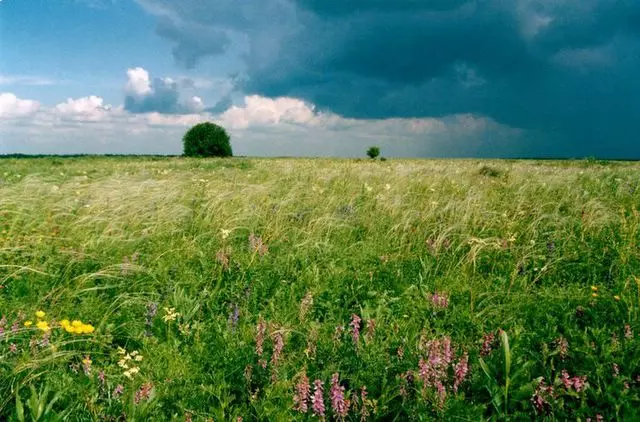 Der regionale Naturpark Wolga Steppe im Oblast Pensa.
Photo: Alexander Dobrolubov / Wikipedia, free to use
Penza at a glance
- Penza lies on the Sura River and is part of Russia’s Volga region.
- The riverside promenade and the Rostok Monument are prominent landmarks along the river.
- Historic Moskovskaya Street follows the route of the former road to Moscow.
- The former fortress stood on what is now Sovetskaya Square; the commercial center developed to its north.
- You can plan separate visits around the riverfront, the city center’s history and its arts scene.
The Sura riverfront, promenade and Rostok
The Sura gives the city a clear geographical focus. The promenade and the prominent Rostok Monument stand along its banks. For a first walk, start at the river and then continue toward the squares in the city center.
Central administrative buildings stand on Lenin Square, while Sovetskaya Square forms the historic heart of the old center. A fortress once stood here. Moving between the riverfront and the old center shows how the city grew from a fortified settlement into a larger commercial and administrative hub. Taking two separate, leisurely walks leaves more time to appreciate the urban landscape.
Moskovskaya Street and the history of trade
Moskovskaya Street developed north of the former fortress, where shopping streets, the town hall, customs house and an inn sprang up. Merchants and craftspeople followed, and the street later became a center of markets and handicrafts. Its name refers to the former postal route from Penza to Moscow via Saransk, Arzamas, Murom and Vladimir. The old commercial thoroughfare can therefore be combined with Sovetskaya Square and the riverside path for a historical walk through the city.
Other cultural attractions include the Russian Drama Theatre, Orthodox churches and a Tatar mosque. These places add the city’s present-day religious and cultural landscape to the story of the trading street. The regional art gallery named after K. A. Savitsky offers a distinct focus on fine art and changing exhibitions alongside the theater and churches.
Accommodation and planning your day
For a short stay, a central location is practical if the promenade, historic street and squares are your priorities. If you also want to visit the art gallery and theater, set aside a separate block of time. Compare the accommodation options in Eastern Europe by location, planned routes and length of stay. If you plan to stay outside the center, include your evening route and return journey in your plans.
A good order is to visit the riverside promenade and Rostok in the morning, then walk to Moskovskaya Street and the site of the former fortress. For another part of the day, visit the drama theater, churches and gallery as separate destinations. This lets you shape your time in the city around public spaces, architectural history or fine art, rather than treating the squares as brief stops along the way.
Adding Penza to a longer Russia itinerary
On a longer trip through Russia and Central Russia, plan city visits and larger landscapes as separate sections. The Volga offers a broader perspective on the river region, with destinations such as Samara and Ulyanovsk. This makes it possible to organize a trip around Russia by region rather than as one continuous route.
If you are planning a trip from Moscow, include Moscow as a separate major-city stop; the Urals represent a later, much farther eastward region. The Volga region can be planned as a separate route, using transport in Russia. This breaks distances, transfers and overnight stays into clear legs instead of packing too much into a single day.
Current flight and rail conditions affect onward travel. Tailor getting there and getting around and travel preparations to your actual route; make sure to include money and payments in your budget, as card and cash arrangements differ. For longer journeys, factor in breaks and the return trip as part of a safe travel plan.
Internet and mobile services may also be disrupted or throttled in some regions; foreign SIM cards are often temporarily blocked from using mobile data and SMS after arrival. Western credit cards and payment apps do not work there. Include cash and a reserve in your budget; exchanging money on the street is illegal.
Frequently asked questions about Penza
Why is it called Moskovskaya Street?
Its name comes from the former postal route to Moscow, which ran from Penza via Saransk, Arzamas, Murom and Vladimir.
What does the name Rostok mean?
“Rostok” means “shoot” or “sprout” in German.
Penza is in the Russian Federation.
