
Hotels in Stolac: Fortress, Bregava and Cultural Heritage
Accommodation in Stolac
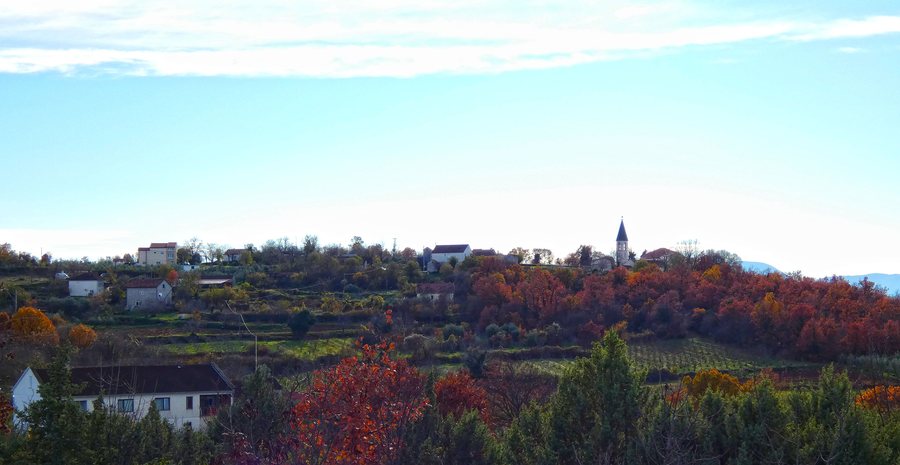
Stolac lies on the Bregava and combines distinctive buildings, archaeological sites and a richly documented history. The bridges as well as the grain and fulling mills on the Bregava are monuments and evidence of local construction techniques. Stolac is also home to the Old Fortress of Stolac, one of the largest fortresses in Bosnia and Herzegovina.
Culture and History
Begovina, a residential complex, is located on the northeastern edge of Stolac. The complex consists of four areas that create a gradation of space from the public access road to the private family courtyards. The Čaršija is also part of the historic cityscape: it is a central Ottoman district. At its center are the Čaršija Mosque and the Great Tepa, a marketplace. The Čaršija Mosque was built in 1519.
The Šarić House was built in 1734/1735. In 1963, the Art Gallery in Sarajevo opened its first branch outside the city in Stolac. It was housed in the Šarić House and named after Branko Šotra. A heritage interpretation center provides visitors with informational materials and online resources about Stolac’s cultural heritage.
Archaeology and Historical Traces
The archaeological site of the Hellenistic city of Daorson is located in Ošanići. It consists of three interconnected parts whose arrangement is determined by the configuration of the terrain. The archaeological area of the Hellenistic city of Daorson in Ošanići is a national monument of Bosnia and Herzegovina.
The Badanj Paleolithic site lies in a rock overhang 45 meters above the Bregava, about 6 kilometers west of Stolac. An engraved drawing at the Badanj Paleolithic site is considered one of the oldest artistic monuments in Bosnia and Herzegovina. Three kilometers west of Stolac lies the Radimlja necropolis, on the Stolac–Čapljina road in Vidovo polje near the village of Poprati. The Radimlja necropolis has been on the UNESCO list of protected tangible cultural heritage since 2016.
Vidoški stood along routes used by merchants from Dubrovnik. Vidoški had 13 towers that served to defend against possible attacks. From there, the view extends across the Vidovo plain, also called the Vitus Plain, and the Bregava River.
Bregava and Landscape
The Bregava River flows through Stolac. Above the Begovina residence, the Bregava forms the natural Pjene waterfall, and above the Propa area, the Provalije waterfall. Thus, different manifestations of the same river occur side by side within the city: its course through Stolac, the historic bridges and mills along its banks, and the two waterfalls mentioned above.
Routes and Regional Connections
Stolac lies on a route that crosses Herzegovina from Bosnia to the Adriatic coast. At the same time, the city is located at a road junction with connections to Sarajevo, Mostar, Dubrovnik, Split, Čapljina, Trebinje, Montenegro and Albania. Alongside this location is the StolacX route, a cultural and tourism route that passes through the attractions in the area of the city of Stolac. Visitors can explore the StolacX route independently.
For further regional orientation, you can also find Ježeprosina, Blagaj, Polje Bijela, Zavala, Međugorje, Lakševine, Konjic and Ravno here.
For the overarching travel overview: Herzegovina-Neretva Canton.

.jpg)