
Visoko: Hotels, Medieval History and Bosnian Pyramids
Accommodation in Visoko
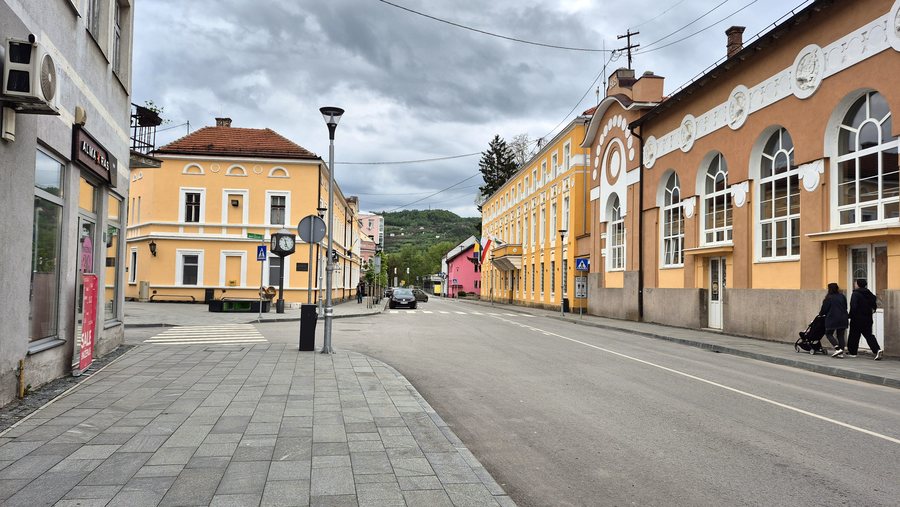
Visoko brings together several clearly defined themes: the medieval history of Visoki and Mile, national monuments, museums, and the sites in the Valley of the Bosnian Pyramids. Within the boundaries of the city of Visoko are cultural, historical and natural heritage sites of national importance. Visoko lies on the Sarajevo–Zenica railway line.
History
The historic site of Stari grad Visoki is a national monument of Bosnia and Herzegovina. It lies on the summit of Visočica Hill at an elevation of 766.5 metres and about 300 metres above the valley in which Visoko developed. The first documented mention of Visoki appears in a charter issued by Ban Tvrtko on 1 September 1355. The old town of Visoki was a well-known medieval city and fortress built on Visočica Hill in the 14th century.
Mile and Arnautovići also refer to central chapters of Bosnian history. The archaeological site of Mili in Arnautovići is a national monument. The archaeological site of Mile/Arnautovići was a place for assemblies of the Bosnian nobility, coronations, and the burial church of Bosnian rulers. It comprises four architectural units from the Late Antique, Romanesque, Early Gothic and Late or High Gothic periods. Tvrtko I Kotromanić was crowned in Mile in 1377.
Culture
Religious monuments include the Tabhanska Mosque, also known as the Tabačka Mosque, which is a national monument. The tanners of Visoko built it in the first half of the 17th century during the expansion of the tanning trade. The small harem next to the Tabhanska Mosque, where agas, ulemas and dervishes are buried, is also designated as a national monument. Šerefudin's White Mosque received the Aga Khan Award for Architecture in 1983.
The Church of Saint Procopius in Visoko and its valuable collection of icons were declared national monuments of Bosnia and Herzegovina in 2004. The collection includes works by Byzantine, Cretan, Russian and Venetian masters. The local history museum displays traditional clothing, tools and household objects and presents exhibitions on traditional crafts such as pottery and weaving. The UGLU Gallery Likum 76 hosts exhibitions and events throughout the year featuring works by local and international artists. The Franciscan Monastery of St. Bonaventure remains active, serves as a spiritual and cultural centre, and is open to visitors.
Landscape
The geographical surroundings are also reflected in the waterways: the Fojnica flows into the Bosna at Visoko at an elevation of 430 metres. At the site of the Bosnian Pyramid of the Sun, the terrain displays a regular pyramidal geometry with three preserved sides: the north, east and west sides. In the immediate vicinity of the pyramid site is the tumulus at Vratnica, an artificial conical hill 5 km away.
Archaeology
The Valley of the Bosnian Pyramids in Visoko includes the Foundation's museum. The Ravne complex in Visoko offers archaeological, tourist and sporting activities. The Ravne 2 archaeological and tourist park extends over more than 100,000 square metres in Visoko. At the KTK Tunnel, the Foundation has cleaned and secured 150 metres of an existing tunnel. The KTK Tunnel is 3 metres high and 2.5 metres wide.
The Ravne underground labyrinth is a prehistoric network of underground tunnels and chambers. The visitor area of the Bosnian Pyramids offers individual and group tickets as well as guided tours. Thus, alongside the historical sites, archaeological sites with different spatial and temporal contexts are also central to Visoko.
For further destinations, you can then visit Olovo, Dobrinje, Strica, Vranduk, Zenica, Doboj, Zbilje and Donji Lučani.
For the higher-level travel overview: Zenica-Doboj Canton.

