
Olovo: Hotels between the Krivaja and Cultural Heritage
Accommodation in Olovo
Olovo is first mentioned in written documents in 1382 under the name Plumbum. In the 14th and 15th centuries, the town was a mining and trading centre with lucrative customs revenues. In the second half of the 14th century, during the time of Tvrtko I Kotromanić, the Monastery of Sveta Gospa was built here. At the same time, the rivers and the healing spring, as well as designated cultural monuments, shape the town's historical themes.
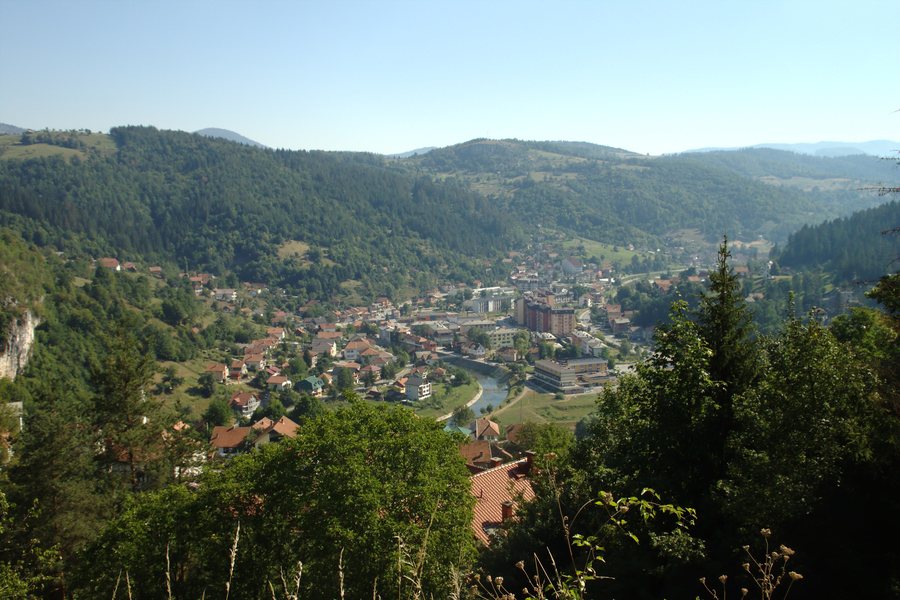 File:Olovo, pohled na město.jpg
Photo: I would appreciate being notified if you use my work outside Wikimedia. More of my work can be found in my personal gallery . via Source, CC BY 3.0
File:Olovo, pohled na město.jpg
Photo: I would appreciate being notified if you use my work outside Wikimedia. More of my work can be found in my personal gallery . via Source, CC BY 3.0
Culture
The historic Crkva Majke Božje church in Olovo, together with its movable property, is designated as a national monument of Bosnia and Herzegovina. The historic “Rimski most” bridge over the Orlja River near Klinčići has the same protected status. In Lavšići lies the “Mramorje” necropolis with old nišan tombstones, which is likewise designated as a national monument of Bosnia and Herzegovina. The Bakići Donji natural and historical area comprises necropolises, stećci, nišan tombstones, an obelisk and the remains of the Church of Sv. Rok; this area is also designated as a national monument of Bosnia and Herzegovina.
The Olovo City Library preserves a Torah that is designated as a national monument of Bosnia and Herzegovina. In Drecelj there are medieval necropolises with stećci and old Muslim nišan tombstones, which likewise have this status. Mramor in Musići near Olovo is part of the UNESCO World Heritage Site “Stećci Medieval Tombstone Graveyards”.
The healing spring of Olovo is mentioned in Ivo Andrić's story “Čudo u Olovu”. The Sanctuary of Gospe Olovske attracts Catholic worshippers from all parts of Bosnia and Herzegovina as well as from Croatia. Traditionally, it is visited on 1 May at the beginning of the May devotions, on the Feast of the Assumption, on the Feast of the Nativity of the Blessed Virgin Mary, and in the last week of October for the memorial day of the church restorer Fra Lujo Zloušić.
Nature
In Olovo, the Stupčanica and Bioštica merge to form the Krivaja. The river stretches for 35 kilometres through the municipality of Olovo. The Zeleni Vir excursion area is located two kilometres from Olovo city centre on the Bioštica. It lies at the river's source, is surrounded by coniferous forest and is suitable for swimming and fishing. Paved walking paths, sports facilities, and areas for relaxation and leisure are available there.
The Krivaja offers opportunities for organising rafting tours and has potential for sport fishing and fly fishing. In the centre of Olovo, Aquaterm is located next to the confluence of the Bioštica and Stupčanica, which form the Krivaja there. Aquaterm is a spa and recreation centre in the centre of Olovo. At Aquaterm Olovo, thermal water is used for drinking, inhalation and bathing.
The treatment programmes at Aquaterm Olovo begin with an initial medical examination. Depending on the diagnosis and state of health, hydrotherapy, electrotherapy, ultrasound therapy, kinesiotherapy and massages are prescribed; on average, five treatments are carried out daily.
Routes
In the south-eastern part of the municipality of Olovo lies the “Mramorje” necropolis with 46 stećci. It is incorporated into the “Stazama predaka – nekropole i spomenici – jugoistok” route. This route starts and ends in Olovo and is 42.5 kilometres long. As a cycling route, it leads through the south-eastern part of the municipality of Olovo and showcases sights that have been declared national monuments of Bosnia and Herzegovina by the Commission to Preserve National Monuments.
The “Stazama predaka – nekropole i spomenici – jugoistok” route also follows a gravel road to Miljevići and the national monument “Stara drvena džamija i harem”. In this way, it connects the “Mramorje” necropolis with other designated monument sites in the south-eastern part of the municipality.
Location
Olovo is located directly on the M18 main road, which was built in 1958. Between the rivers, the spa and recreation centre, the historical sites and the routes, the townscape combines natural and cultural themes in close proximity to one another.
Other Places
Other places: Dobrinje, Kakanj, Zenica, Tešanj, Doboj, Uvorići, Donji Lučani, Vranduk.
For the higher-level travel overview: Zenica-Doboj Canton.

