
Boboshevo: Landscapes, Churches and the Ruen Monastery
Accommodation in Boboshevo
The Municipality of Boboshevo encompasses parts of the Rila Mountains, the northern slopes of the Ruen Mountains and a section of the tectonic Struma Valley. Protected plant sites, churches dating back several centuries and the Ruen Monastery offer tangible points of interest for nature and culture enthusiasts. When looking for a hotel, you can start by deciding which of these themes is most important for your trip.
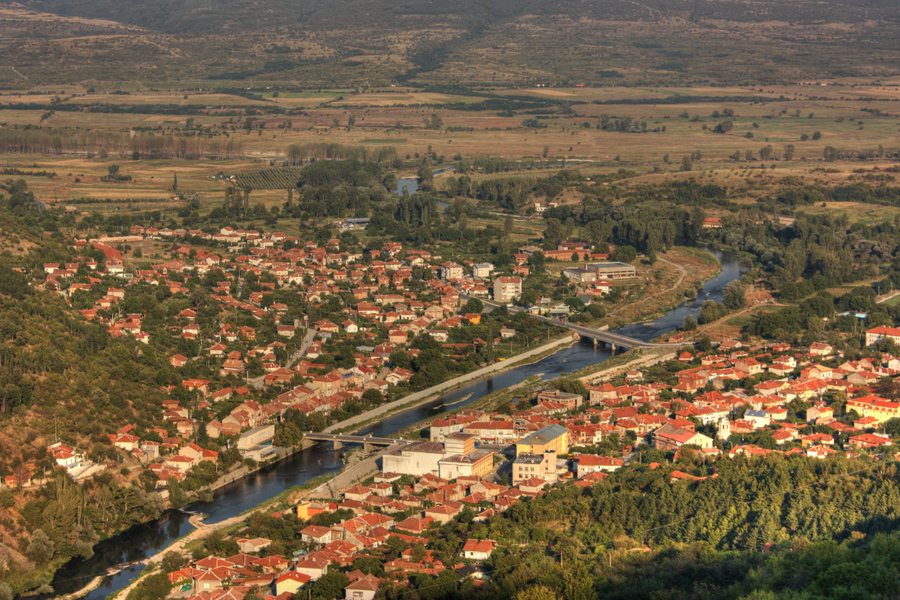
Boboshevo at a glance
- The municipality includes parts of the Rila Mountains, the northern slopes of the Ruen Mountains and a section of the Struma Valley.
- The Struma and Dzherman are part of the municipality’s river system; the Slatinska flows into the Dzherman.
- Several protected areas preserve distinctive plant populations and their habitats.
- Churches in Vukovo and near Boboshevo, along with the Ruen Monastery, shape the municipality’s historic character.
What landscapes and natural features define Boboshevo?
The landscape combines mountain slopes with a section of the tectonic Struma Valley. The river system also helps put the area in geographical context: it includes the Struma and the Dzherman, and the Slatinska flows into the Dzherman. These relationships describe the municipality’s territory, not a particular walking route or the location of a specific accommodation.
Within the land of the town of Boboshevo, the “Woolly-flowered Milkvetch Habitat – Boboshevo” protected area safeguards the population of woolly-flowered milkvetch (Astragalus dasyanthus Pall.) and its habitat. Another protected area, “Anise-leaved Mullein Habitat – Vukovo,” is in the village of Vukovo and preserves the local population of anise-leaved mullein (Verbascum anisophyllum Murb.) and its habitat. Both protected areas were designated in 2013.
The “Boboshevo” Special Protection Area for birds, code BG0002107, is part of the Natura 2000 network and was designated on 29 October 2008. In Skrino, the Turkish hazel habitat has also been designated a natural monument since 25 November 1980. Boboshevo grapes, cherries and apples, for which the area is known, also contribute to its regional character.
Which churches and historical sites should you know about?
Vukovo has two churches with distinct historical dates. The Church of St. Nicholas is a nationally significant architectural and artistic monument dating from the 16th century; it was designated as such in 1969. The Church of St. Petka was built in the second half of the 16th century and painted in 1592. Near Boboshevo stands the Church of St. Theodore, built in the early 11th century.
Other dates range from the 16th to the 17th century: the Church of St. Athanasius, within the land of the town of Boboshevo, dates to this period, while the Church of St. Elijah there was built in 1678. The municipality thus has sites from different eras side by side, without implying a single, uniform construction date.
The prehistoric period is represented too. The prehistoric settlement in the Chardako locality near Slatino was inhabited during the Copper Age, in the 5th to 4th millennium BC. For more recent cultural history, the Loza 1870 cultural centre in Boboshevo is of interest: founded in 1870–1871, it is one of the region’s earliest cultural centres.
What should you know about visiting and getting there?
The Ruen Monastery of St. John of Rila holds three annual monastery feasts: on 1 July, 18 August and 19 October. If you plan to attend a feast, check the current service arrangements, as some details may change.
Above the monastery, in the forest, there is a small rock niche vaulted with a stone wall. Local people venerate it as the first hermit’s cave of St. John of Rila. It can be reached on foot in about ten minutes; this estimate refers to the walking time, not the difficulty of the route.
A railway station on the Sofia–Kulata line is 3 km northeast of the municipal centre. Check current passenger services separately before planning to travel by train. For more precise local orientation, you can also visit the pages for the Town of Boboshevo and the Village of Dobrovo.
Discover more destinations: Treklyano, Kyustendil, Rila and Kocherinovo.
FAQ
Which landscapes does the Municipality of Boboshevo include?
It includes part of the Rila Mountains, the northern slopes of the Ruen Mountains and a section of the tectonic Struma Valley.
Which protected plant sites are there?
The protected area for woolly-flowered milkvetch is within the land of the town of Boboshevo, and the protected area for anise-leaved mullein is in Vukovo. Both protect plant populations and their habitats.
Which historic churches are associated with Boboshevo?
They include, among others, St. Nicholas and St. Petka in Vukovo, St. Theodore near Boboshevo, and St. Athanasius and St. Elijah within the land of the town of Boboshevo.
When are the Ruen Monastery’s feasts?
The three annual feast days are 1 July, 18 August and 19 October. Check the current service arrangements before your visit.
How far is the railway station from the municipal centre?
A railway station on the Sofia–Kulata line is 3 km northeast of the municipal centre. You should check current passenger services separately.
For the regional travel overview: Kyustendil Province.

