
Discover Janjina: Vineyards, Coast and History
Accommodation in Janjina
Janjina brings together winemaking and historical heritage with coastal villages, pebble beaches, and hiking and cycling routes. Which of these aspects interests you most can help guide your choice of destination and accommodation.
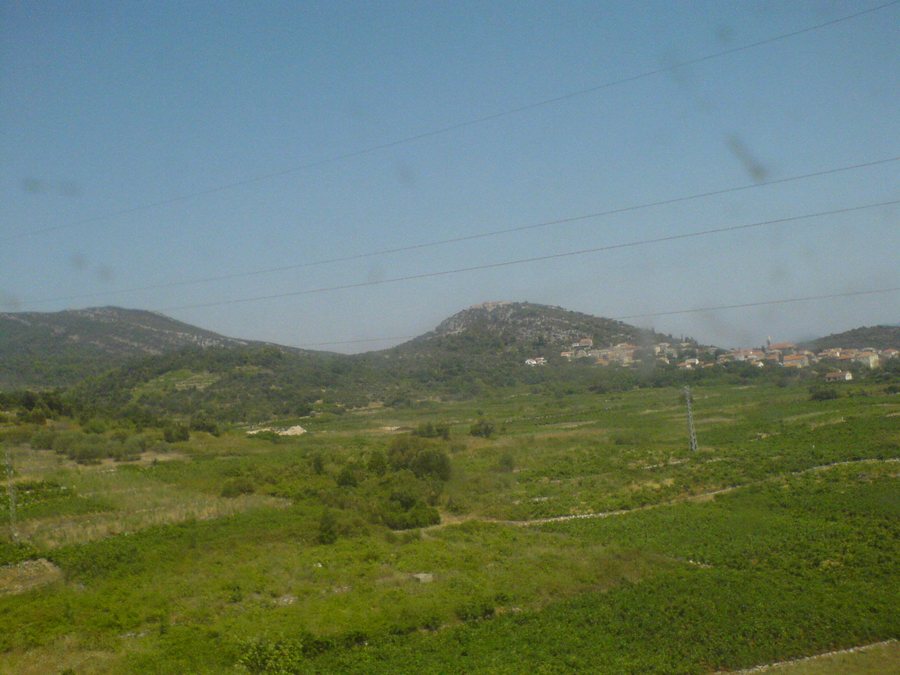
Janjina at a glance
- The Municipality of Janjina is known for vineyards growing Plavac mali and other well-known grape varieties.
- Pebble beaches are located in Sreser and Drače; Janjina is about 2 km from Drače Bay.
- Tourist infrastructure includes hiking trails and marked cycling routes.
- The area brings together cultural heritage from different periods with karst, maquis, and coastal landscapes.
What do Janjina’s places and buildings tell us?
In the Janjina area, the settlement history of the Pelješac Peninsula can be traced from prehistoric times through the Illyrians and Romans to the present day. On the hill of Gradina above the village stands an Illyrian hillfort, surrounded by numerous tumuli. Near the cemetery church of St. Stephen, the walls of a Roman villa rustica and stelae from the 1st century were discovered. The remains of the pre-Romanesque church of St. George also tell of older building and burial traditions. These include a late medieval cemetery and fragments of an altar screen with interlace ornament and an inscription naming its donor, Petar.
Another prominent building is the so-called “Knežev dvor” in Janjina. The Republic of Dubrovnik had the Prince’s Palace built in 1465; its façade bears the republic’s coat of arms and a statue of its patron saint, St. Blaise. Construction of the parish church of St. Blaise began in 1876, and the new church building was consecrated on 1 May 1878. Janjina’s streetscape is also shaped by stone, single-storey houses featuring elements of late Baroque vernacular architecture. The architecture in Janjina and Popova Luka reflects the former presence of sea captains and shipowners. The Bjelovučić family, for example, produced around 30 sea captains.
How do the landscape and coastal villages differ?
Just over 15 orchid species have been recorded around Janjina, particularly in olive groves and on dry karst; a smaller number grow in pine forests. Vineyards around Janjina, Popova Luka, and Zabrežje alternate with maquis and karst on the northern slopes of Mataružnica. In the west of the Municipality of Janjina lie the hilly peaks and northern slopes of Rota, toward Osobjava and the Neretva Channel. Near Osobjava, a stone pillar by the roadside commemorates the local quarry: it was made for the Prince’s Palace in Dubrovnik and has been preserved as a historical reminder of the quarry.
Drače Bay is about 2 km from Janjina; visitors can swim and enjoy water sports there. Drače lies in a small bay and is characterized by an archipelago of 13 islets. The sea there is unusually warm and offers favorable conditions for fish and shellfish farming. There are also pebble beaches in Sreser. A small group of islands off Sreser can be explored by kayak and smaller boats. The area is considered suitable for surfing and kitesurfing; across the Neretva Channel, kitesurfing is developing rapidly. Bottlenose dolphins can be spotted in the waters of the Pelješac Channel in the Janjina area. Within the Municipality, the Malostonski zaljev i Malo more Special Reserve covers 921.8 hectares of sea.
Which experiences suit your stay?
Hiking trails and marked cycling routes offer different ways to explore the Municipality of Janjina. Those interested in winemaking can focus on the vineyards around Janjina and Popova Luka, where the landscape is also shaped by maquis and karst. For a stay focused on history, the archaeological remains, church ruins, and buildings take center stage. Along the coast, pebble beaches go hand in hand with water sports and the island group off Sreser. The Janjina Tourist Board also took part in the “Napoleonov put kroz Pelješac” (“Napoleon's Road through Pelješac”) project.
There is also an alternative route to Janjina via the car ferry from Ploče to Trpanj. From Trpanj, it is then about a 20-minute drive to Janjina. If you would like to compare other destinations, you can also explore Trpanj, Orebić, and the Municipality of Ston.
FAQ
Where are the pebble beaches in the Municipality of Janjina?
Pebble beaches are located in Sreser and Drače.
How far is Janjina from Drače Bay?
Janjina is about 2 km from Drače Bay.
What is the alternative route via Trpanj?
You can take the car ferry from Ploče to Trpanj. From there, the drive to Janjina takes about 20 minutes.
For the overview of the wider region, see: Peljesac.

