
Zator: Hotels and Accommodations
Accommodation in Zator
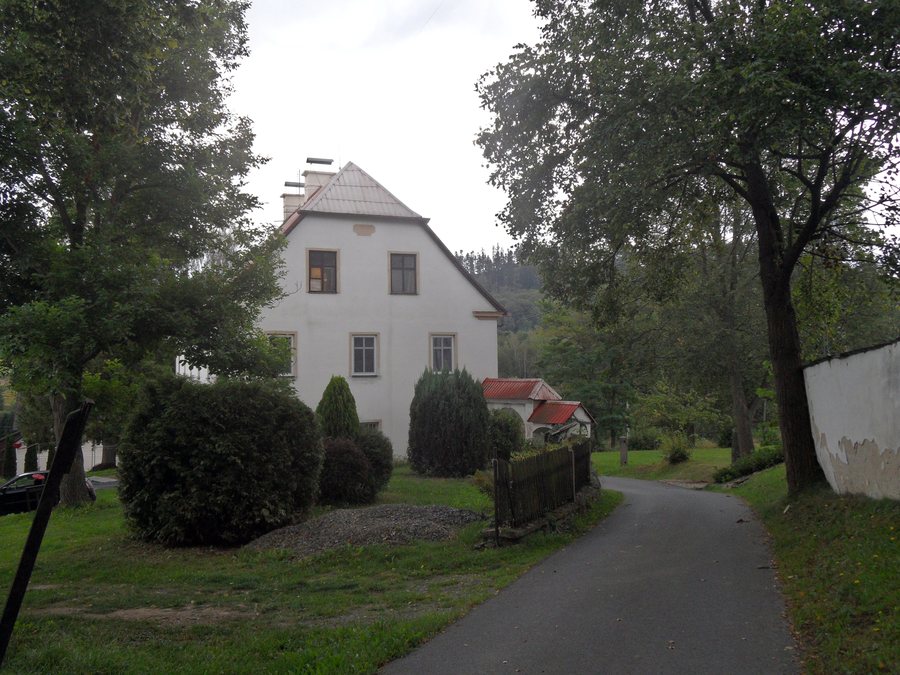
Zátor is surrounded by forests and hills. The Opava flows through Loučky, the lower part of Zátor, while the Zátoráček stream flows through the upper part of the town.
Culture and History
The Church of the Most Holy Trinity was rebuilt in 1753–1755 under the patronage of Václav Liechtenstein. In 2014–2015, it was restored at a cost of approximately 5.7 million Czech korunas. Its interior preserves figurative biblical scenes in violet tones as a surviving work by Kramolín.
The cemetery by the church contains four classicist chapels of Boží Tělo. The Boží Tělo Chapel was built in 1872; the restored Boží Tělo Chapel is listed as a cultural monument. The Evangelical Chapel was built in 1898 in the evangelical cemetery in Zátor.
The remains of the core buildings, a surrounding rampart, and a moat have survived from the Zátor Castle Ruins. The castle was first mentioned in 1342, was probably built in the first half of the 14th century, and was abandoned in the 16th century.
Nature
The picturesque landscape around Zátor, scarcely affected by industry, invites long walks and is considered a recreational opportunity for nature lovers and hikers. The borehole of Zátorská kyselka is connected to a freely accessible building.
Transport
The heavily trafficked I/45 road from Krnov to Bruntál passes through Zátor. The Opava–Olomouc railway line runs along the edge of Zátor; Zátor railway station is located there.
Other places to read about directly: Liptaň, Nové Heřminovy, Lichnov U Bruntálu, Bílčice, Brantice, Dvorce U Bruntálu, Stará Rudná, Dolní Václavov.
For the broader travel overview: Bruntál District.

