
Bystročice: Hotels and Accommodations
Accommodation in Bystročice
Bystročice can be documented through several clearly dated records. The first surviving written mention of Bystročice dates from 1131. Archaeological finds date the beginnings of settlement in the cadastral area of the present-day municipalities of Bystročice and Žerůvky back to the Neolithic period.
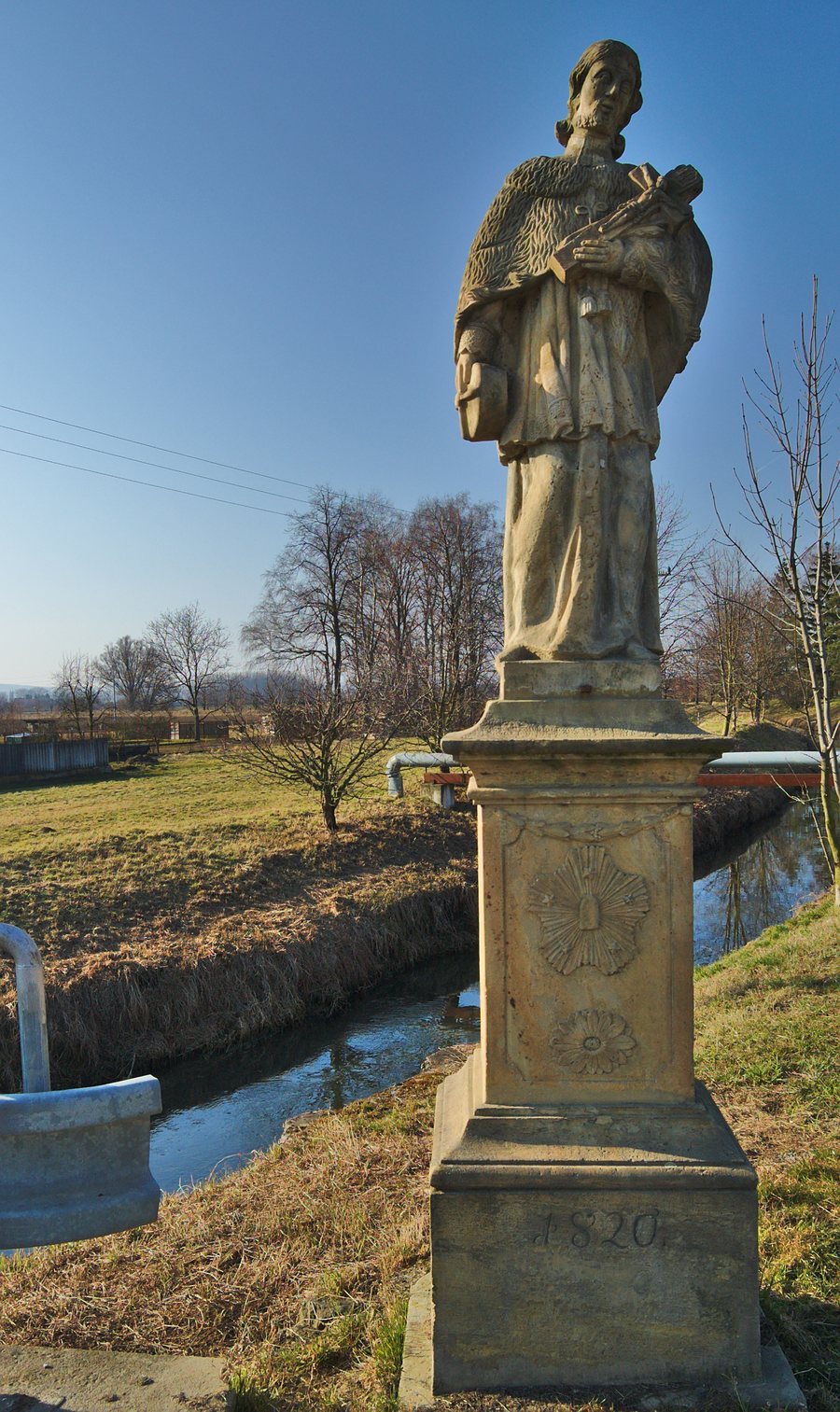 File:Socha na mostě, Bystročice, okres Olomouc.jpg
Photo: Jiří Komárek via Wikimedia Commons, CC BY-SA 4.0
File:Socha na mostě, Bystročice, okres Olomouc.jpg
Photo: Jiří Komárek via Wikimedia Commons, CC BY-SA 4.0
Culture and History
The Church of Saints Cyril and Methodius was built in Bystročice in 1858 after a chapel was destroyed in a fire in 1856. It is a rectangular single-nave building with a tower on the southern façade and a recessed segmental-arched termination on the northern side. The church tower received a clock in 1887.
Bystročice is home to a statue of Saint Francis de Sales dating from 1858 and a statue of Saint John of Nepomuk dating from 1820.
Traditions
In the 19th century, fruit growing expanded in the municipalities, and much of the fruit was subsequently dried. The production of homemade farmstead Tvarůžky continued in Bystročice despite strong competition from the surrounding municipalities until the period of the First Czechoslovak Republic.
Experiences
Bystročický Poutníček is a recurring cycling event that traditionally starts in Bystročice. The cycle path between Bystročice and Nedvězí is 1.8 kilometres long and forms part of regional cycle route No. 5 as well as the EuroVelo 9 Baltic–Adriatic route, known as the Jantarová stezka (Amber Road).
Other linked places: Samotišky, Náměšť Na Hané, Bystrovany, Horka Nad Moravou, Kožušany-Tážaly, Bukovany, Dubčany, Dlouhá Loučka.
To the broader travel overview: Olomouc District.

