
Veverská Bítýška – Discover Culture and Nature
Accommodation in Veverská Bítýška
Veverská Bítýška combines cultural traces, technological history and a nature-oriented route. This allows you to plan your stay around different interests without limiting yourself to just one type of travel experience.
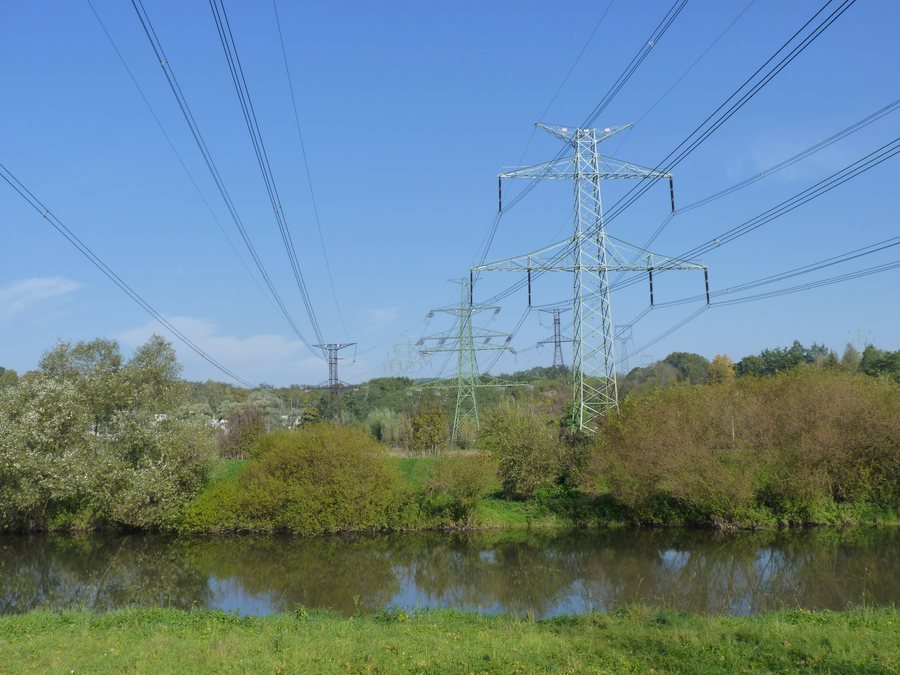 File:Veverská Bitýška, elektrické vedení.JPG
Photo: Michal Klajban via Wikimedia Commons, CC BY-SA 3.0
File:Veverská Bitýška, elektrické vedení.JPG
Photo: Michal Klajban via Wikimedia Commons, CC BY-SA 3.0
The significant Slešťůvka landscape feature (VKP) lies on the southern edge of Veverská Bítýška. It covers approximately five hectares and contains various biotopes. This means that, alongside the town's cultural attractions, a clearly defined landscape theme is also at the centre of attention.
The Slešťůvka educational trail is no more than two kilometres long; its main axis is a footpath leading to the chapel. For your trip planning, this limited length provides a useful point of reference if you would like to include a nature section of manageable scope in your stay. The precise significance of the individual stations arises from the landscape itself rather than from a blanket assessment of the destination as a whole.
What historical traces can you discover?
Those interested in religious buildings and visible evidence of past centuries can visit the parish church independently of a hike or a visit to technical monuments. The church thus brings a different form of culture into your travel planning than the Slešťůvka landscape.
Another historical object is Smírčí kámen. The carved reconciliation stone dates from 1559. On the side facing the road, a visible remnant of the vertical arm of the former cross has been preserved. It is precisely such concrete traces that distinguish a general visit to the town from a trip during which you pay attention to individual details.
For couples and families with different interests, this makes Veverská Bítýška a flexible destination to interpret: the parish church and the reconciliation stone appeal to visitors interested in cultural history, while Slešťůvka offers a landscape perspective.
What role does Jarošův mlýn play?
Jarošův mlýn was declared a cultural monument by the Ministry of Culture of the Czech Republic. This declaration gives the mill site a clear place in a trip focused on the region's architectural and technological heritage. For visitors interested not only in landscapes but also in historical working environments, the mill provides a distinct accent within the selection of local attractions.
The mill site expands Veverská Bítýška's cultural offering with a theme that differs from the parish church and the reconciliation stone. While sacred and historical details take centre stage there, at Jarošův mlýn the focus is on a building and its former function. These differences help you assess your own travel interests more precisely instead of understanding culture solely as a uniform sightseeing programme.
When choosing a hotel in Veverská Bítýška, this thematic mix may provide a better basis for your decision than a general expectation of the destination. Consider whether you primarily want to plan visits to historical objects, the mill site, the church or the landscape.
Which nature themes complement a visit to the town?
The Slešťůvka VKP includes a small wetland, a chapel with a spring, grassland and the remains of an old apple orchard. These different components give the landscape feature several distinct facets. They range from wet habitats and a built feature associated with water to traces shaped by agriculture.
Protected species included on the Red List have been found in the Slešťůvka VKP. For nature-oriented travellers, this creates an observation theme that goes beyond a mere view or walk. The landscape can be explored attentively and slowly; at the same time, the statement remains limited to the species recorded and the specific natural area.
The combination of wetland, grassland, old apple orchard and chapel with a spring makes Slešťůvka a counterpoint to the historical objects in the town. Families can take different interests into account, while couples can view the nature section as a quieter focus within their own plans.
How can you plan your trip around your interests?
Veverská Bítýška is suitable for planning a trip in which you do not have to pit culture against nature. Start by considering the theme that matters most to you: religious furnishings, a historical reconciliation stone, technological history or a landscape with different biotopes. You can then add the remaining themes as far as they fit your available time and travel group.
For travellers with children, the limited length of the educational trail can be a helpful planning factor, while culturally interested adults can weigh the historical details of the church, stone and mill differently. Couples benefit from the same thematic openness if they want to divide their stay between observing the landscape and visiting cultural monuments. What matters is which of these specific aspects you personally want to experience and explore in greater depth.
Which other destinations can you compare?
For your further travel planning, you can also compare Hostěnice, Borač, Lesní Hluboké, Kupařovice, Pohořelice, Skryje, Nová Ves and Brezina.
FAQ
What details does the parish church of St James offer?
The tower of the parish church of St James (Farní kostel sv. Jakuba) contains four bells from the 17th century. The interior of the church also contains a 17th-century baptismal font.
What can visitors see at Jarošův mlýn?
Visitors to Jarošův mlýn can see the entire mill building, the machines required to process the individual products, as well as the water channel with its sluice gate.
Where is Smírčí kámen located?
Smírčí kámen is located approximately 150 metres before the edge of Veverská Bítýška, on the right-hand side of the Hvozdec–Bítýška road.
To the higher-level travel overview: Brno-Venkov District.

