
Kvemo Kartli: Nature, History and Experiences
Accommodation in Kvemo Kartli
In Kvemo Kartli, nature excursions in Algeti National Park meet archaeological sites, churches and fortresses. The highlights range from a marked 16-kilometre circular trail to evidence of early history.
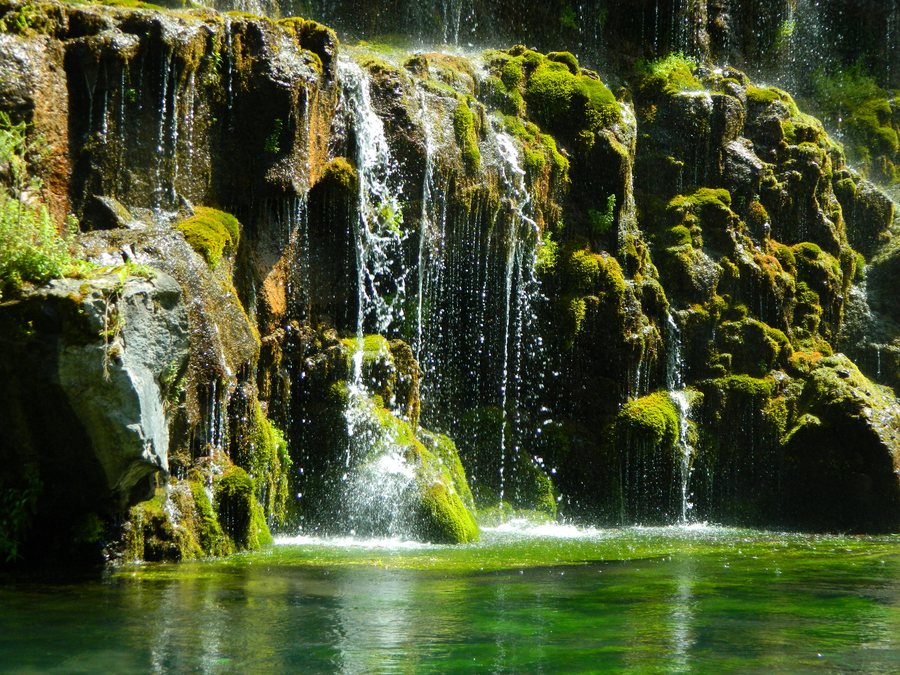 File:Dashbashi Canyon Natural Monument, Kvemo Kartli, Georgia.jpg
Photo: Ani.Georgia via Wikimedia Commons, CC BY-SA 4.0
Kvemo Kartli at a glance
- Nature: Algeti National Park has five ecotourism routes, including horse-riding and hiking trails.
- Trail: The marked Royal Ridge Trail is a 16-kilometre circular route.
- Archaeology: Five skulls have been discovered at the Dmanisi site; some Stone Age weapons are 1.8 million years old.
- Church architecture: Bolnisi Sioni was built as a three-nave basilica between 478 and 493.
What nature experiences does Algeti National Park offer?
The five ecotourism routes in Algeti National Park include trails for hiking and horse riding. One of them is the marked Royal Ridge Trail: at 16 kilometres long and circular in shape, it offers a clearly defined option for planning your excursion. Its stated length helps you estimate the route without specifying a walking time.
A distinctive landmark in the park is a 900-year-old mountain oak known as the “Patriarch Oak.” The visitor centre is also home to the ecotourism attraction Rope Park, with a family zone and a youth zone. As conditions may change, check the latest information about Rope Park before visiting.
What do the archaeological finds in Dmanisi tell us?
Zezva and Mzia, described as the first European hominins, were discovered at the archaeological site of Dmanisi. Five skulls in total were unearthed there. The oldest finds include Stone Age weapons, some of which are 1.8 million years old. The site thus brings together specific archaeological finds and a very early period in human history.
The Bolnisi Museum also explores human development: its exhibition spans the Eneolithic period to the Middle Ages. It also displays copies of Georgian inscriptions from the 5th century. This broadens the focus from the finds at Dmanisi to other historical topics in the region.
Which churches and fortresses shape the region’s history?
Bolnisi Sioni was built between 478 and 493 as a three-nave basilica. The term describes a church interior divided into three naves. Three inscriptions on its walls are among the oldest known fragments of Georgian writing, following the Georgian inscriptions in Palestine. Bolnisi Sioni was also the first monument in Georgia to be decorated with bas-reliefs and carvings.
The medieval Kveshi Fortress lies near the village of Kveshi in Bolnisi Municipality, on an almost inaccessible rocky cliff. Its 220-metre-long wall is up to eight metres high in places. Access is through a tunnel cut into the cliff.
Ktsia Monastery dates from the 8th to 9th centuries; the Ktsia Church there is a three-church basilica. The city at Samshvilde was settled in the 4th to 3rd centuries BC. Archaeological finds there include traces of a water supply system. Tsopi Fortress in Marneuli Municipality was a strategic location from the 6th to the 13th century.
The monastery on Mount Elia near Bolnisi is active, with a service held there every day. As conditions may change, check the latest visiting information before you go.
What can you discover at the Tsalka Reservoir and in Akaurta?
The remains of a settlement dating from the 10th to 11th centuries lie beneath the Tsalka Reservoir. They become visible when the water level drops. The reservoir also attracts fishing enthusiasts. These offer two different points of interest for planning your visit: the conditional visibility of archaeological traces and the opportunity to go fishing.
Performances at the culinary and ethnographic theatre attraction “Akaurta” showcase Georgian ethnography, history, culinary arts and everyday life. If this offering matches your travel interests, check the latest performance dates.
Start comparing hotels by considering which topics you most want to experience during your trip.
Discover more destinations: Kojori, Asureti, Tetritskaro, Kumisi, Kiketi, Tbilisi and Mtskheta-Mtianeti.
FAQ
When do the remains beneath the Tsalka Reservoir become visible?
They become visible when the water level drops.
What topics do the Akaurta performances present?
They present Georgian ethnography, history, culinary arts and everyday life.
What does the Bolnisi Museum display?
The exhibition explores human development from the Eneolithic period to the Middle Ages; the museum also displays copies of Georgian inscriptions from the 5th century.
How do you access Kveshi Fortress?
Access is through a tunnel cut into the rocky cliff.
For the broader travel overview: Georgia.

