
Discover Kvemo Kartli
Accommodation in Kvemo Kartli
Kvemo Kartli offers a range of options for your trip: Algeti National Park features nature trails and a rope course, while archaeological sites, historic houses, and churches bring the region’s cultural history to life. You can use these interests to choose a regional focus for your trip.
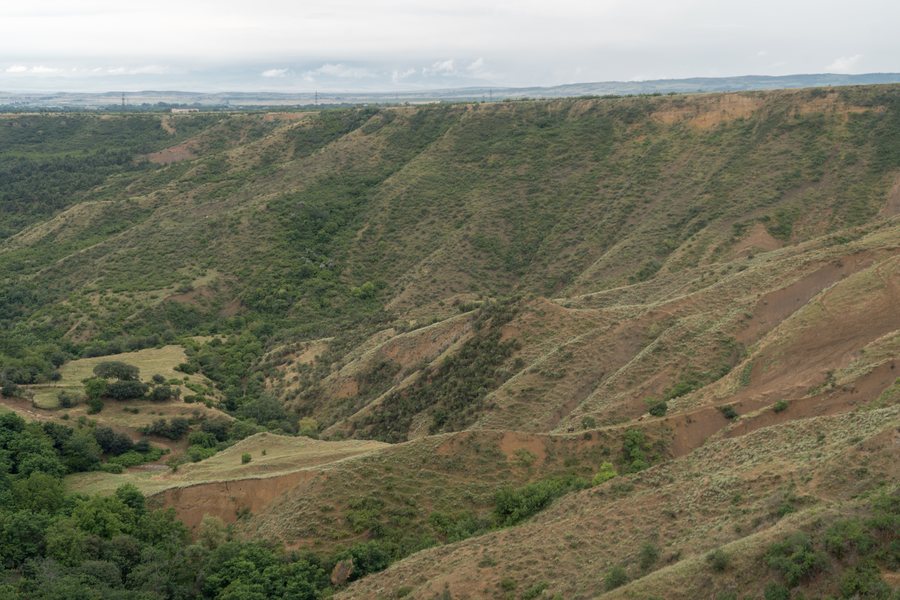
Quick facts about Kvemo Kartli
- Algeti National Park has one marked trail and five ecotourism routes, including horse-riding and hiking trails.
- The “Royal Ridge” trail is a 16-kilometer circular route that starts and ends in Manglisi.
- The ruins of Samshvilde are considered some of the oldest ruins in the Caucasus region; excavations there uncovered 22 monuments from four periods.
- The local history exhibition at the Bolnisi Museum covers human development from the Eneolithic to the Middle Ages.
What nature experiences does Algeti National Park offer?
The marked “Royal Ridge” trail is a useful option if you are planning a specific outing: the 16-kilometer circular route starts in Manglisi, passes through Martalkhevi and a picnic area, continues to the village of Didi Namtvriani, then returns to Manglisi via “Royal Ridge.” The distance and circular route provide a clear guide for planning without specifying a walking time. The national park also lists five ecotourism routes, including horse-riding and hiking trails.
The Algeti National Park visitor center has a rope course with a family zone featuring 10 obstacles and a youth zone with 14. The two zones differ both in their designation and in the stated number of obstacles. The park is also home to a 900-year-old mountain oak known as the “Patriarch Oak.” Here, a specific tour, an activity with designated zones, and a named natural landmark come together.
Which historic places shape the region?
The ruins of Samshvilde are often referred to as “Orbisa Fortress” and are considered some of the oldest ruins in the Caucasus region. Archaeological excavations there uncovered 22 monuments dating to the Chalcolithic, Late Bronze Age, Hellenistic, and medieval periods. These time spans show that the site’s archaeological history is not limited to a single period.
The archaeological site of Dmanisi also offers a distinctive historical connection: its oldest finds include Stone Age weapons, some of which are 1.8 million years old. In Bolnisi, meanwhile, the German Quarter is the oldest part of Katarinenfeld. Preserved houses combine Georgian wooden balconies with German half-timbered style, including high attics and deep cellars. The Bolnisi Museum’s local history exhibition spans the period from the Eneolithic to the Middle Ages.
The present-day Manglisi Sioni Church includes building phases from the 5th and 11th centuries. A fragment of the True Cross, an important Christian relic, is also kept in the church. Samshvilde, Dmanisi, Bolnisi, and Manglisi Sioni therefore each offer a different focus: archaeological finds, historic architecture, and religious heritage.
Which regional focus suits your trip?
If you want to focus on nature and outdoor activities, Algeti National Park and its ecotourism routes offer specific options. Those more interested in archaeology and architectural history will find a range of periods and themes in Samshvilde, Dmanisi, and Bolnisi. The rope course’s designated family zone may be a relevant consideration when choosing for travelers with children; the youth zone is listed separately. For a regional overview, you can consider the subregions of Rustavi, Bolnisi, and Manglisi separately.
Discover more destinations: Kakheti, Shida Kartli, Mtskheta-Mtianeti, Samegrelo-Zemo Svaneti, and Racha-Lechkhumi and Lower Svaneti.
FAQ
How long is the “Royal Ridge” trail?
The circular route is 16 kilometers long. It starts and ends in Manglisi and passes through Martalkhevi and the village of Didi Namtvriani.
Which periods are represented by the excavations in Samshvilde?
Twenty-two monuments were discovered, dating to the Chalcolithic, Late Bronze Age, Hellenistic, and medieval periods.
What is known about Manglisi Sioni?
The present-day church includes building phases from the 5th and 11th centuries. A fragment of the True Cross is also kept there.
To the main travel overview: Georgia.

