
Discover Kakheti: Wine, Nature and Culture
Accommodation in Kakheti
Kakheti combines Georgia’s winemaking traditions with a diverse landscape and places of cultural significance. When planning your trip, it is worth considering the differences: protected areas offer tours with a range of transport options and focuses, while Telavi and other cultural destinations offer their own insights into the region’s history.
Key facts about Kakheti
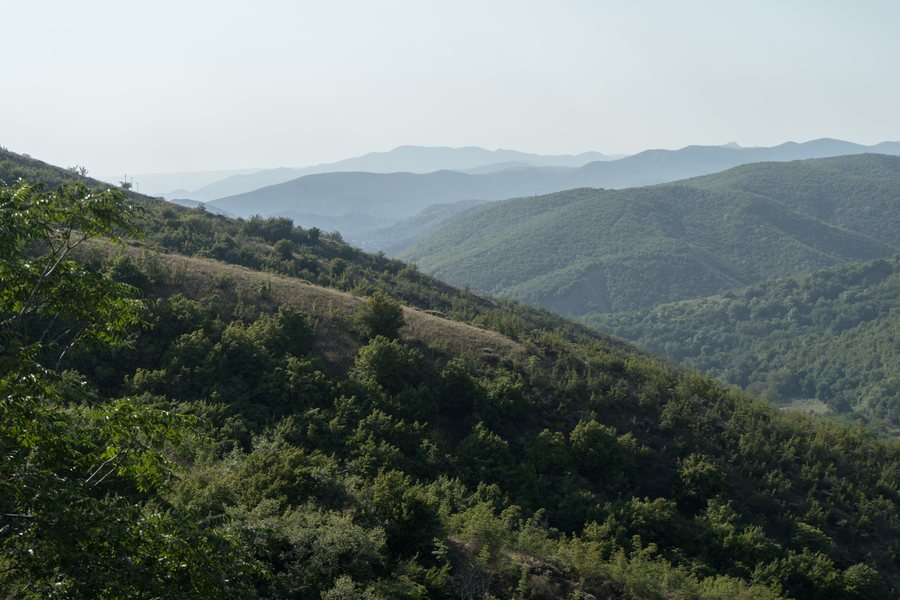
Kakheti is Georgia’s most important wine-growing region. Its landscape includes the Alazani Valley, steep mountain passes, evergreen forests and dry steppes. There is also a wide range of experiences to choose from, including wine destinations and museums, marked hiking trails, horse-riding and cultural tours, and wildlife observation.
Which nature experiences are right for your trip?
The Vashlovani protected areas comprise a nature reserve, a national park and three natural monuments. Their network of routes offers one- and two-day tours by car, bicycle and safari vehicle. Those comparing different tour formats will find a different selection here than in the Lagodekhi protected areas, which offer five marked hiking trails, as well as educational, horse-riding and cultural tours through a largely unspoiled natural landscape.
One specific example of a longer excursion is the route to Black Rock Lake: the horse-riding route is 48 kilometres long, takes three days and is of moderate difficulty. The route through Artsivi Gorge is laid out differently. It is 7 to 8 kilometres long, designed for one day and combines a drive with a walk; it is also of moderate difficulty. Along the way, there are viewpoints for observing griffon vultures and other birds of prey. The route also passes the endemic plant Campanula kakhetica.
In the Tusheti protected areas, eleven routes are available, each with a different focus: hiking, cycling, horse riding, culture, birdwatching and observing bezoar goats. Your choice will therefore depend both on the activity you want and on the stated duration and difficulty of each route. The trail to Rocho Waterfall follows the forest along the banks of the Shromiskhevi River; the climb over Mount Ninigori includes occasional steep sections.
What should you know about protected areas and wildlife?
Not every protected area is intended for the same kind of visit. Access to the strict Batsara Nature Reserve is limited to educational purposes, scientific research and monitoring. There, untouched stands of the endangered European yew cover 100 hectares. This restriction is important to bear in mind when considering natural areas for your trip.
Other natural areas have their own distinctive features: Iori Nature Reserve is a wildlife corridor through which the Iori River flows. Migratory birds breed there in spring and autumn, while various animal species live in the area year-round. Eighty-two bird species breed in Chachuna Nature Reserve, ten of which are listed as endangered in Georgia. The Lagodekhi protected areas are considered the oldest in Georgia and are home to rare plant and animal species considered endangered in Georgia and internationally.
How do wine and cuisine shape Kakheti?
Wine is an essential part of the region’s identity. Kakheti is known for its large qvevri, including vessels with a capacity of 6,000 to 8,000 litres. Telavi is one of the most important stops on Georgia’s wine route. Family-run wineries and larger producers can be visited in the city and surrounding villages. Tsinandali Estate includes a winery and a palace whose history is closely linked to the family of Prince Aleksandre Chavchavadze.
Regional cuisine also offers specific ways to explore your interests on a trip. Well-known dishes include mtsvadi, chakapuli and khashlama. Sweet specialities include churchkhela and tatara, both made with grape juice.
Which cultural sites can you discover?
Telavi is the cultural centre of Kakheti and a medieval city with a royal palace. The palace, which has survived to this day, served as a royal residence in the 17th and 18th centuries and now houses the Museum of King Heraclius (Erekle) II. The Niko Pirosmanashvili House Museum in Mirzaani is also one of the region’s cultural institutions.
Other historic sites vary in character: the Gremi complex is a fortified city from the 15th century, set on a hill. The Sighnaghi Fortress encircles the entire city and is one of the largest fortresses of its kind in Europe and the South Caucasus. The Davitgareji Monastery Complex stretches for 25 kilometres and is known for its architecture and art. Bodbe Monastery is associated with Saint Nino. Machi Fortress lies in the Lagodekhi protected areas on the border between Georgia and Azerbaijan and is known for its distinctive history and location.
Which regional page would you like to explore next?
For further inspiration, find regional pages for Khashmi, Tkhilistskaro, Ujarma, Dartlo, Vardisubani, Shenako, Dedoplis Tskaro, Sasadilo, Shilda, Sagarejo, Udabno, Akhalsopeli, Koreti, Omalo, Kvareli Municipality, Lagodekhi, Kvemo Alvani, Gurjaani, Eniseli, Tsinandali, Sighnaghi, Telavi, Ikalto Monastery, Kachreti and Napareuli.
FAQ
How long is the route to Black Rock Lake?
The horse-riding route is 48 kilometres long, takes three days and is of moderate difficulty.
What activities do the routes in Tusheti offer?
The eleven routes include hiking, cycling, horse riding, cultural experiences, birdwatching and observing bezoar goats.
How do you get from Kvemo Alvani to Omalo?
The journey from Kvemo Alvani to Omalo is only possible in an off-road vehicle.
For the main travel overview: Georgia.

