
Eger
Accommodation in Eger
Eger combines historic rooms and exhibitions with traces of Ottoman rule and a thermal bath. The options range from insights into the world of the Archbishops of Eger to a city panorama from the minaret.
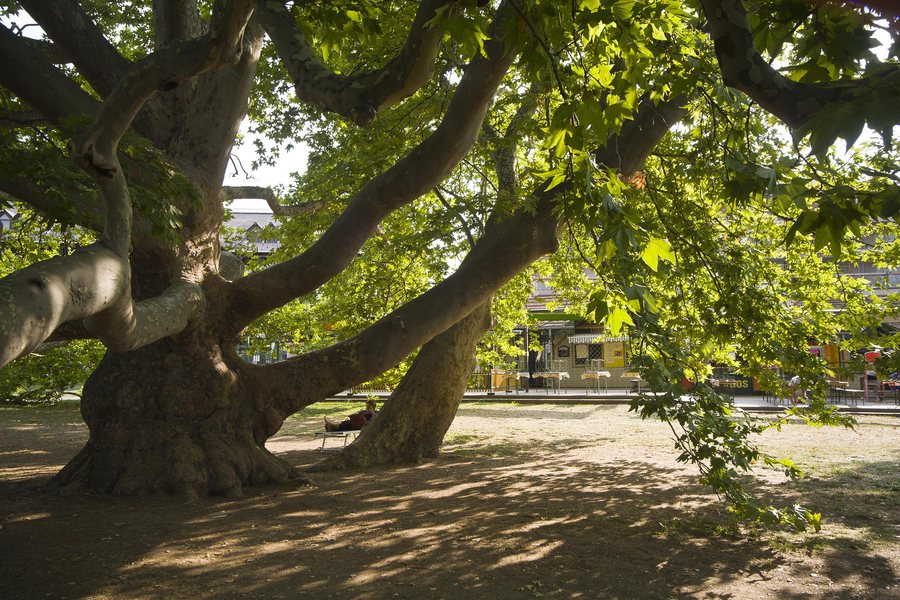 File:2013 Plane tree in Eger HU.jpg
Photo: Hungarian Environmental Partnership Foundation via Wikimedia Commons, CC BY-SA 4.0
File:2013 Plane tree in Eger HU.jpg
Photo: Hungarian Environmental Partnership Foundation via Wikimedia Commons, CC BY-SA 4.0
Eger at a glance
The visitor centre at the Archbishop’s Palace showcases historic interiors; it opened in 2016. Eger Castle held back the Ottoman army in 1552 and houses the István Dobó Castle Museum, with several permanent exhibitions. The minaret’s 97 steps lead to a panorama from a height of 32 metres. The Török Fürdő has six pools as well as wellness and medical services.
What cultural history can you discover in Eger?
The visitor centre at the Archbishop’s Palace offers a glimpse into the world of the Archbishops of Eger in an authentic setting. The historic interiors on display include a prelate’s study, a salon and a reception room, as well as a bedroom and a chapel. The different types of rooms give visitors a tangible sense of everyday life and the palace’s formal spaces, without the need for a lengthy introduction to its history.
The Archiepiscopal Vinoték in the visitor centre offers another perspective, introducing the four wine regions within the Archdiocese. This topic adds a regional wine connection to the insight into church history. If you’re interested in both culture and wine regions, you can take both into account when planning your trip; the Vinoték introduces the regions rather than promising a particular tasting.
What do the castle and minaret reveal about the city’s history?
Eger Castle is associated with the year 1552, when it held back the Ottoman army. Since then, it has been regarded as a symbol of patriotic steadfastness. The István Dobó Castle Museum features several permanent exhibitions. The castle therefore offers both a significant historical connection and a museum visit. If you’re choosing historic places for your cultural trip, the castle brings these two aspects together without reducing the exhibitions to a single theme.
The minaret tells the story of another era: it was built by the Turks during Ottoman rule, next to the Ketkhuta Mosque, using the medieval Chapel of St. Catherine. It is probably the northernmost minaret in Europe dating from the period of Ottoman rule. Climb 97 steps to reach a height of 32 metres and enjoy the city panorama. Its specific height and number of steps make the minaret a distinct sightseeing attraction, different from the palace interiors and museum exhibitions.
What does the Török Fürdő offer?
The Török Fürdő offers six pools along with wellness and medical services. One historical feature is the Török Pool, built between 1610 and 1617 during Ottoman rule. This specific pool provides a point of reference for the history of bathing, while the other pools and services appeal to different visitor interests. Several protected plant species also grow at the Egri Thermal Bath, including an Oriental plane tree over 250 years old.
If you’d like to compare other destinations in addition to Eger, you’ll also find Noszvaj, Demjén, Egerbakta, Novaj, Feldebrő, Maklár, Egerszalók and Verpelét here.
FAQ
Which interiors are on display at the Palace visitor centre?
These include a prelate’s study, a salon, a reception room, a bedroom and a chapel.
What can you see from the minaret?
Climb 97 steps to a height of 32 metres, where you can enjoy the city panorama.
When was the Török Pool built?
The Török Pool at the Török Fürdő was built between 1610 and 1617, during Ottoman rule.
What special plant grows at the Egri Thermal Bath?
Several protected plant species grow there, including an Oriental plane tree over 250 years old.
For the overview of the wider region: Eger.

