
Bierna: Village History and Landscape
Accommodation in Bierna
Bierna can be understood through its linear village layout, its location on the upper reaches of the Czerwona Woda, and a history dating back to the 13th century. Weaving and watermills are among its historical themes; a former mill building is also listed as a historic monument.
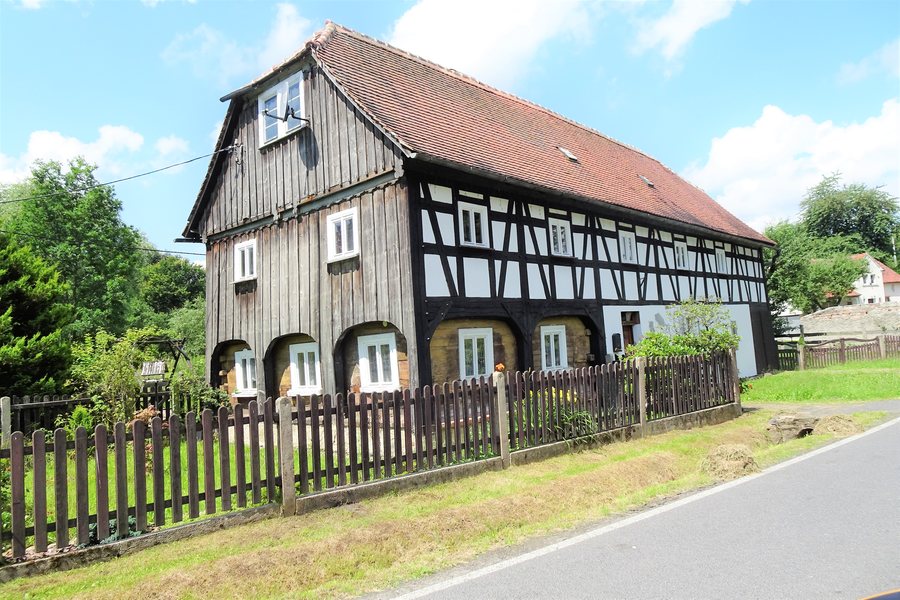
Bierna at a glance
- Bierna is a linear village on the upper reaches of the Czerwona Woda River.
- The village is one of the settlements in the varied landscape of the Wzgórza Zalipiańskie.
- The beginnings of the settlement under German law date back to the 13th century.
- Its history includes a linen-weaving tradition, with 180 looms in operation in the mid-19th century, and four watermills in the 19th century.
- The former mill building, at number 144, is now a residential and farm building. It was entered in the historic monuments register in 2009.
What historical traces shape Bierna?
The beginnings of the settlement under German law date back to the 13th century. The present-day building of the primary school in Bierna dates from 1882. Another architectural landmark is the former mill building: it bears the number 144 and is now used as a residential and farm building. On September 29, 2009, it was entered in the historic monuments register under registration number A/1351. These details mark different points in time: the settlement’s distant beginnings, a building date, and a later historic-monument listing.
What do weaving and watermills tell us?
Bierna’s history includes a linen-weaving tradition. In the mid-19th century, 180 looms were in operation there. Four watermills are also recorded for the 19th century. The periods are defined differently: the loom count explicitly refers to the middle of the century, while the mill count covers the century as a whole. Textile production and milling thus stand alongside one another as two distinct themes in the village’s history. These details also show that the village’s history can be traced not only through buildings, but also through former crafts and technical activities.
How is Bierna situated geographically?
Bierna is a linear village on the upper reaches of the Czerwona Woda River. A linear village is a settlement laid out along a line; the term provides a concise way to describe the village’s form. The reference to the river adds a specific geographical feature to this description. In the broader landscape, Bierna is one of the villages in the varied Wzgórza Zalipiańskie. This offers two different ways to orient yourself: the settlement pattern of the village and its place within a wider landscape.
What biographical connection leads to Bierna?
Jan Krystian Altnicol was born in Bierna and was a student and son-in-law of Johann Sebastian Bach. His biography adds a personal connection to the village’s architectural and economic history. His connection to Bach was both educational and familial; Bierna is Altnicol’s birthplace. The village’s cultural context therefore includes a specific life story alongside historic buildings and former trades.
Discover more destinations: Bogatynia, Ruszów, Zgorzelec, Dłużyna Dolna, Jędrzychowice, Pieńsk, Trójca, Sławnikowice.
FAQ
What does the term “linear village” mean?
It describes a settlement laid out along a line. Bierna is a linear village on the upper reaches of the Czerwona Woda.
What periods do the figures for looms and watermills refer to?
There were 180 looms in operation in the mid-19th century. The figure of four watermills refers to the 19th century as a whole.
What is Jan Krystian Altnicol’s connection to Bierna and Bach?
Altnicol was born in Bierna and was a student and son-in-law of Johann Sebastian Bach.
Go to the regional travel overview: Zgorzelecki.

